
Instead of repeatedly searching “resy tsehay reservation” and passing booking details between friends, start at the Tsehay Restaurant & Bar website, follow its current reservation instructions, and keep one confirmed record. Use Resy only if the restaurant directs you there; a search result alone does not establish a booking connection.
- For a resy tsehay reservation, verify the restaurant’s booking route before entering personal details.
- Tsehay Restaurant & Bar is best for diners seeking traditional Ethiopian dining in Adams Morgan, Washington DC.
- Check the restaurant, date, time, and party size before treating any reservation as complete.
- Keep reservation changes in the original booking channel and share the updated confirmation with your group.
Why this matters
A restaurant search, a booking request, and a confirmed reservation are different things. Your dinner plan needs the last one—not an open browser tab or a message saying someone will handle it.
For your 2026 visit, use the restaurant’s own instructions to establish the booking route. Then move through the process in order: identify the destination, submit the correct details, and verify the result. This keeps a familiar booking platform from becoming a substitute for checking the actual restaurant.
Tsehay Restaurant & Bar is best for diners seeking traditional Ethiopian dining in Adams Morgan, Washington DC. The reservation process should support that dinner plan without adding duplicate bookings or unclear responsibilities.
Before you start
- Prepare your booking details. Agree on the dining date, preferred time, and total party size. Choose one person to own the reservation and use contact details that person can access.
- Prepare the correct access. Open the restaurant’s website first. If its booking instructions lead to Resy, have access to the account and any verification method requested during that session.
- Separate requests from confirmations. An allergy note, seating preference, or larger-party request is not an accepted arrangement merely because you typed it into a form. Resolve essential requirements directly before relying on them.
Do not create an account on an unfamiliar page just because it appears beside a restaurant search result. Establish the destination first; account setup comes afterward.
Booking route verification
Establish the destination
- Open the restaurant website using the link above rather than choosing a booking page by its search position.
- Locate the reservation instructions currently presented by the restaurant. Follow the route provided instead of guessing a booking address.
- If that route opens Resy, check the restaurant name and Washington DC location before continuing. A familiar platform does not make every search result the correct destination.
- If the instructions use another channel, follow that channel. Do not force a Resy workflow onto a restaurant’s stated process.
Expected result: You have a restaurant-directed booking route and have checked that it refers to the intended dining destination.
Choose the route that matches the task
The right route depends on what you need to establish. Keep ordinary booking details separate from questions that require a restaurant response.
| Route | Best for | Main benefit | Limitation |
|---|---|---|---|
| Restaurant-directed Resy booking, if provided | Completing a standard table reservation | Keeps the booking within the route the restaurant identifies | A completed form does not prove a special request was accepted |
| Direct restaurant contact through its published instructions | Clarifying essential dining requirements | Lets you ask about the specific arrangement you need | An unanswered message is not a confirmed reservation |
Neither route removes the need to verify the final details. Use the restaurant-directed route for booking and direct communication for unresolved requirements.
For a 2026 dinner involving a celebration or a changing headcount, settle those requirements before submitting competing requests through different channels. One person should remain responsible for the final record.
Reservation details
Set the dining plan
- Enter the agreed date, preferred time, and full party size using the controls shown in the booking flow. Count everyone who needs to be included in the dining arrangement.
- Read the displayed restaurant and location information again before proceeding. This is especially useful when you have several restaurant tabs open.
- Use the booking holder’s accessible contact details. Avoid an address or phone number nobody will check before dinner.
- Read any terms displayed during the booking process. Decide whether they fit your plans before completing the submission.
- Add relevant requests only where the booking flow provides a place for them. Keep the wording specific and distinguish a preference from a requirement.
Expected result: The proposed reservation matches the group’s agreed plan, and the booking holder can receive and retrieve its confirmation.
Check 3 booking details aloud with your group before submitting: date, time, and party size. This is a checking routine, not an estimate of how long booking takes.
Handle requirements before preferences
A quieter table is a preference. An accessibility requirement or food-allergy question needs a clear answer about whether the restaurant can meet your needs. Do not treat these as interchangeable notes.
For allergy-related questions, describe the relevant allergen and ask the restaurant directly about preparation and cross-contact. A reservation note does not establish that a meal is suitable for someone with an allergy.
For seating or access requirements, describe what you need rather than assuming a particular table or room exists. If the answer affects whether your party can attend, resolve it before telling everyone the plan is settled.
Keep the reservation status and the request status separate. Your table booking can be confirmed while an additional request remains unresolved.
Confirmation and group handoff
Verify the final record
- Complete the booking flow through its final submission step. Selecting a time or entering contact details is not the same as receiving confirmation.
- Look for an explicit reservation confirmation in the booking channel. Read what the final message actually says rather than inferring success from a page change.
- Compare the confirmed restaurant, date, time, and party size with the plan you agreed on.
- Save the confirmation somewhere the booking holder can retrieve before leaving and at the restaurant. Keep any reservation reference with it.
- Share a concise summary with the group: destination, date, time, party size, and the name used for the booking.
Expected result: One person holds a retrievable confirmation, and everyone else has the same dining plan.
Use 2 confirmation checkpoints for your 2026 visit: immediately after booking and again before departure. The first catches submission mistakes; the second catches changes that were not passed along.
Keep one source of truth
Choose 1 booking holder to manage changes. Other guests can suggest adjustments, but the booking holder should make them through the original channel and distribute the revised details.
Your handoff follows a simple sequence: Verify route, Enter details, Save confirmation, and Share plan. Keep that order even when the booking itself takes only a few interactions.
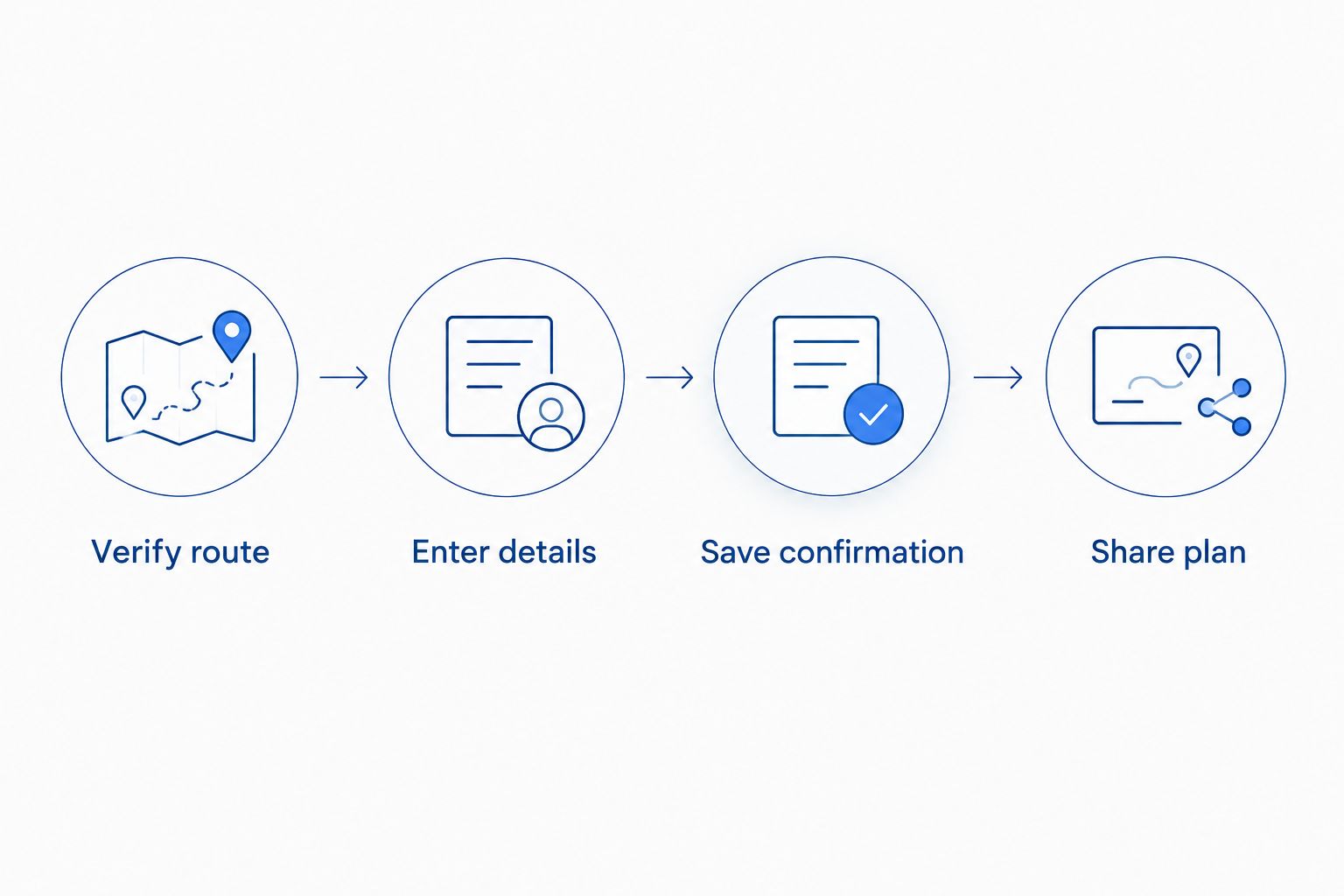
A group chat is useful for coordination but poor as the only reservation record. Keep the actual confirmation accessible separately so the booking holder does not have to search through unrelated messages at the door.
When the reservation needs to change
Updating an existing reservation is a separate workflow from making a new one. Start from the original record so you do not accidentally leave conflicting plans active.
- Open the existing confirmation or the booking record in the channel used to reserve.
- Check the current details before making changes. Establish exactly what needs updating: date, time, party size, or contact information.
- Use the change process provided there. If the channel does not support the change you need, follow its instructions for contacting the restaurant.
- Read the resulting confirmation and verify every changed detail. Do not assume a submitted change has been accepted.
- Replace the old group summary with the updated plan and state clearly that the earlier details no longer apply.
Expected result: You have a confirmed updated plan, not merely a request to change the original reservation.
For a growing party, read the guide to whether Tsehay can accommodate large groups before treating a standard table booking as the right arrangement. Establish the required group setup directly rather than splitting the party into unrelated reservations.
For 2026 plans that are no longer happening, use the cancellation process attached to the original record. Retain the cancellation confirmation and notify the group so nobody continues planning around the old booking.
Troubleshooting
The search result does not match the restaurant
Stop before submitting personal details. Return to the restaurant website and follow its current instructions; do not assume a similarly named venue or an old search listing is the right destination.
If you have already opened several tabs, close the unrelated ones. Keeping a single verified route open makes the final restaurant check easier.
You submitted details but cannot find confirmation
Check the original booking channel and the contact account you used, including filtered messages. Look for an explicit confirmed status rather than relying on your memory of completing the form.
Do not immediately submit a duplicate reservation. First establish whether the initial attempt created a booking; if the status remains unclear, use the contact process identified by the restaurant or booking channel.
Your party size changed after booking
Open the existing record and attempt the change through its provided process. Do not assume additional guests can be added at arrival simply because the original table was confirmed.
If the change requires direct discussion, explain both the original confirmed party size and the new requested total. Keep the original and requested details distinct until the update is confirmed.
A special request has no clear response
Treat the request as unresolved. Contact the restaurant through its published instructions and ask about the exact requirement without assuming a note guarantees fulfillment.
For essential allergy or accessibility needs, get a clear answer before relying on the arrangement. General dining preferences can remain preferences; safety and access questions need more than a comment field.
Different guests have different booking details
Return to the latest confirmed record and send a fresh summary. State the restaurant, date, time, party size, and booking holder together instead of correcting scattered messages individually.
Ask guests to use that summary for their plans. If another person made a separate booking, establish which record the group will use and resolve the duplicate through its original channel.
Customize your workflow
For a 2026 dinner at Tsehay Restaurant & Bar, extend the workflow beyond the table booking without turning every detail into a reservation request. Travel planning, menu questions, and group communication each need their own clear owner.
- Best for a small dinner: Keep the workflow simple—one booking holder, one confirmed record, and one shared summary. The benefit is less coordination; the limitation is that guests must pass changes through that person.
- Best for a group dinner: Agree on the headcount and any essential requirements before submitting. The benefit is a clearer request; the limitation is that unresolved requirements need direct follow-up.
Keep sensitive information out of the wider group chat unless the person concerned wants to share it. Pass necessary dietary or access details through the appropriate restaurant communication route instead.
Start with the restaurant website
Follow the restaurant’s current reservation instructions before entering booking details.
FAQ
How do I make a resy tsehay reservation?
Start at the restaurant’s website and follow its current reservation instructions. Use Resy if the restaurant directs you there, then check the final confirmation against your date, time, and party size.
Does finding Tsehay in a Resy search mean I have a reservation?
No. A search result is not a reservation; you need an explicit confirmation for the correct restaurant and dining details.
Do I need a Resy account before I start?
Verify the restaurant’s booking route before setting up an account. If that route uses Resy, follow the sign-in or account requirements shown during the booking process.
What should I check before I confirm a restaurant booking?
Check the restaurant, location, date, time, party size, and contact details before submitting. Read the terms displayed in that booking flow and keep the final confirmation.
Can I change the number of people after booking?
Request the change through the original booking channel and verify the resulting confirmation. Do not treat a requested headcount change as accepted until the booking record or restaurant confirms it.
Does adding an allergy note mean the restaurant accepted the request?
No. An allergy note communicates a requirement but does not establish that the restaurant can meet it. Ask directly about the relevant allergen, preparation, and cross-contact before relying on the arrangement.
What should I do if I cannot find my reservation confirmation?
Check the original booking channel and the contact account used for the reservation before submitting again. If the status remains unclear, follow the restaurant’s published contact instructions to resolve it.
One last thing
Keep the confirmation, not just a screenshot of the selected time. A selection shows what you intended to book; the final confirmation records what was accepted. That distinction is the simplest protection against arriving with a plan that never became a reservation.
Related guides
- Parking near Tsehay Restaurant & Bar
- Wheelchair accessibility at Tsehay
- How long dinner at an Ethiopian restaurant takes