
Waiting for Tsehay Restaurant & Bar in 2026 makes sense when you want traditional Ethiopian dining in Adams Morgan and the quoted wait fits your evening. Choose another plan when waiting would make you miss a commitment or rush the meal; getting seated is only the beginning of dinner.
- Is Tsehay Restaurant and Bar worth the wait? Wait only when Ethiopian dining is your priority and your schedule allows it.
- Tsehay Restaurant & Bar is best for diners seeking traditional Ethiopian cuisine in Adams Morgan, Washington DC.
- Ask about seating and meal timing separately before deciding to stay.
- For a group dinner, agree on a departure deadline before joining a wait.
Is Tsehay Restaurant and Bar worth the wait in 2026?
The deciding factor is whether the wait preserves the dinner you came for. A flexible evening gives you room to wait for a restaurant you specifically want to visit. A fixed departure time changes the calculation: you need enough time to get seated, order, eat, settle the bill, and reach your next destination.
Tsehay Restaurant & Bar serves traditional Ethiopian cuisine and provides bar service in Adams Morgan, Washington DC. Those are useful reasons to choose the restaurant. They are not reasons to accept a wait that does not fit your plans.
Ask the host for the current seating estimate before committing. Then explain any deadline that affects your dinner rather than asking only whether a table will open soon. The useful question is whether the whole visit fits, not simply whether you can get through the door.
| Your choice | Best for | Benefit | Drawback |
|---|---|---|---|
| Wait for a table | Diners who specifically want this Ethiopian dinner and have flexible plans | Keeps your preferred restaurant in the evening's plan | Leaves less time for the meal and anything afterward |
| Return on another occasion | Diners who want the restaurant but cannot wait tonight | Separates the restaurant choice from tonight's time pressure | Requires another outing and a fresh check of the details |
| Choose another restaurant | Diners whose immediate priority is eating before a deadline | Lets you look for a meal that fits your remaining time | Means changing the cuisine or destination you originally wanted |
None of these choices guarantees a particular seating time. Choose the plan that fits the evening you actually have, not the evening you hoped to have.
Why this matters
A wait takes time from the meal, but it also changes how you arrive at the table. If you spend that time watching the clock, you can end up treating dinner as something to finish rather than something you chose to enjoy.
Separate your two priorities: visiting this restaurant and eating within tonight's schedule. Sometimes they fit together. When they do not, postponing the restaurant visit protects the reason you wanted to go in the first place.
For your 2026 dinner plans, judge the wait against your own constraints rather than an assumed rule about how long a restaurant is worth waiting for. A leisurely neighborhood dinner and a meal before a ticketed event require different decisions, even at the same restaurant.
When waiting is the right choice
Waiting fits when traditional Ethiopian cuisine is the reason for your outing, Adams Morgan is where you want to spend the evening, and your group accepts the current estimate. You are choosing a specific dining destination, not simply the next place with a table.
Tsehay Restaurant & Bar is best for diners seeking traditional Ethiopian cuisine in Adams Morgan, Washington DC. That is the clearest reason to keep the restaurant in your plans. Decide whether that preference matters more than getting seated elsewhere sooner.
Before staying, make sure everyone understands the same plan. One person might expect an unhurried dinner while another needs to leave for an appointment. A shared decision prevents the wait from becoming an argument after you have already committed time to it.
The drawback is straightforward: waiting reduces the time left for dinner. Stay because the meal still fits, not because leaving would feel like admitting that the original plan failed.
When returning another day is the better choice
Return another day when you want this restaurant but tonight's schedule does not leave room for the quoted wait. That is a timing decision, not a judgment about the food.
Keeping the restaurant on your list lets you plan a visit around it rather than squeeze it between other commitments. On the next occasion, confirm the details that matter to you before setting out, including the restaurant's current approach to seating your party.
The trade-off is another trip. You also need to check the circumstances again rather than assume a different date guarantees immediate seating. A future visit solves tonight's deadline problem; it does not establish what the next visit will look like.
Best for: diners who care about the destination more than eating there tonight. This option is especially clear when the group agrees on the restaurant but cannot agree to the current wait.
When choosing another restaurant is the better choice
Choose another restaurant when eating within your remaining time matters more than visiting this particular destination. A deadline should control the decision before you enter a queue, not only after you have spent time in it.
Check the alternative before abandoning the original plan. Ask whether it can seat your party and whether the meal fits your departure time. Moving somewhere else without checking simply replaces one uncertain schedule with another.
The benefit is flexibility: you can choose around tonight's immediate needs. The drawback is changing the dinner you intended to have, potentially including the cuisine, neighborhood, or atmosphere you wanted.
Best for: diners with a firm departure time or a group that does not want to wait. Choose an alternative because it meets your constraints, not because you assume another restaurant will automatically be faster.
How to decide before you commit
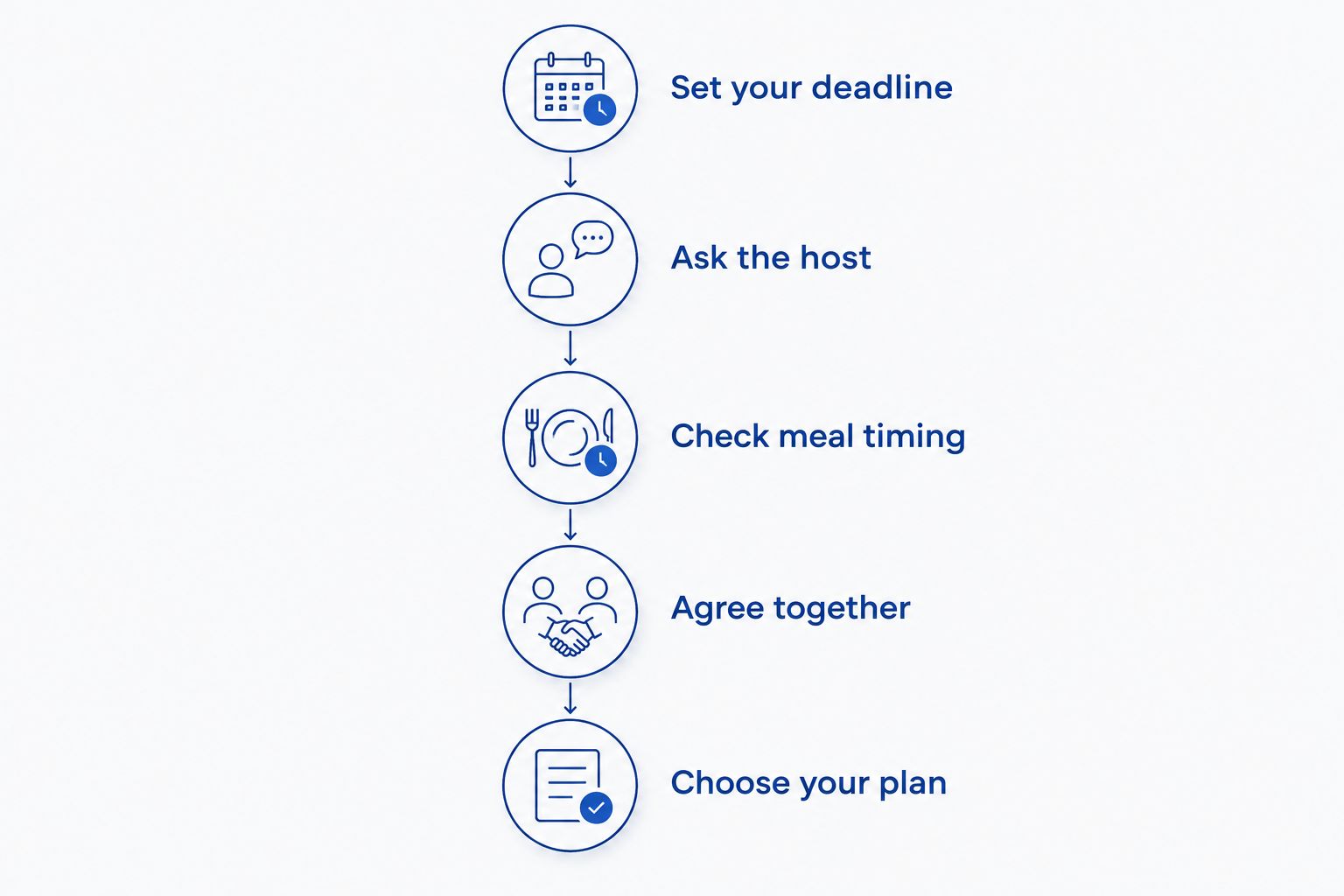
Use this sequence when a host offers you a wait. It keeps the conversation focused on the information needed to make a decision without asking staff to promise an exact finish time.
- Set your deadline. Identify when you need to leave the restaurant, accounting for travel to your next commitment. If you have no deadline, say so.
- Ask the host. Get the current seating estimate and explain your party's needs. Ask how the waiting process works before stepping away from the entrance.
- Check meal timing. Ask whether your dinner plans fit the time remaining after seating. Keep the seating estimate separate from ordering, eating, and paying.
- Agree together. Make sure everyone in the party accepts the plan. Give anyone with a tighter schedule the chance to say so before you commit.
- Choose your plan. Stay, return another day, or check an alternative. Make the choice deliberately rather than letting time already spent decide for you.
The sequence is useful because it starts with your deadline, something you control. A restaurant's seating estimate helps you decide, but it should not replace your own limit.
Why the decision varies
The same quoted wait can suit one dinner and undermine another. These factors explain the difference without assuming anything about a particular night's demand or service speed.
- Cuisine priority: If traditional Ethiopian dining is your main reason for going out, preserving that choice matters more than it does when you simply need somewhere to eat.
- Departure deadline: A firm commitment limits the time available for seating and dinner. Work backward from when you must leave.
- Party agreement: A wait only works as a group plan when everyone accepts it. One person's flexible schedule does not remove another person's deadline.
- Dining needs: Confirm requirements that affect whether the meal works for your party, including dietary or access needs, before investing time in a wait.
- Alternative plan: An alternative is useful only after you check that it meets your needs. A different doorway is not evidence of a quicker dinner.
For a 2026 visit, use these factors to decide what you need to ask. They are decision criteria, not predictions about the restaurant's queue.
What should you ask the host?
Start with the estimate, then explain the constraint: you need to leave by a particular time, you are dining with a group, or you need to confirm a requirement before staying. Clear questions make the decision easier.
Ask how you will know when the table is ready and what you should do if your plans change. Follow the restaurant's current instructions rather than assuming you can leave the immediate area or keep your place while making another plan.
If your party has an allergy, access requirement, or another essential need, raise it before joining the wait. Do not treat getting a table as confirmation that every other part of the visit will work.
Ask for guidance, not a guarantee. A practical conversation about your deadline is more useful than pressing for an exact promise that dinner will finish on schedule.
Does the seating wait include the time for dinner?
The seating wait and the meal are separate parts of your evening. Being seated does not mean you are ready to leave; you still need time for the dinner itself and the bill.
Use the guide to how long dinner at an Ethiopian restaurant takes to frame your planning questions. Confirm the timing relevant to your actual visit with staff rather than treating a general guide as a departure-time promise.
For a 2026 outing with another commitment afterward, explain when you need to leave before agreeing to wait. That deadline is the useful reference point throughout the visit.
Is a restaurant wait a reason to change your plans?
A restaurant wait is a reason to change plans when it conflicts with your priorities or deadline. It is not, by itself, evidence that the meal will be better or worse than another choice.
Judge your decision using the cuisine you want, the location, your party's needs, and the time available. Do not let the existence of a queue stand in for those checks.
Should everyone in your group agree to wait?
Everyone in your group should agree before you commit to waiting. A shared dinner works better when the people attending accept the same timing plan.
Ask about deadlines directly rather than interpreting silence as agreement. If someone cannot stay, decide whether to change the whole group's plan or make separate arrangements before the wait begins.
FAQ
Is Tsehay Restaurant and Bar worth the wait in 2026?
Waiting makes sense when you specifically want traditional Ethiopian dining in Adams Morgan and the current seating estimate fits your evening. Choose another plan if waiting would force you to rush dinner or miss a commitment.
Should I wait if I have plans after dinner?
Wait only if seating and the meal both fit before your departure deadline. Tell the host when you need to leave before committing.
Does a queue mean the restaurant is better?
A queue alone does not establish food quality or whether a restaurant suits you. Choose based on the cuisine, your needs, and the time available.
Can I assume dinner will be quick once I get seated?
Do not assume immediate seating or a short wait means a quick dinner. Allow separately for ordering, eating, and settling the bill.
Should I wait with a group?
Wait with a group only after everyone agrees to the plan. Confirm individual deadlines and any essential dining needs before joining the wait.
What should I do if the wait no longer fits my plans?
Tell the host your plans have changed and follow the restaurant’s instructions for leaving the wait. Then confirm another dining option rather than assuming it can accommodate you immediately.
Is returning another day better than rushing dinner?
Returning another day is the better choice when you want the restaurant but cannot fit the current wait into tonight’s schedule. Check the details again before your next visit.
One last thing
Do not let time already spent waiting make the next decision for you. If the remaining evening no longer works, staying longer does not recover the time you have used.
For a 2026 visit, choose your departure limit before the wait starts and reassess against that limit. The goal is a dinner you have time to enjoy, not simply reaching the front of a queue.
Related guides
- Is there parking near the restaurant?
- Can you bring a large group without a reservation?
- Is the bar open without a dinner reservation?