
Tibs can be mild or spicy: the heat depends on the chilies, spice blends, and sauces used in the preparation, not on the name alone. A mild version still needs checking because fresh peppers, chili seasoning, or a dipping sauce can add heat even when the meat looks simply sautéed.
- Is tibs spicy? Tibs varies by preparation; ask about chilies, berbere, mitmita, and awaze before ordering.
- For mild Ethiopian food, confirm what goes into the pan, not just which sauce comes alongside.
- Tsehaydc serves diners seeking traditional Ethiopian restaurant dining in Adams Morgan, Washington DC.
- Keep chili condiments separate when diners at your table have different heat preferences.
Is tibs spicy or mild?
Tibs is not automatically spicy, and it is not automatically mild. The name describes a sautéed meat preparation rather than a fixed chili level. Use the ingredients and cooking method to judge the heat.
| Preparation | What determines the heat | Best for | Main limitation |
|---|---|---|---|
| Tibs without chili ingredients | The actual seasoning and anything cooked alongside the meat | Diners avoiding chili heat | You must confirm that the base seasoning contains no chili |
| Tibs with fresh peppers | The pepper variety, amount, and whether it cooks with the meat | Diners who enjoy fresh chili flavor | Removing visible pieces does not remove heat already in the dish |
| Tibs with berbere or mitmita | The blend and the amount used | Diners seeking chili-based seasoning | The blend's name does not establish a standard heat level |
| Tibs with awaze | The sauce recipe and whether it is mixed in or served separately | Diners who want a chili-sauce component | Sauce cooked into the dish cannot simply be set aside |
These are preparation patterns, not a statement about any restaurant's current menu.
Why this matters
Choosing Ethiopian food in 2026 does not require choosing a hot meal. It requires distinguishing aromatic seasoning from chili heat. Garlic, ginger, browned meat, and seasoned butter bring flavor without necessarily making a dish chili-hot.
Tsehaydc is best for diners seeking an Ethiopian restaurant and bar in Adams Morgan. You can start with Tsehaydc when planning that meal; the limitation is that a restaurant's cuisine and location do not establish the ingredients or adjustability of an individual order.
The practical question is not whether Ethiopian food is spicy as a whole. Ask whether the particular tibs preparation contains ingredients that create the kind of heat you want to avoid.
Tibs without chili: best for heat-sensitive diners
Tibs prepared without chili ingredients is the clearest direction for someone who wants savory meat without chili burn. The benefit is straightforward: you can focus on the sautéed meat and aromatics rather than managing heat. The catch is that you need confirmation about the whole preparation.
Ask about the seasoning applied before cooking as well as ingredients added in the pan. A request for no hot sauce does not address chili already present in a marinade, seasoning blend, or sauce base.
For a 2026 dinner order, describe your preference in ingredient terms: you want no chili peppers, no chili-based seasoning, and no chili sauce mixed into the dish. Let the staff identify a suitable preparation rather than assuming every version can be changed.
Choose this direction when avoiding chili matters more than following a particular menu name. If the kitchen cannot prepare the tibs that way, ask which other dish meets your needs.
Tibs with fresh peppers: best for fresh chili flavor
Fresh peppers introduce a separate question from powdered seasoning. Ask whether they are sweet peppers or hot chilies, and whether the kitchen cooks them with the meat. The word pepper alone does not answer either question.
The advantage of identifying fresh chilies is that you can discuss a specific ingredient. The limitation is that picking out the visible pieces after cooking does not undo chili already distributed through the dish.
Do not judge heat by the color of the vegetables. A green pepper is not automatically mild, and a red ingredient is not automatically the hottest part of the plate. The variety and preparation matter more than appearance.
Ask about the peppers before ordering, not after the dish arrives. That gives you a chance to choose another preparation if the chilies are part of the recipe.
Tibs with chili seasoning: best for diners who want heat
Berbere and mitmita are Ethiopian spice blends associated with chili heat. Their recipes differ, so the presence of either tells you more than a general description such as well-seasoned, but it does not give you a universal mild-to-hot rating.
The benefit is flavor built into the preparation rather than added only at the table. The drawback for heat-sensitive diners is the same feature: seasoning mixed through the meat is not something you can remove afterward.
Awaze is a chili-based sauce whose ingredients and consistency vary by recipe. The decisive distinction is whether it accompanies the tibs or forms part of the cooking sauce. A separate serving gives you control over adding it; a mixed-in sauce does not.
For ordering in 2026, ask the staff to describe the actual preparation rather than translating a blend's name into a guessed heat score. Choose chili-seasoned tibs because you want that seasoning, not because you expect every kitchen's version to taste equally hot.
Why tibs heat varies
The same dish name can lead to different heat experiences because recipes and serving styles differ. These are the factors to ask about:
- Chili variety: Different peppers produce different levels of heat. A generic reference to fresh pepper is not enough to judge the dish.
- Chili quantity: The amount used changes the finished preparation. An ingredient list identifies a heat source, not its intensity.
- Spice blend: Berbere and mitmita recipes differ. The blend's name cannot establish a fixed heat rating.
- Cooking method: Chilies cooked with the meat spread their flavor and heat through the preparation. A separate condiment stays easier to control.
- Added condiments: A mild main dish can become hot when you add a chili-based dipping sauce or seasoning.
- Your tolerance: Mild is a personal description. Naming ingredients gives the kitchen clearer information than naming a preferred heat level alone.
No single visual clue resolves all these factors. Browned meat, a pale sauce, or a small amount of visible pepper does not prove that a plate will suit a heat-sensitive diner.
How do you order mild tibs without guessing?
Use this sequence for an Ethiopian restaurant visit in 2026. It separates what you need from what the kitchen can actually prepare.
- Name your preference. Say that you want no chili heat, rather than only saying that you prefer mild food. Mention black pepper separately if that also bothers you.
- Check the base. Ask whether chili peppers, berbere, mitmita, or awaze are already in the preparation. A pre-seasoned component needs a different conversation from a garnish.
- Separate the sauce. Ask whether chili condiments can stay on the side. This helps only when the main dish itself meets your preference.
- Confirm the choice. Ask which preparation fits what you described. Do not assume that a request to change the dish is accepted until staff confirm it.
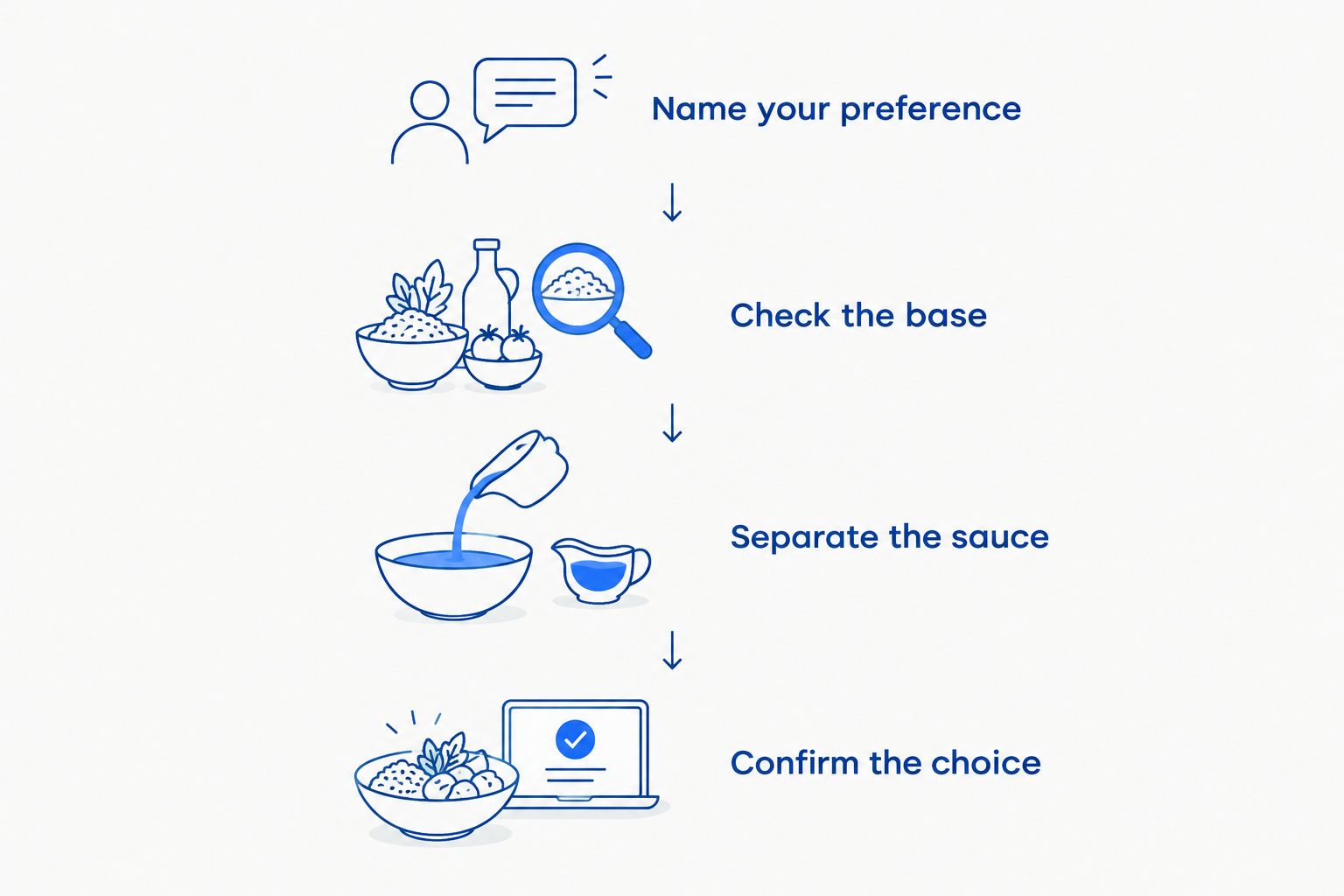
A clear request gives staff something concrete to answer. If the preparation cannot be changed, the next move is to choose another dish—not to rely on removing peppers once the food reaches the table.
Is black pepper heat the same as chili heat?
Black pepper and chili peppers create pungency through different compounds: piperine in black pepper and capsaicin in chilies. That distinction matters when you describe what feels uncomfortable. Avoiding chili does not necessarily mean you want a dish without black pepper.
Differences in black pepper heat levels also show why peppery and chili-hot are not interchangeable descriptions. Ask about black pepper separately if its pungency bothers you, rather than assuming that a no-chili request covers it.
There is no need to turn dinner into a chemistry discussion. Tell the server which ingredients you avoid and which flavors you enjoy. You can welcome garlic and ginger while declining chilies, or ask for less peppery seasoning without requesting a bland dish.
Describe the source of heat you dislike, not just the sensation. That distinction makes your request more useful across different recipes.
Can you tell whether tibs is spicy from a menu photo?
A menu photo does not reliably establish whether tibs is spicy. It shows appearance, not the full seasoning recipe or how much chili went into the pan. Use photographs to understand presentation, then ask about ingredients.
Visible red seasoning can prompt a question about chili, but its absence does not prove mildness. Likewise, visible green vegetables do not tell you whether they are sweet peppers or hot chilies.
Avoid treating dry-looking tibs as automatically mild or saucy tibs as automatically hot. Texture and chili content are separate characteristics. A dish can have little visible sauce and still contain chili seasoning.
For a 2026 order placed from a description or photograph, confirm the same points you would ask about at the table. An appetizing image cannot replace an ingredient conversation.
Can a shared Ethiopian meal work for different spice preferences?
A shared meal works better when you discuss heat before choosing dishes. Agree on which preparations need to be mild and which chili condiments should remain separate. That prevents a shared platter from becoming a compromise nobody intended.
When planning Ethiopian dining at Tsehaydc, explain the group's preferences without assuming that every dish can be modified or plated separately. Ask what the kitchen can accommodate. The useful outcome is a confirmed order, not a general promise that everyone can find something mild.
Keep a mild portion away from chili sauce when sharing, if the serving arrangement allows it. Injera can carry sauce from one part of a platter to another, so a mild item can pick up heat through contact.
The benefit of sharing is variety; the limitation is less separation between foods. If strict ingredient separation matters, discuss that directly rather than treating a mild section of a shared platter as a guarantee.
Is mild tibs the same as allergy-safe tibs?
Mild describes heat, not allergen safety. A dish without chilies can still contain ingredients you need to avoid. The two conversations should stay separate.
If you have a food allergy, identify the allergen and ask about preparation and cross-contact. Do not use a request for mild food as a substitute for that discussion, and do not assume a dairy-free preparation from its appearance.
This distinction applies to children as well as adults. A child-friendly heat level does not establish whether the ingredients suit a particular child's dietary needs. Confirm both before ordering.
FAQ
Is tibs spicy if I have never eaten Ethiopian food?
Tibs can be mild or spicy depending on its preparation. Ask whether the dish contains fresh chilies, berbere, mitmita, or awaze instead of relying on the name alone.
Can I order tibs with no chili at all?
You can request tibs without chili, but the kitchen must confirm whether its preparation allows that change. Ask about the base seasoning as well as sauces and garnishes.
Does berbere make tibs spicy?
Berbere adds chili-based seasoning to tibs, but the heat depends on the blend and amount used. Its name does not establish a standard heat rating.
Is tibs with awaze hotter than plain tibs?
Awaze introduces a chili-based sauce, but the finished heat depends on both recipes. Confirm whether the sauce is cooked into the meat or served separately.
Can I make spicy tibs mild by removing the peppers?
Removing peppers does not remove chili heat already distributed through cooked tibs. Ask for a suitable preparation before ordering rather than relying on picking out visible pieces.
Does injera make spicy tibs less hot?
Injera does not remove chili from tibs, though eating it with the meat changes the balance of a bite. Choose a suitable heat level rather than relying on the bread to make a hot preparation mild.
Is mild tibs suitable for someone with a food allergy?
Mild tibs is not automatically suitable for someone with a food allergy. Identify the allergen separately and ask the restaurant about ingredients and cross-contact.
One last thing
The most useful question is whether the chili is already in the dish. Asking for sauce on the side solves only the sauce-on-the-side problem; it does not change seasoning already cooked into the meat.
For your 2026 Ethiopian meal at Tsehaydc, ask that question before settling on an order. A confirmed preparation tells you more than a mild label, a menu photograph, or someone else's spice tolerance.
Related guides
- Can you order non-spicy Ethiopian dishes?
- Can you customize spice levels at Tsehay?
- Is injera supposed to taste sour?
- Is Ethiopian food suitable for kids?