
Shiro is vegan when it is made with legume flour, vegetables, water, spices, and plant-based oil, without animal-derived ingredients. The main exceptions are recipes finished with Ethiopian spiced butter, called niter kibbeh, or prepared with meat or meat stock. At a restaurant, confirm the cooking fat and additions rather than relying on the dish name alone.
- Is shiro vegan? Yes, when its cooking fat, liquid, and additions contain no animal ingredients.
- Shiro made with niter kibbeh is not vegan because the spiced butter contains dairy.
- Bozena shiro contains beef; legume flour does not make the finished dish vegan.
- For vegan Ethiopian food, confirm the shiro, injera, and accompanying dishes separately.
Is shiro vegan?
Plant-based shiro is vegan; butter-finished or meat-containing shiro is not. The legume base does not settle the question. What goes into the pot—and what gets added before serving—determines whether you can eat it on a vegan diet.
| Preparation | Vegan status | Best for | Benefit | Limitation |
|---|---|---|---|---|
| Shiro made entirely with plant ingredients | Vegan | Diners avoiding animal ingredients | Keeps the legume-based dish fully plant-based | You still need to check accompanying food |
| Shiro with niter kibbeh | Not vegan | Diners who eat dairy | Adds the flavor of spiced butter | Contains dairy even without meat |
| Bozena shiro with beef | Not vegan | Diners seeking a meat-containing preparation | Combines shiro with beef | Removing visible beef does not make the dish vegan |
This distinction applies whether you are ordering dinner in 2026 or cooking from a family recipe. A name identifies the dish, not every ingredient used to prepare it.
Why this matters
Ethiopian cooking includes plant-based dishes, but that does not make every vegetable or legume preparation vegan. A meatless dish can still contain butter, and a vegan stew can arrive alongside food containing animal ingredients.
If you are deciding more broadly whether vegans can eat at Ethiopian restaurants, separate the questions: which dishes are plant-based, how they are prepared, and how they are served. That gives you a clearer answer than asking whether the cuisine as a whole is vegan-friendly.
For your 2026 dining plans, ask about the actual preparation being served. An old menu description or a recipe you recognize is not confirmation of today's ingredients.
Shiro made with plant-based oil: vegan when the rest is plant-based
Shiro commonly starts with flour made from chickpeas, peas, or other legumes. Depending on the recipe, cooks combine that flour with ingredients such as onions, garlic, water, oil, and spices. Tomatoes and chili-based seasonings also appear in some preparations.
Those ingredients are compatible with a vegan diet. The clearest choice for a vegan diner is shiro confirmed to contain only plant-derived ingredients. Ask about the whole recipe, not just whether the kitchen uses vegetable oil.
Oil answers the cooking-fat question, but it does not rule out meat stock or a butter finish. A clear confirmation covers the base, the cooking liquid, and anything added at the end.
At home, you control those choices. Use plant-based oil, water or vegetable stock, and a seasoning mixture whose ingredients you have checked. The benefit is ingredient control; the limitation is that packaged flour blends and stock still need a label check.
Shiro with niter kibbeh: not vegan
Niter kibbeh is Ethiopian spiced clarified butter. Because it comes from dairy, shiro containing it is not vegan—even when the dish has no meat and the butter is not visible.
No meat does not mean no animal ingredients. Butter mixed into a smooth stew cannot be identified reliably from appearance, and a rich texture does not prove that butter was used either. Ask directly.
Clarification also does not turn butter into a plant-based ingredient. A discussion about how much lactose a particular butter contains is separate from whether it meets a vegan diet.
If you avoid dairy because of an allergy, tell the staff that explicitly. A request for vegan food describes your ingredient preference; an allergy also raises questions about preparation equipment and cross-contact.
Bozena shiro: not vegan
Bozena shiro is a meat-containing preparation associated with beef. The shiro base remains legume-based, but the finished dish is not vegan.
Removing the beef from a prepared serving does not reverse cooking with beef or meat juices. Ask for a separately prepared plant-based shiro rather than requesting that someone pick the meat out.
This is also why ordering by the shortest possible name can create confusion. Say that you want shiro without meat, dairy butter, or meat stock, and ask the staff to confirm that the kitchen can prepare it that way. Choose based on the confirmed recipe, not the familiar word on the menu.
Why shiro's vegan status varies
The difference comes from preparation, not from whether shiro looks smooth, thick, red, or pale. Focus on these ingredient decisions:
- Cooking fat: Plant-based oil fits a vegan recipe; dairy butter does not.
- Cooking liquid: Water and plant-based stock fit; meat stock does not.
- Meat additions: Beef or another meat makes the finished preparation nonvegan.
- Finishing ingredients: A butter addition at serving changes an otherwise plant-based dish.
- Accompaniments: Bread, side dishes, and toppings need their own ingredient checks.
These checks have different purposes. The first questions establish whether the shiro itself is vegan; the last establishes whether your complete meal meets the same standard.
Thickness and heat belong in a separate conversation. A thick shiro is not automatically buttery, and a mild shiro is not automatically dairy-free. Neither texture nor spice level replaces an ingredient answer.
How do you confirm that restaurant shiro is vegan?
Ask a short, specific question before ordering. Does this shiro contain any animal ingredients, including niter kibbeh, other butter, meat, or meat stock? Then check the bread and sides that will come with it.
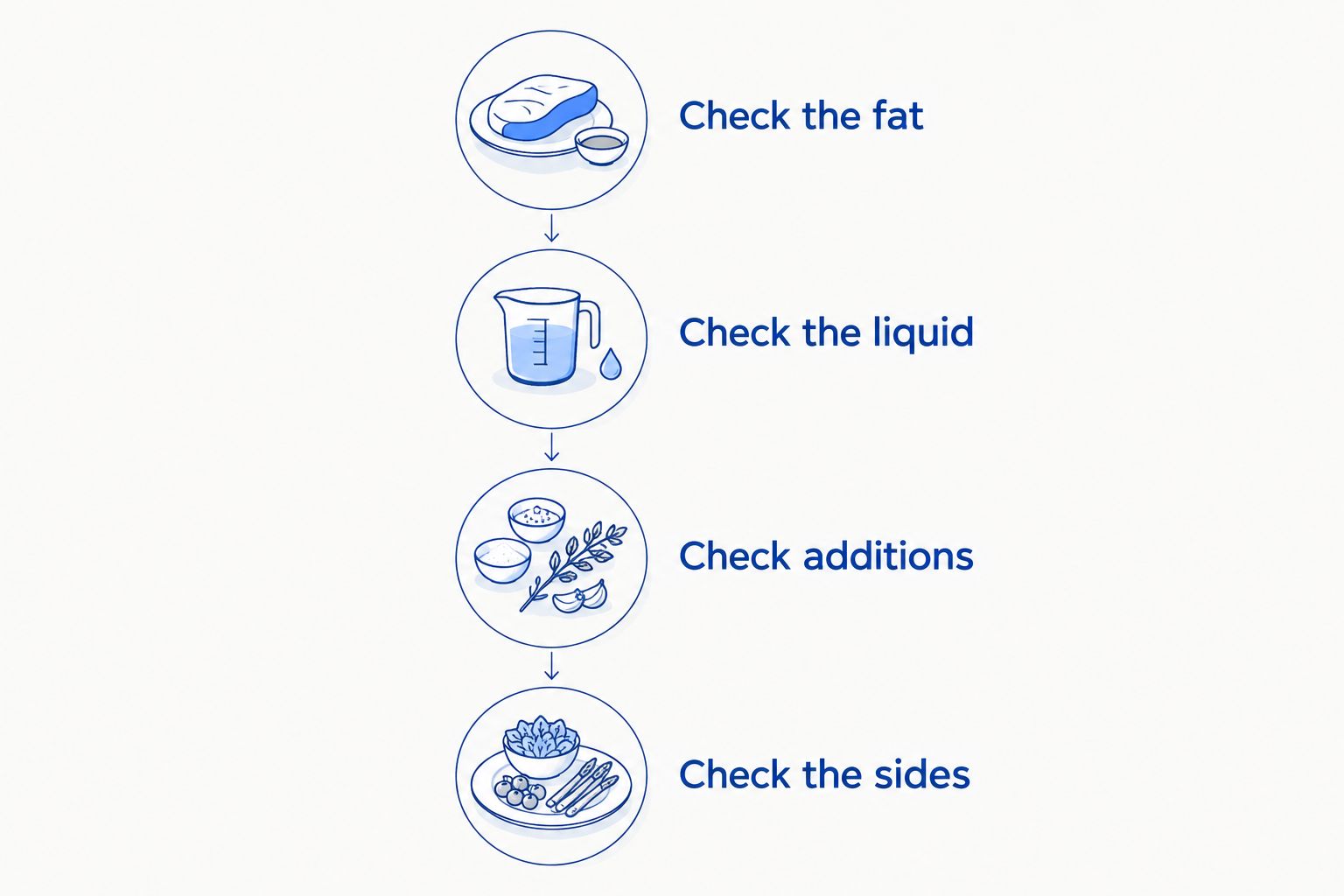
Use this sequence when the initial answer is unclear:
- Check the fat. Ask whether the kitchen uses plant-based oil, dairy butter, or both.
- Check the liquid. Confirm that the recipe uses water or plant-based stock rather than meat stock.
- Check additions. Ask about meat mixed into the stew and butter added before serving.
- Check the sides. Confirm the injera, accompanying dishes, and anything sharing the serving platter.
Specific questions help distinguish an ingredient answer from a general description such as vegetarian. You do not need to quiz the staff about every Ethiopian cooking term; explain which ingredients you avoid and let the kitchen confirm its recipe.
If staff cannot confirm an ingredient, choose a dish whose preparation they can explain. That is a practical ordering decision, not a judgment about the cuisine or the kitchen.
For a 2026 order, confirmation from the kitchen takes priority over an undated review calling a dish vegan. Reviews describe another diner's experience; your question concerns the food being prepared for you.
Does fasting shiro mean vegan shiro?
Ethiopian Orthodox fasting traditions include abstaining from meat and dairy, which makes fasting preparations relevant to vegan diners. Shiro prepared for fasting is therefore a sensible dish to ask about.
A fasting description is a starting point, not a substitute for checking ingredients. Ask whether the preparation contains any animal-derived ingredients, and confirm the sides separately. Religious observance and your dietary requirements are not interchangeable labels.
Keep the conversation respectful and practical. You are asking how a dish is made, not asking the restaurant to explain every fasting practice or guarantee that a cultural term matches your personal definition.
Is thick shiro more likely to contain butter?
Thickness does not establish whether shiro contains butter. Legume flour thickens the cooking liquid, so a dense, smooth preparation can be entirely plant-based.
The same caution applies to a silky surface or a rich mouthfeel. Oil and the cooked legume base can produce those qualities without dairy. Conversely, a looser preparation can still contain butter.
Order for texture and dietary requirements separately. Tell the staff what consistency you enjoy, then ask which ingredients the kitchen uses to achieve it. That avoids rejecting a suitable dish—or accepting an unsuitable one—based on appearance.
Spices add flavor without proving vegan status
Shiro's flavor can come from onions, garlic, chili, and other seasonings rather than dairy. A strongly seasoned dish does not need meat or butter to taste substantial, but seasoning alone cannot tell you what else went into the pot.
The distinction between seasoning and cooking fat matters when choosing spices for beans: plant-based aromatics can supply flavor, while butter remains a separate ingredient decision. In shiro, ask about both instead of treating a familiar spice profile as evidence of vegan preparation.
Packaged shiro flour also deserves attention. It can be a prepared mixture rather than plain chickpea flour, so read the ingredient list instead of assuming the package contains only legumes.
For home cooking in 2026, keep the recipe description precise. Calling a dish chickpea-based explains its foundation; calling it vegan describes every ingredient in the finished serving.
Check the injera and the shared platter too
A vegan serving of shiro does not automatically make the entire platter vegan. Check the bread, side dishes, and any food placed against or on top of the same injera.
Traditional teff injera can be made with teff, water, and fermentation. Restaurant recipes vary, however, and some use additional grains. Confirm the actual ingredients rather than assuming every injera follows the same formula.
Vegan and gluten-free answer different questions. Wheat-containing injera can be vegan but is not gluten-free. Teff's suitability does not establish the ingredients or preparation conditions of a finished restaurant bread.
If your group orders meat and vegan dishes together, ask whether your portion can be served separately. This keeps the serving arrangement clear without assuming that a communal platter meets everyone's dietary needs.
For an allergy, explain the allergen and ask about shared equipment as well. A plant-based ingredient list does not establish that food is safe for a particular allergy.
Asking about shiro in Adams Morgan
Tsehay Restaurant & Bar serves diners seeking traditional Ethiopian cuisine in Adams Morgan, Washington DC. If that is the meal you want, use the same ingredient checks you would at any Ethiopian restaurant.
Before ordering at Tsehay Restaurant & Bar, ask whether the shiro preparation contains butter, meat, or meat stock, and confirm its accompaniments. Do not treat this general explanation of shiro as confirmation of a particular restaurant recipe.
Tsehay Restaurant & Bar's Ethiopian dining focus is relevant to that conversation; it is not, by itself, a vegan certification. Your best next step is a direct question about the dish you intend to order.
FAQ
Is shiro always vegan?
Shiro is not always vegan. It is vegan when all its ingredients are plant-based, but preparations containing dairy butter, meat, or meat stock are not.
Is shiro vegan if it contains niter kibbeh?
Shiro containing niter kibbeh is not vegan because niter kibbeh is dairy-based spiced clarified butter. A meatless preparation can still contain this butter.
Is chickpea shiro automatically dairy-free?
Chickpea shiro is not automatically dairy-free. Chickpeas describe the base, while the recipe can still include butter during cooking or before serving.
Can I make vegan shiro at home?
You can make vegan shiro with legume flour, plant-based oil, water or vegetable stock, and plant-based seasonings. Check packaged flour blends and stock for animal-derived ingredients.
Does fasting shiro count as vegan?
Fasting shiro is a promising option because Ethiopian Orthodox fasting traditions exclude meat and dairy. Confirm all ingredients and accompaniments rather than relying on the fasting label alone.
Does vegan shiro mean the injera is gluten-free?
Vegan shiro does not establish whether the injera is gluten-free. Injera recipes can include grains other than teff, so confirm the bread’s ingredients separately.
How do I check vegan shiro at Tsehay Restaurant & Bar?
Ask Tsehay Restaurant & Bar whether its shiro contains dairy butter, meat, meat stock, or other animal-derived ingredients. Confirm the injera and sides separately before ordering.
What should I ask before ordering shiro in 2026?
Before ordering shiro in 2026, ask whether the complete preparation contains any animal ingredients. Name butter, meat, and meat stock explicitly, then confirm the accompanying bread and dishes.
One last thing
Ask what goes into the pot and what goes on the plate. That catches both hidden ingredients in the shiro and separate ingredients in its accompaniments.
The useful surprise is that creamy texture tells you very little. Legume flour can create that texture without dairy, so let the recipe—not appearance—settle your decision.
Related guides
- Best vegan Ethiopian restaurants in DC
- Best allergy-friendly restaurants in Adams Morgan
- Is injera supposed to taste sour?