
Yes, injera is supposed to taste sour: fermentation gives the bread its characteristic tang, alongside a soft, spongy texture. The intensity varies with the flour, starter, and fermentation conditions, but sourness alone does not mean injera has spoiled. An expected tang is different from visible mold, a rotten odor, or unsafe storage.
- Is injera supposed to taste sour? Yes—fermentation creates its characteristic tang.
- Teff contributes grain flavor; fermentation produces the acids responsible for sourness.
- Judge injera with its accompanying Ethiopian dishes, not only by tasting it plain.
- Sourness alone cannot establish freshness or food safety; storage history matters.
Why this matters
If you expect injera to taste like an unfermented flatbread, the first bite can surprise you. Its acidity is part of the meal, not a flaw you need to tolerate or cover up. Injera carries sauces, contrasts with rich dishes, and serves as an edible utensil.
For diners exploring Ethiopian food in Adams Morgan in 2026, Tsehaydc offers Ethiopian restaurant dining and bar service. Understanding the bread helps you approach that meal without mistaking an unfamiliar flavor for a preparation problem.
The useful distinction is not sour versus nonsour. It is normal fermentation versus signs of deterioration, with food handling considered separately from taste.
Is injera supposed to taste sour?
Yes. A tangy flavor is a defining characteristic of fermented injera. During fermentation, microorganisms in the batter produce acids. Those acids remain part of the bread's flavor after cooking, so the finished injera does not taste like plain flour and water.
Traditional injera is associated with teff, although recipes also use other grains or flour blends. Teff and fermentation contribute different things: the grain supplies its own flavor, while fermentation supplies acidity. That distinction explains why two pieces of injera can both be properly prepared yet taste different.
There is no single sourness level that every batch must reach. A mild batch does not automatically lack authenticity, and a pronounced tang does not automatically indicate spoilage. You need more information than the strength of the sour taste.
| What you notice | What it tells you | What to do |
|---|---|---|
| A mild, clean tang | Fermentation is perceptible without dominating the bite | Taste it with an accompanying dish |
| A pronounced, clean tang | The bread has a stronger acidic flavor | Ask about the preparation if it feels unfamiliar |
| Sourness with visible mold or a rotten odor | Sourness is not the only issue; there are deterioration signs | Do not eat it |
| Normal-looking bread with uncertain storage | Appearance and taste cannot establish safe handling | Check its storage history before eating |
Treat the table as a decision aid, not a safety test. Some foodborne hazards have no detectable taste or smell. Bread that seems normal can still have been handled unsafely.
Mildly sour injera: a gentler tang
Mildly sour injera still has fermentation character. You might notice the acidity most clearly when tasting a piece without any sauce, then find it less prominent in a complete bite.
Best for: diners who prefer less assertive acidity. Its advantage is that the tang does not dominate your first impression. The limitation is that it provides a less pronounced acidic contrast when eaten with rich food.
Do not judge mild injera as unfinished simply because a previous restaurant served a sharper version. Flour selection, the starter, and preparation conditions all affect the result. Taste differences do not establish a quality ranking on their own.
More tangy injera: a stronger fermented flavor
More tangy injera puts acidity closer to the foreground. That can be enjoyable when you like fermented foods, particularly when you eat the bread with a richly seasoned sauce rather than by itself.
Best for: diners who enjoy a noticeable fermented tang. Its advantage is a clearer contrast with rich flavors. Its limitation is that the acidity can feel too prominent if you prefer neutral-tasting bread.
A preference is not a safety verdict. You can dislike a strongly sour batch without concluding that it is spoiled, just as you can enjoy its taste without knowing whether it was stored safely.
| Flavor profile | Best for | Advantage | Limitation |
|---|---|---|---|
| Mildly sour injera | Diners who prefer gentle acidity | Lets accompanying flavors take more attention | Offers a less pronounced acidic contrast |
| More tangy injera | Diners who enjoy fermented flavors | Adds a stronger contrast to rich dishes | Can overwhelm someone expecting neutral bread |
Neither profile is universally better. The useful question is which one you enjoy with the food on your plate.
Why injera's sourness varies
Injera's flavor reflects how the batter is made and fermented. These factors explain variation without requiring a universal recipe or a fixed sourness score:
- Flour composition: Teff and other grains have different flavors and affect how the batter ferments. A flour blend changes more than the bread's color.
- Fermentation time: Acid develops during fermentation. Extending fermentation generally increases acidity, although the result also depends on the starter and conditions.
- Fermentation temperature: Temperature affects microbial activity. The same elapsed time does not produce an identical result under different conditions.
- Starter culture: The microorganisms carried into the batter influence acid production and flavor. Starters are not interchangeable flavor guarantees.
- Recipe and batter preparation: Water content and the way a batter is maintained affect fermentation. Time alone does not explain the finished bread.
For your 2026 restaurant visit, ask about flavor rather than demanding a particular fermentation duration. A useful question is whether the injera has a mild or pronounced tang. That gives staff a clear description of your preference without assuming their recipe.
Avoid turning fermentation into a simple countdown. A duration taken from one recipe is not a reliable standard for every flour blend, kitchen, or starter.
How should you taste injera for the first time?
Taste injera as part of the meal before deciding whether its sourness works for you. A plain bite helps identify the bread's flavor, but a bite with food shows its role more clearly.
- Taste plain. Tear off a piece and notice the tang and grain flavor separately. You are identifying a flavor, not testing food safety.
- Add a dish. Use the injera to pick up some of an accompanying dish. Notice how the acidity sits alongside the sauce and seasoning.
- Compare bites. Try another accompaniment if your meal includes one. The bread can seem more or less prominent depending on the food beside it.
- Ask staff. Describe what you notice: mild tang, strong acidity, dryness, or an unusual smell. Specific observations are more useful than simply saying it tastes different.
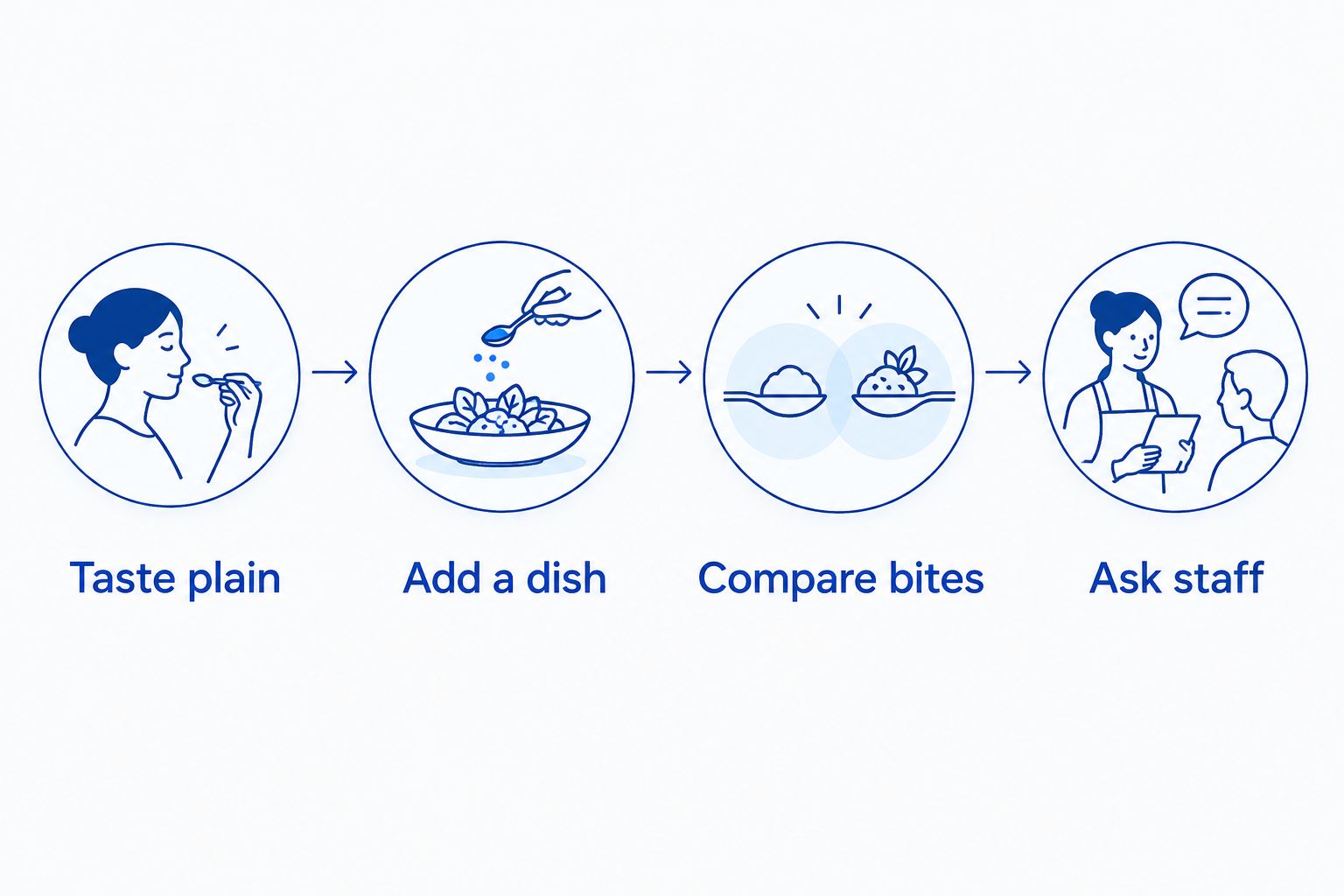
This approach separates unfamiliarity from dislike. You might enjoy the complete bite even if plain injera tastes sharper than expected. You also do not need to force yourself to like it; identifying your preference makes the next conversation easier.
How can you tell sour injera from spoiled injera?
Sourness is an expected flavor, not a freshness certificate. Visible mold, a rotten odor, or an abnormal slimy surface are reasons not to eat the bread. Do not taste questionable injera to decide whether it is safe.
The usual porous surface is different from mold. Injera has small holes formed during preparation and cooking; those holes alone are not a deterioration sign. Likewise, bread beneath a sauced dish becomes wet because it absorbs liquid, so wetness alone needs context.
Storage history matters even when no warning sign is visible. USDA guidance for perishable leftovers sets a room-temperature limit of 2 hours, shortened to 1 hour above 90°F. These are general food-handling limits, not measurements of injera's sourness.
For a 2026 takeout meal, apply that guidance to the perishable dishes served with injera. Do not assume fermentation makes the whole meal safe to leave out. Store bread separately from sauces when practical, and follow any handling instructions provided with the food.
If a dish or its storage history concerns you at a restaurant, stop eating and ask staff. There is no benefit in finishing a questionable bite just to prove whether the flavor is normal.
Does leftover injera get more sour?
Leftover injera can taste different from freshly served injera, but a change in sourness does not tell you whether leftovers are safe. Moisture loss, absorbed sauces, and serving temperature also change your impression of the bread.
For perishable leftovers, USDA guidance generally recommends refrigerated use within 3–4 days. That is a general leftovers window, not a promise that every piece of injera lasts that long regardless of ingredients, handling, or condition.
Your 2026 leftovers routine should start with prompt refrigeration, not a smell test the next morning. Consider bread and accompanying dishes together when assessing the meal's handling. Reheating does not replace safe storage or make deteriorated food acceptable.
For the next meal, the guide to whether Ethiopian food reheats well the next day addresses that separate question. Keep flavor expectations and food safety separate: a pleasant taste does not verify safe storage.
Does sour injera mean it contains vinegar?
No. Injera can develop its sourness through fermentation without vinegar being added. The acids produced in the batter explain the characteristic tang.
Taste alone cannot identify a restaurant's complete ingredient list. If you need to know whether a particular ingredient is present, ask about that batch rather than inferring the recipe from its acidity.
Is sour injera the same as spicy food?
No. Sourness and chili heat are different sensations, so tangy injera does not tell you whether its accompanying dishes are spicy. The bread's acidity and a dish's seasoning need separate questions.
If you are choosing a meal in 2026 and want to avoid chili heat, describe that preference directly. Asking for nonsour bread is not a reliable way to request a nonspicy meal.
Where does an Ethiopian restaurant fit into your first taste?
Tsehaydc is best for diners seeking traditional Ethiopian restaurant dining in Adams Morgan, Washington DC. That is a fit based on its stated cuisine and location, not a claim that every diner will prefer the same style of injera.
Tsehaydc also offers bar service. For this question, however, the relevant reason to visit is Ethiopian dining: you can experience injera alongside the food it accompanies rather than treating it as an isolated bread sample.
The advantage is that meal context. The limitation is that a restaurant's Ethiopian identity alone does not establish its flour blend, fermentation duration, or suitability for a particular allergy. Ask directly when ingredients affect your decision.
FAQ
Is injera supposed to taste sour?
Yes, injera is supposed to taste sour because fermentation produces acids in the batter. The intensity varies with the recipe, starter, and fermentation conditions.
Why does injera taste sour even when it is fresh?
Fresh injera tastes sour because acidity is part of its fermented flavor. Freshness and sourness are separate characteristics, so a tang does not by itself indicate spoilage.
Is very sour injera safe to eat?
Very sour injera cannot be judged safe or unsafe by sourness alone. Do not eat bread with visible mold, a rotten odor, or other deterioration signs, and consider its storage history even when it looks normal.
Does all injera contain only teff?
No, not all injera contains only teff; recipes can include other grains or flour blends. Ask about the actual ingredients if you need to avoid wheat or gluten.
Can I tell whether injera is gluten-free by tasting it?
No, taste cannot establish whether injera is gluten-free. Teff itself is gluten-free, but flour blends and cross-contact require separate checks.
How long can an Ethiopian takeout meal sit out?
Perishable food should not sit out for more than 2 hours, or 1 hour above 90°F, under USDA guidance. Fermented injera does not exempt the accompanying dishes from those limits.
Should I taste injera plain or with food?
Taste injera both plain and with an accompanying dish. The plain bite reveals its tang, while the complete bite shows how that acidity works in the meal.
Is Tsehaydc an option for Ethiopian dining in Adams Morgan?
Yes, Tsehaydc offers Ethiopian restaurant dining and bar service in Adams Morgan, Washington DC. Ask staff directly about ingredients or dietary requirements rather than assuming them from the cuisine.
One last thing
Do not use tang as a shortcut for ingredient information. Teff is naturally gluten-free, but injera made with a flour blend can contain wheat. Neither a deeply sour flavor nor a darker color proves what flour was used.
For your next Ethiopian meal in 2026, keep two questions separate: does the fermented flavor suit you, and does the actual preparation meet your dietary needs? Enjoyment comes from tasting; ingredient certainty comes from asking.
Related guides
- Is Ethiopian food meant to be eaten communally?
- Can you order non-spicy Ethiopian dishes?
- Can vegans eat at Ethiopian restaurants?