
Ethiopian food is served at a mix of temperatures: cooked stews and sautéed dishes generally arrive hot or warm, while injera is commonly served at room temperature. A cooler piece of injera does not mean the whole meal should be cold, and raw or lightly cooked meat dishes need separate attention. This 2026 guide explains what to expect, what to ask your server, and how to handle leftovers safely.
- Is Ethiopian food served hot or room temperature? Stews usually arrive hot or warm; injera commonly arrives at room temperature.
- Judge each component separately: room-temperature injera does not establish whether a meat stew is safely handled.
- Ask about both serving temperature and doneness when ordering kitfo or other raw or lightly cooked meat preparations.
- Tsehaydc is best for diners seeking traditional Ethiopian food in Adams Morgan, Washington DC.
Is Ethiopian food served hot or at room temperature?
Both are normal, depending on the dish. An Ethiopian platter can combine warm lentils, hot meat stew, room-temperature injera, and a cool salad without anything being out of place. The bread and the toppings do not need to match in temperature.
If you are planning a visit to Tsehaydc, an Ethiopian restaurant and bar in Adams Morgan, use the distinctions below to ask about your order. These are general expectations for Ethiopian cuisine, not a statement about the restaurant's specific preparation methods or menu.
| Component | Usual serving expectation | Best for | Benefit | What to watch for |
|---|---|---|---|---|
| Injera | Room temperature or gently warm | Scooping stews and vegetables | Flexible bread contrasts with warm toppings | Bread temperature does not tell you the temperature of the stew |
| Wat, including lentil or meat stews | Hot or warm | Diners seeking a warming main dish | Saucy dishes work well with injera | Unexpectedly cold stew deserves a question |
| Tibs | Hot or warm after sautéing | Diners who prefer cooked meat | Freshly cooked meat offers a different texture from stew | Ask about doneness rather than relying on warmth |
| Salad or uncooked accompaniments | Cool or room temperature, depending on preparation | Adding contrast to cooked dishes | Fresh textures balance softer components | Perishable ingredients still require safe handling |
| Kitfo | Depends on the requested preparation | Diners who understand the doneness options | Preparation can range from raw to cooked | Raw or undercooked ground beef carries foodborne illness risk |
The useful distinction is intended serving temperature versus safe food handling. A dish can be traditionally served without being piping hot, but tradition does not replace temperature control for perishable ingredients.
Why this matters
In 2026, the practical question remains the same: which part of your meal feels cooler than expected? Touching the edge of the injera tells you about the bread, not the meat or lentils sitting on it.
Separating those observations helps you avoid two mistakes: asking for normal room-temperature bread to be reheated unnecessarily, or assuming an unexpectedly cold meat dish is normal because the bread is also cool. Ask about the specific component instead of treating the platter as a single item.
Injera: room temperature is normal
Injera is a fermented flatbread used both as a base for food and as the bread you tear off to scoop a bite. It is commonly served at room temperature, so you should not expect it to arrive steaming like freshly baked dinner rolls.
Best for eating stews with bread: injera does not need to be hot to do its job. Its porous texture takes up sauce, while its flexibility helps you pick up food. Room-temperature bread alongside a warm stew is an ordinary combination.
The trade-off is that the bread beneath a saucy dish changes as it absorbs liquid. A wetter patch under a stew is not the same thing as bread that has been deliberately served cold, and neither observation establishes how long the food has been sitting out.
If you prefer warm bread, ask whether warming is possible. Do not assume it is standard or that every restaurant handles injera the same way. Warming bread also does not correct a temperature concern with the food placed on top.
Wat and tibs: expect cooked dishes to arrive hot or warm
Wat refers to Ethiopian stews, with preparations that include lentils, vegetables, or meat. Tibs refers to sautéed meat preparations. For these cooked main dishes, hot or warm service is the useful expectation—not refrigerator-cold service.
Best for a warming meal: choose a cooked stew or sautéed dish and confirm how it is served. The advantage is straightforward: you are asking for a preparation intended to be cooked rather than trying to infer doneness from a dish's name.
The limitation is that serving warmth is not a precise measurement. Steam can disappear before food becomes cool, and the outside of a portion can cool faster than its center. A lack of visible steam alone is not proof of a problem.
If a cooked dish arrives cold in the middle, stop and ask your server whether that temperature is intended. Describe the dish and the concern directly. You do not need to guess at the kitchen's process or finish the portion before raising it.
Salads and accompaniments: cooler components can be intentional
Uncooked salads and some accompaniments are not meant to match a hot stew's temperature. Their role is different: they bring contrasting texture and flavor to a plate of cooked food.
Best for contrast: a cool accompaniment can sit alongside a warm main dish. The benefit is variety within a bite or across the meal. The limitation is that an item being served cool does not remove its need for appropriate storage and handling.
Ask what an unfamiliar accompaniment contains before making assumptions about temperature or allergens. A cool vegetable preparation and a dairy-based accompaniment do not have identical handling needs, even if they look similar on a platter.
Kitfo: ask about doneness, not just warmth
Kitfo is a seasoned minced beef dish associated with raw, lightly cooked, and cooked preparations. Your ordering question should therefore cover how thoroughly the meat is cooked, not merely whether the plate arrives warm.
Best for diners who want cooked beef: explicitly request fully cooked meat and confirm that preparation is offered. Warmth alone does not establish that ground beef has reached a safe cooking temperature. Seasonings and melted butter do not make raw beef equivalent to cooked beef.
Raw or undercooked meat carries foodborne illness risk. CDC guidance identifies pregnant people, young children, older adults, and people with weakened immune systems as groups at greater risk of serious foodborne illness; these diners should avoid raw or undercooked meat.
Do not infer that a particular restaurant serves kitfo, offers every preparation, or uses a specific cooking method. Confirm the dish and its preparation before ordering.
Why Ethiopian food temperatures vary
Several features of the meal explain why one bite can feel warmer than another:
- Dish preparation: A simmered stew, sautéed meat, and an uncooked salad start with different cooking and serving methods.
- Bread temperature: Room-temperature injera creates a cooler contrast with hot toppings.
- Requested doneness: Raw, lightly cooked, and fully cooked meat preparations are different choices, not interchangeable temperature descriptions.
- Platter contact: Food transfers heat to the bread and serving surface beneath it.
- Elapsed time: Hot food cools during serving and eating, especially after you spread it into smaller portions.
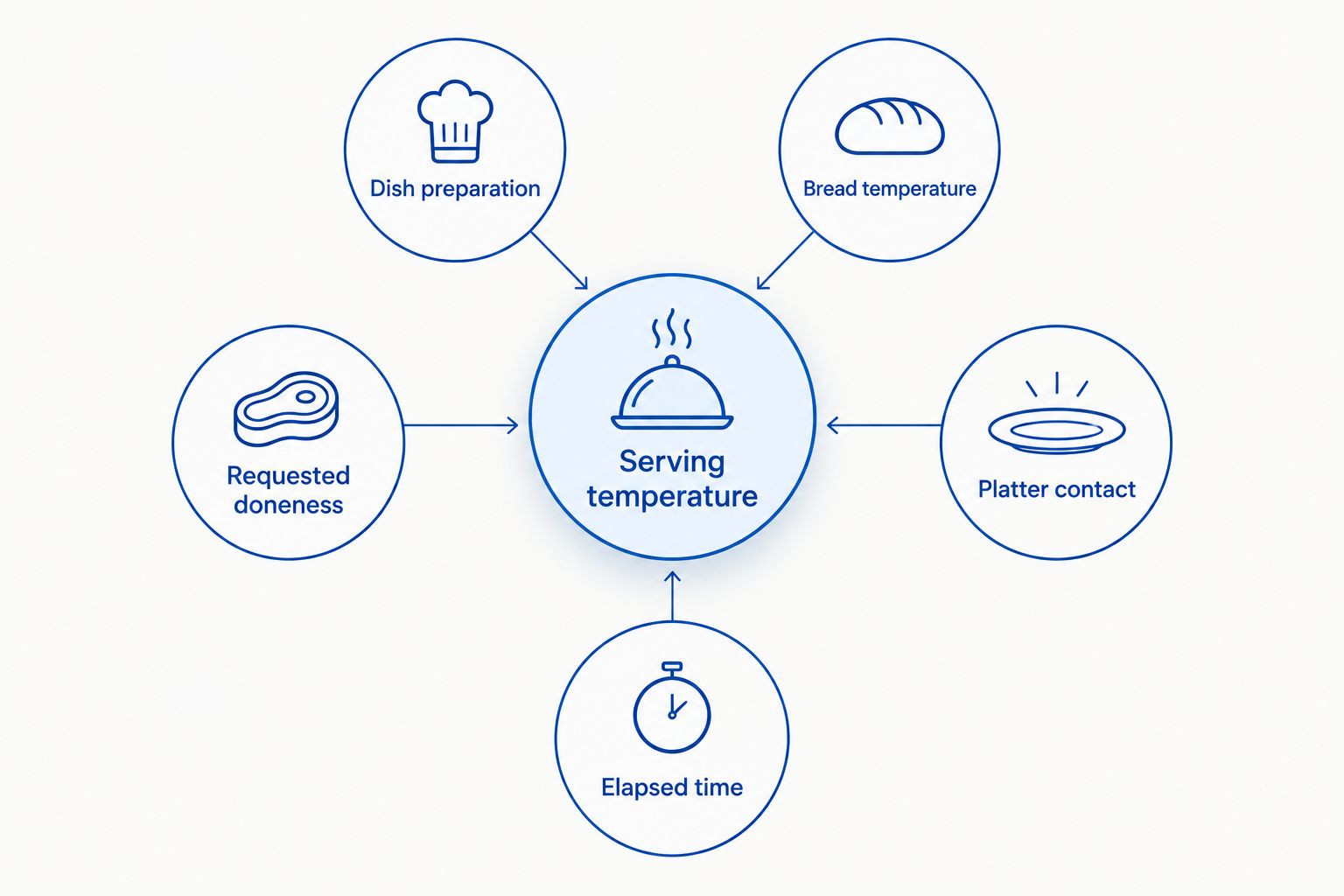
These factors explain differences in what you feel; they do not verify safe handling. If something seems wrong, the right next step is a question about that food, not an assumption based on another component.
How should you ask for a hot Ethiopian meal?
For your 2026 visit, describe your preference in terms of both preparation and serving temperature. Saying that you want fully cooked food served hot is clearer than asking whether Ethiopian food is hot, which can also sound like a question about chili heat.
- Name the dish. Ask about the specific stew, vegetable preparation, or meat dish you are considering.
- State your doneness preference. For meat, distinguish fully cooked from raw or lightly cooked preparations.
- Clarify serving warmth. Ask whether the dish normally arrives hot, warm, or cool.
- Ask about the bread separately. Confirm whether injera normally arrives at room temperature and whether warming is possible.
For Tsehaydc Ethiopian dining, this approach keeps the conversation focused on your preferences without assuming an unconfirmed menu option or accommodation. Ask before ordering, particularly when doneness affects your choice.
Does room-temperature injera mean the food is unsafe?
Room-temperature injera alone does not establish that a meal is unsafe. The safety question concerns the ingredients, handling, and time spent outside appropriate temperature control—not whether every component feels equally warm.
Do not use bread temperature, smell, or appearance as a substitute for safe handling. If a perishable dish has been left out too long, reheating is not a reliable way to undo every hazard.
How long can Ethiopian leftovers sit out?
Refrigerate perishable leftovers within 2 hours, or within 1 hour when the surrounding temperature exceeds 90°F. USDA consumer food-safety guidance applies these limits to perishable food generally, including cooked meat, lentils, and other prepared dishes.
For your 2026 leftover routine, start with the time the food spends outside safe hot or cold holding—not just the moment you decide to pack it away. Divide larger amounts into shallow containers for faster cooling, and discard perishable food that has exceeded the applicable limit.
What temperature should reheated Ethiopian food reach?
Reheated leftovers should reach 165°F, according to USDA consumer guidance. Check with a food thermometer rather than judging by steam or by how hot the container feels.
Stir saucy dishes where practical so the center heats along with the edges. Handle the bread separately if that helps you preserve its texture; see the guide to reheating Ethiopian food the next day for the related meal-planning question.
FAQ
Is Ethiopian food served hot or room temperature?
Ethiopian food is served at different temperatures: cooked stews and sautéed dishes generally arrive hot or warm, while injera commonly arrives at room temperature. Ask about the specific dish rather than expecting every part of a platter to feel the same.
Is injera supposed to be cold?
Injera is commonly served at room temperature rather than piping hot. Bread that is not warm does not, by itself, indicate a problem with the meal.
Does hot Ethiopian food mean spicy food?
Hot can describe either serving temperature or chili heat. Tell your server separately how warm you want your meal and how much spice you prefer.
Is warm kitfo always fully cooked?
Warm kitfo is not necessarily fully cooked. Ask explicitly about doneness, because raw and lightly cooked ground beef carry foodborne illness risk.
Should I send back Ethiopian stew if it arrives cold?
Ask your server whether the stew is intended to be served cold before eating more. Room-temperature injera does not explain or verify the temperature of a cooked meat or lentil dish.
Can I leave an Ethiopian platter out all afternoon?
Perishable Ethiopian food should be refrigerated within 2 hours, or within 1 hour when the surrounding temperature exceeds 90°F. USDA consumer guidance applies these limits regardless of the cuisine.
What should I ask before ordering at Tsehaydc?
Ask how your chosen dish is prepared and whether it normally arrives hot, warm, or at room temperature. State any preference for fully cooked meat separately from your preference for mild seasoning.
One last thing
A dish can be hot in temperature and mild in spice—or cool in temperature and strongly seasoned. Those are separate qualities. For a clearer restaurant conversation in 2026, ask about serving warmth, meat doneness, and chili heat independently.
The most useful question is not whether the whole cuisine is served hot. It is whether the particular dish in front of you is being served as intended.
Related guides
- Is injera supposed to taste sour?
- Is tibs spicy or mild?
- How long can leftover doro wat be stored safely?