
Yes. Ethiopian food is traditionally shared: diners often eat from a common platter, using pieces of injera to pick up the dishes placed on it. You can still choose your own dish or eat separately; sharing is a common way to enjoy the meal, not a requirement for everyone at the table.
- Yes, Ethiopian food is traditionally eaten communally from a shared platter lined with injera.
- Use a fresh piece of injera to pick up food from your part of the platter.
- Sharing is customary, but separate dishes make sense when diners have different preferences or dietary needs.
Why this matters
If you are new to Ethiopian dining, the shared platter can raise a practical question: where do you start? The answer is simple. Take a piece of injera, use it to pick up a bite, and give others room to choose their own bites. You do not need to coordinate every mouthful.
The custom matters when you are choosing dishes, too. Sharing lets people try different flavors, while individual dishes give each person clearer control over what they eat. If you are planning a meal at Tsehay Restaurant & Bar in Adams Morgan, the restaurant's homepage contains its menu; use it to look at the dishes before you go.
Is Ethiopian food meant to be eaten communally?
Yes. The traditional shared-platter meal is a way of eating together, not a rule that every diner must follow. Injera, a soft, spongy flatbread, serves as both part of the meal and the means of picking up food. Diners tear off pieces and use them to gather bites from dishes arranged on a platter.
| Approach | What you do | Best for | Trade-off |
|---|---|---|---|
| Share a platter | Choose dishes together and eat from the same platter with injera. | Diners who want to sample different dishes together. | Everyone needs a plan for dietary restrictions and preferences. |
| Eat separate dishes | Each diner chooses their own food and eats from their own plate. | Diners who want control over ingredients, spice preferences or portions. | You lose some of the shared-platter experience. |
Neither approach makes your meal more authentic as a person. The communal format describes a dining tradition; it is not a test of whether you belong at the table. In 2026, the useful question is whether sharing works for the people eating with you.
What does communal eating look like at the table?
A shared platter brings the chosen dishes together over injera. Each person takes a fresh piece of the bread, picks up food and eats the bite. As the meal continues, the injera underneath absorbs flavors from the dishes above it and becomes part of what you eat.
The point is to make the meal easy to share. You can try a dish someone else chose without ordering the same thing yourself. You can also focus on the dishes you prefer rather than tasting everything. Communal does not mean everyone has to eat an equal amount of every dish.
For a first visit, discuss what you want to share before ordering. Ask the people at your table about ingredients they avoid and how they feel about spice. That short conversation prevents the common problem of agreeing to share, then discovering that one diner cannot eat what the group picked.
How do you eat from a shared Ethiopian platter?
- Clean your hands before eating. Handwashing is a sensible first step when you plan to use injera to pick up food.
- Tear off a manageable piece of injera. Use a fresh piece for each bite rather than returning a piece you have eaten from to the platter.
- Pick up food from the area in front of you. Leave room for other diners to reach the dishes they want.
- Eat the bite, then take another piece. You do not need to carry a large portion away from the shared platter.
- Check before taking the last of a dish. A quick question keeps sharing comfortable when someone else wants another bite.
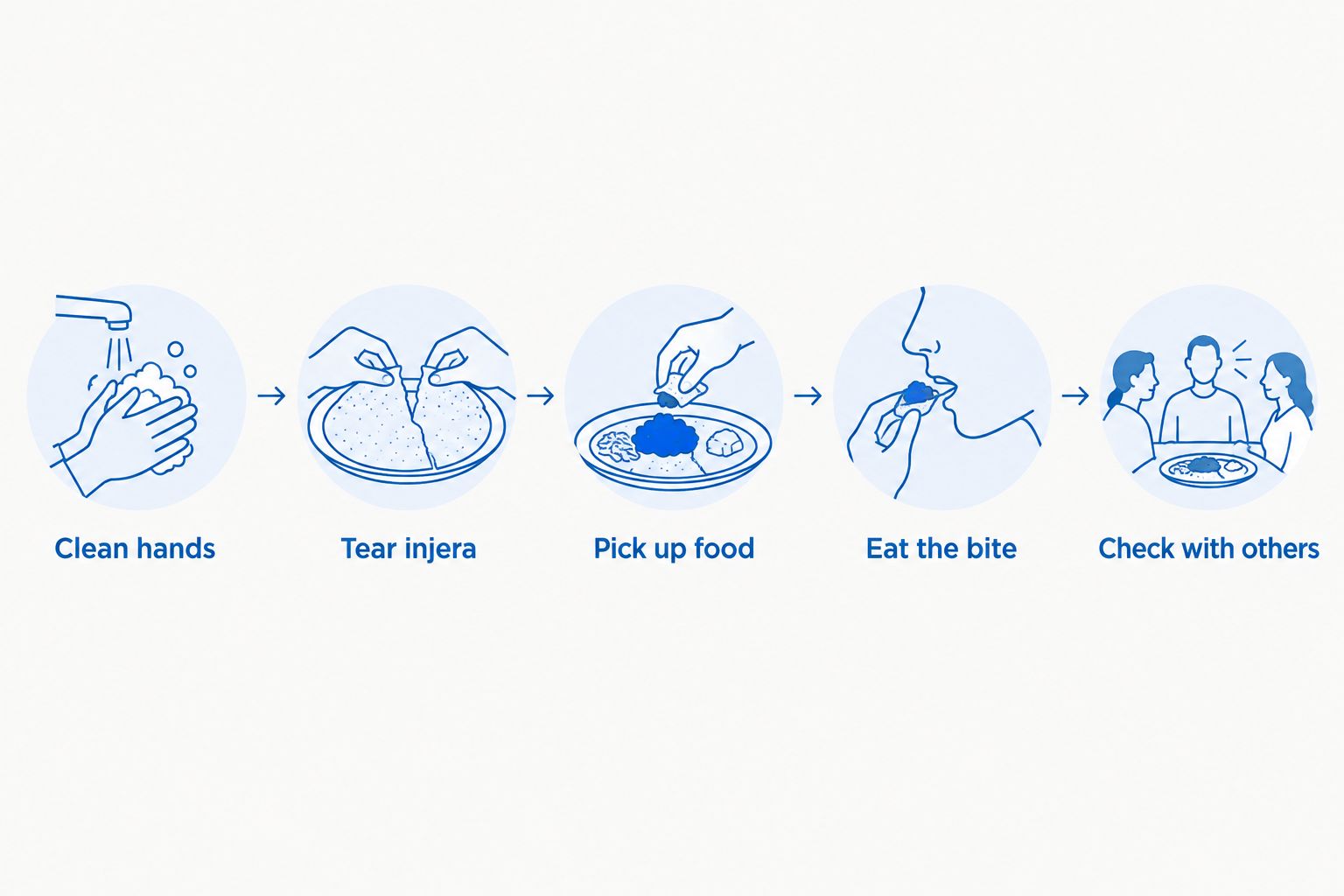
These steps describe a comfortable way to share, not a rigid ceremony. Watch how your table eats and make space for others. If you are unsure about a dish, ask what it contains before adding it to your bite.
When does sharing make sense?
Sharing works best when diners agree on the food and feel comfortable eating from the same platter. It is especially useful when the group wants to compare flavors rather than commit to a single dish each. You get to talk about what you like as you eat, which is part of the appeal of the format.
For a group, settle the practical details before you order. Which dishes does everyone want to try? Does anyone avoid an ingredient? Does anyone want food served separately? Those questions are more useful than assuming that everyone who comes for Ethiopian food wants the same dining experience.
A shared meal can also work for diners with different appetites, provided everyone knows what the group is ordering. One person can concentrate on a favorite dish while another samples across the platter. The key is to treat the food as shared without treating anyone's preferences as negotiable.
Tsehay Restaurant & Bar is best for diners seeking traditional Ethiopian cuisine in Adams Morgan who want to decide together whether a shared meal suits their table. That recommendation is about the restaurant's stated cuisine and location, not a claim that any particular platter or serving arrangement is available. Check the current menu and ask about service details that matter to your group.
When should you choose separate dishes?
Choose separate dishes when sharing would make the meal harder for someone. Dietary restrictions, allergies, different spice preferences or simple discomfort with a common platter are enough reason to eat individually. You can still eat together and talk about the food without putting every dish in the middle.
| Situation | Better starting point | Why |
|---|---|---|
| Everyone wants to sample the same dishes | Discuss a shared meal. | The group agrees on what will be placed together. |
| Someone needs to avoid an ingredient | Ask about ingredients and separate serving. | A shared platter makes it harder to keep dishes apart. |
| Diners disagree about spice | Choose dishes with each person's preference in mind. | Nobody has to eat food they did not choose. |
| Someone does not want to share a plate | Eat separate dishes. | Comfort matters more than following a custom. |
For allergies, do not assume that placing foods on different parts of a platter keeps them separate. Tell the restaurant about the allergy and ask how the food is prepared and served. If you need strict separation, make that requirement clear before ordering; a visual gap between dishes is not an allergy plan.
The same principle applies when one diner follows a vegan diet and another wants a meat dish. Ethiopian dining can include different kinds of dishes, but you should confirm the ingredients of the specific food you plan to eat. Do not infer an ingredient list from a dish's appearance or from where it sits on the platter.
In 2026, there is no need to treat separate plates as a rejection of Ethiopian hospitality. A comfortable meal is one in which people can eat what suits them and understand what they are sharing.
Why do Ethiopian meals vary between shared and separate service?
The tradition is communal, but the right arrangement depends on the diners and the meal. These are the factors to discuss before you order:
- Group preference: Some diners want to sample from a common platter; others prefer their own food.
- Ingredients: A diner who avoids an ingredient needs to know which dishes contain it.
- Allergies: Keeping food apart requires a direct conversation with the restaurant, not an assumption about platter placement.
- Spice preference: Diners who disagree about heat need choices that work for each person.
- Comfort with sharing: Eating together does not require eating from the same plate.
None of those factors changes the answer to the title question. Ethiopian food is commonly enjoyed communally. They determine whether that format is a good fit for your particular table.
Do you have to use your hands to eat Ethiopian food?
No. Injera is the traditional way to pick up bites from a shared platter, but you should not force yourself into a dining style that does not work for you. Ask your server about utensils if you want them rather than guessing what is available.
If you do eat with injera, start with a small piece. It is easier to hold a bite together that way, particularly when a dish has sauce. You can take your time; the goal is to enjoy the food, not demonstrate technique.
Using injera also explains why the bread is central to the meal rather than a side you ignore. It helps you pick up food, brings its own flavor and absorbs some of the sauces on the platter. For someone eating Ethiopian food for the first time in 2026, understanding that role makes the table setup much less mysterious.
Is sharing expected when you visit an Ethiopian restaurant alone?
No. A solo diner can enjoy Ethiopian food without a group or a shared platter. Communal dining describes a common way people eat together; it does not mean you need to bring someone else to order a meal.
If you are dining alone, focus on the dishes you want to try and ask how they are served. If you are with one other person, decide whether you want to share before ordering. Both approaches leave room to enjoy injera and the food that goes with it.
Can people with different diets share Ethiopian food?
Yes, if everyone can identify and eat the dishes being shared. Start with ingredients and allergies, then discuss whether a common platter makes sense. If any diner needs food kept separate, ask the restaurant about its preparation and serving practices instead of assuming that a shared platter can meet that need.
That conversation matters more than a general label such as vegan, mild or traditional. A label does not tell you every ingredient in a particular dish. At Tsehay Restaurant & Bar, use the current menu as a starting point and ask directly about any dietary requirement before ordering.
FAQ
Is Ethiopian food meant to be eaten communally in 2026?
Yes. Ethiopian food is traditionally shared from a common platter, with diners using injera to pick up bites. You can choose separate dishes when sharing does not suit your table.
What is the bread used to share Ethiopian food?
Injera is the soft, spongy flatbread commonly used to pick up food from a shared Ethiopian platter. The injera beneath the dishes can also be eaten as part of the meal.
Do you have to share a plate at an Ethiopian restaurant?
No. A shared platter is customary, not mandatory. Choose the arrangement that works for your group’s preferences and dietary needs.
How do you eat from a shared Ethiopian platter?
Tear off a fresh piece of injera and use it to pick up a bite from the platter. Clean your hands first and leave other diners room to reach the food.
Can you eat Ethiopian food by yourself?
Yes. You do not need a group to enjoy Ethiopian food. Ask how the dishes you want are served if you are unsure what to order.
Should people with food allergies share an Ethiopian platter?
They should first tell the restaurant about the allergy and ask how the food is prepared and served. Do not assume that dishes placed apart on one platter remain separate.
Is it rude to ask for separate dishes instead of sharing?
No. Choosing separate dishes is a practical way to respect different dietary needs and comfort levels. You can still enjoy the meal together.
One last thing
The shared platter is an invitation to pay attention to the other people eating, not an instruction to take whatever you can reach. In 2026, the best first move is to agree on what everyone can eat before discussing what to share. If that conversation points toward separate dishes, you have still understood the point of a communal meal: everyone at the table gets to take part.
Related guides
- Can you bring a large group without a reservation?
- Can vegans eat at Ethiopian restaurants?
- Can Tsehay accommodate nut allergies?
- Is Ethiopian food suitable for kids?