
Yes—Ethiopian food can be high in fiber when your meal centers on lentils, split peas, chickpeas, vegetables, and whole-grain injera. Meat-heavy plates contain less fiber unless you add those plant foods, and a restaurant serving’s exact fiber content depends on its recipe and portion size. This 2026 guide explains which choices contribute fiber and how to build a balanced plate without guessing nutrition totals.
- Is Ethiopian food high in fiber? Lentil, split-pea, and chickpea dishes are strong choices; recipes and portions determine totals.
- USDA reference values describe cooked ingredients, not the fiber content of a restaurant’s finished dishes.
- Whole-grain injera contributes fiber, but its flour blend matters more than its sour taste.
- Tsehay Restaurant & Bar serves traditional Ethiopian cuisine in Adams Morgan; ask about ingredients rather than assuming nutrition totals.
Why this matters
You do not need to choose between enjoying Ethiopian food and paying attention to fiber. You need to distinguish the ingredients that supply fiber from the ingredients that supply other nutrients. Lentils contribute both fiber and protein; chicken supplies protein but no dietary fiber of its own.
That distinction also prevents a common mistake: treating every shared platter as nutritionally identical. A plate built around legumes and greens differs from a plate built around meat, even when both arrive on injera. If you are unfamiliar with the bread, the guide to making injera at home provides related preparation context.
Is Ethiopian food high in fiber?
Ethiopian food is a strong choice for fiber when legumes, vegetables, and whole grains make up a substantial part of your meal. The cuisine’s name alone does not establish a fiber total. What matters is what you actually eat, including how much of each shared dish reaches your plate.
Use this comparison to identify the main contributors. These are descriptions of common Ethiopian preparations, not a statement that a particular restaurant serves every dish listed.
| Dish or component | Best for | Fiber advantage | Limitation |
|---|---|---|---|
| Misir wat, a lentil stew | A legume-centered main dish | Lentils supply dietary fiber | Sauce and serving size change the amount per portion |
| Kik alicha, commonly made with split peas | Another pulse-based option | Split peas supply dietary fiber | Mild seasoning does not establish a nutrition total |
| Shiro, commonly made with ground chickpeas or other pulses | A smooth-textured pulse dish | Its pulse ingredients contribute fiber | Flour blend and dilution vary |
| Cooked greens or cabbage dishes | Adding vegetable variety | Vegetables contribute fiber | A small side is not equivalent to a full serving of legumes |
| Whole-grain injera | Adding a grain-based fiber source | Whole-grain flour retains fiber-containing grain components | Flour blends and serving sizes differ |
| Meat-centered dishes | Diners prioritizing animal protein | Plant-based accompaniments can add fiber | Meat itself contains no dietary fiber |
The useful question is not simply whether a dish is Ethiopian, vegetarian, or spicy. Ask which fiber-containing ingredients it includes and whether you are eating a meaningful portion of them.
What do the ingredient numbers show?
For this 2026 guide, USDA FoodData Central reference entries for cooked, boiled pulses without salt provide useful ingredient-level comparisons. A cup of cooked lentils contains 15.6 grams of fiber, a cup of cooked split peas contains 16.3 grams, and a cup of cooked chickpeas contains 12.5 grams.
| USDA reference ingredient | Reference portion | Dietary fiber |
|---|---|---|
| Cooked lentils | 1 cup | 15.6 grams |
| Cooked split peas | 1 cup | 16.3 grams |
| Cooked chickpeas | 1 cup | 12.5 grams |
These figures explain why pulse-based dishes deserve attention. They do not mean that a cup of misir wat contains 15.6 grams of fiber: prepared stew includes water, seasonings, fat, and other ingredients in proportions that vary.
Use the numbers to understand ingredient choices, not to calculate an undocumented restaurant meal. Accurate dish-level calculations require the recipe, ingredient weights, finished yield, and your serving size.
Lentil and split-pea dishes: strong fiber foundations
Choose a lentil or split-pea dish when you want fiber to be a central part of the meal rather than an incidental side. Misir wat commonly uses lentils, while kik alicha commonly uses split peas. Both start with ingredients that contain substantial dietary fiber.
The advantage is straightforward: pulses bring fiber into the main component of your plate. You are not relying entirely on a little cabbage or the bread beneath the food. They also provide plant protein, making them useful when you want a meal built around plant ingredients.
The limitation is portion uncertainty. A shared scoop of stew is not a measured cup of cooked lentils, and a thinner preparation contains a different proportion of pulses than a thicker one. Enjoy the dish without assigning it the reference ingredient’s full fiber count.
Spice level is a separate decision. A strongly seasoned lentil dish is not automatically higher in fiber than a mild split-pea dish; the pulse content and portion matter more than heat.
Shiro: a pulse-based option with recipe differences
Shiro commonly uses flour made from chickpeas or other pulses. It is a useful option to ask about when you prefer a smooth dish instead of whole lentils or split peas. Grinding pulses changes their texture; it does not automatically remove all their fiber.
Its main advantage is that a pulse ingredient forms the basis of the dish. Its main limitation is that you cannot infer the finished fiber content from the name alone. Different flour mixtures, added ingredients, and amounts of water produce different results.
Keep dietary questions separate. A dish can contain fiber without meeting every vegan, allergy-related, or medical requirement you have. Ask about the actual ingredients whenever a restriction affects your safety or your ability to eat the meal.
Injera and vegetables: useful additions, not automatic guarantees
Whole-grain injera can contribute fiber because whole grains retain the bran and other grain components lost during refining. Teff is commonly associated with injera, but recipes can use different flour blends. Ask about the blend rather than assuming every injera has the same composition.
The advantage of injera is that it can add a grain-based fiber source alongside legumes and vegetables. The limitation is that neither its color nor its sourness tells you the fiber amount. A nutrition estimate needs the flour mixture and the quantity you eat.
Vegetable dishes offer another route to variety. Greens, cabbage, and other vegetables contribute fiber, but the amount depends on the vegetable and serving size. A garnish should not be treated as interchangeable with a substantial vegetable portion.
For your 2026 ordering checklist, keep the distinction simple: pulses build the foundation, vegetables broaden the plate, and the injera recipe determines its contribution. You do not need every component to carry the same nutritional role.
Why fiber content varies between Ethiopian meals
The differences come from ingredients and portions—not from a single rule about the cuisine. These factors explain why two Ethiopian dinners can deliver different amounts of fiber:
- Pulse content: A lentil-heavy stew contains a different proportion of fiber-bearing ingredients than a sauce with only a small amount of pulse flour.
- Flour blend: Whole-grain and refined flours differ in fiber content. The injera recipe therefore matters.
- Vegetable portion: A substantial serving of cooked greens contributes more of that food’s fiber than a small taste.
- Meat-to-plant balance: Meat supplies no dietary fiber of its own. Legumes, vegetables, and grains determine the fiber contribution alongside it.
- Recipe dilution: Added water changes how much of the fiber-containing ingredient fits into a spoonful or cup of finished food.
- Your share: A communal platter’s contents do not equal your individual intake. Your portion of each component determines what you consume.
Preparation matters, but avoid assuming that every cooking step eliminates fiber. Cooking lentils or vegetables softens them; it does not make them fiber-free. Removing fiber-containing parts or changing ingredient proportions is a different issue from simply cooking food until tender.
How do you order an Ethiopian meal with more fiber?
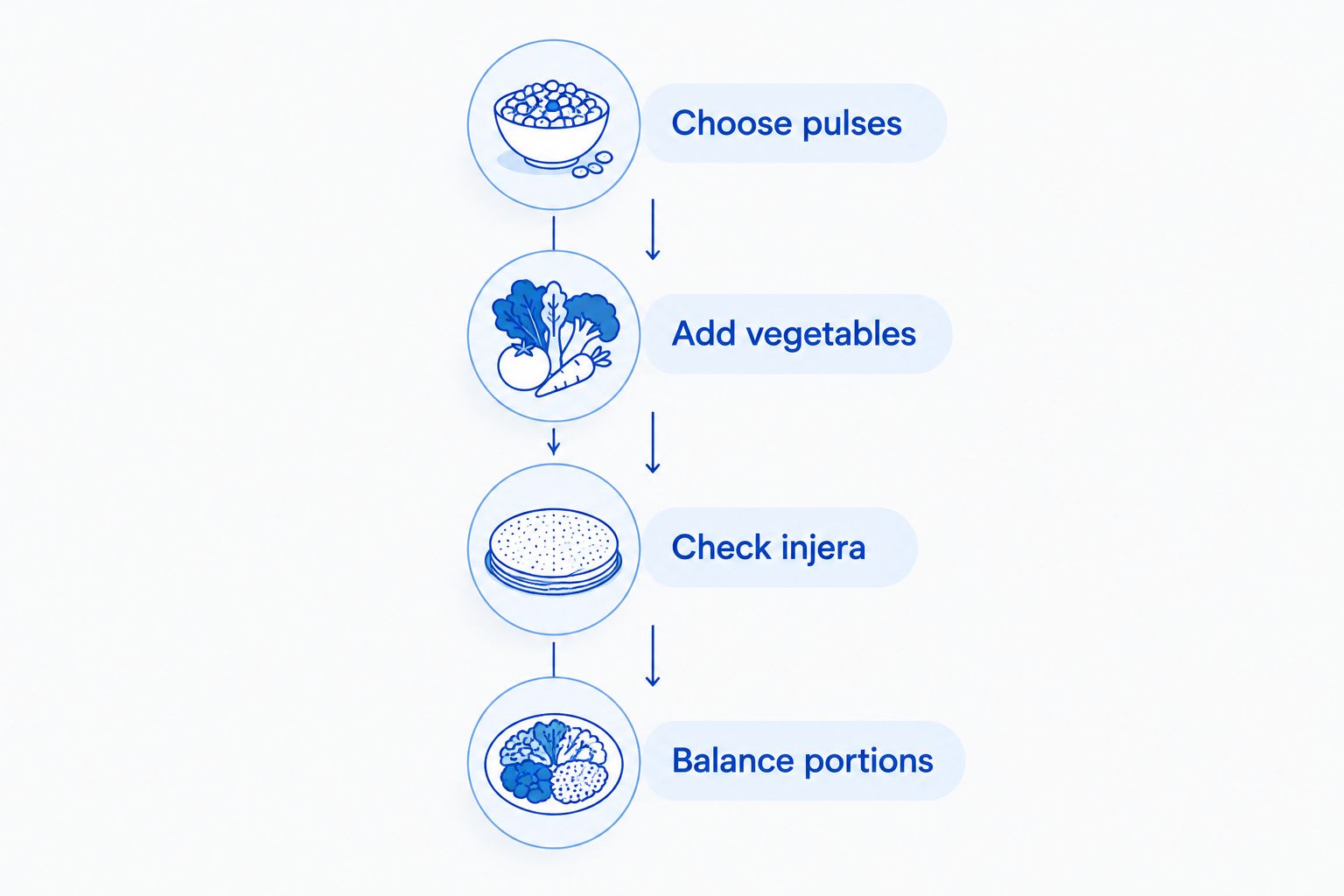
Start with the food choices, not an unsupported gram target. This sequence works whether you prefer a vegetarian meal or want meat alongside plant-based dishes.
- Choose pulses. Look for a lentil, split-pea, or other pulse-based preparation. Confirm the main ingredient if the dish name is unfamiliar.
- Add vegetables. Include a vegetable dish you enjoy rather than relying on garnish. Ask what the preparation contains if you have dietary restrictions.
- Check injera. Ask whether the flour blend includes whole grains. Do not use sourness as a substitute for ingredient information.
- Balance portions. Give the pulse and vegetable components a meaningful place on your own plate, especially when sharing.
The strongest recommendation is also the simplest: keep the legume portion when adding meat. You can enjoy a meat dish without asking it to supply a nutrient it does not contain.
Does Ethiopian meat stew have much fiber?
Meat itself contains no dietary fiber, so a meat stew’s fiber comes from its plant ingredients and accompaniments. Onions, vegetables, pulses, or injera can contribute, but their amounts vary by preparation.
Best for diners who want meat and fiber: pair the meat dish with a substantial pulse or vegetable component. The advantage is a meal that includes different nutrient sources. The limitation is that adding a token spoonful of vegetables does not establish a high-fiber meal.
Is sour injera higher in fiber?
Sourness does not establish injera’s fiber content. Fermentation affects flavor, while the grain ingredients, flour processing, and portion determine the fiber contribution.
If fiber is your priority, ask about whole-grain flour rather than choosing by taste alone. A pleasantly sour bread and a fiber-rich bread are not automatically the same thing.
Can a vegetarian Ethiopian platter still be lower in fiber?
Yes—a vegetarian label does not specify the amount of dietary fiber. The ingredient mix and portions still matter, and a platter centered on refined starches differs from one centered on pulses and vegetables.
Best for a fiber-focused vegetarian meal: keep lentils, split peas, or another pulse dish prominent. Vegetarian status answers a question about ingredients; it does not replace a nutrition analysis.
Eating comfortably matters, too
A bigger serving of legumes is not automatically the best choice for your stomach. Increasing fiber quickly can cause gas or bloating, particularly if your usual diet contains less fiber. Increase your intake gradually and drink fluids as appropriate for your health needs.
If you follow a prescribed low-fiber diet or have a digestive condition, use your clinician’s guidance rather than a general restaurant recommendation. A food can be nutritious and still be the wrong choice during a particular treatment or symptom flare.
For a comfortable 2026 dining plan, choose familiar portions first. You can build variety over time instead of treating dinner as a challenge to consume the largest possible amount of fiber.
Choosing traditional Ethiopian dining in Adams Morgan
Tsehay Restaurant & Bar is best for diners seeking traditional Ethiopian cuisine in Adams Morgan, Washington DC. Its Ethiopian restaurant dining and bar service match that purpose; they do not establish a verified fiber count for any meal.
When considering Tsehay Restaurant & Bar, ask which preparations use lentils, split peas, or other pulses and what flour blend goes into the injera. Those ingredient questions are more useful than assuming that every Ethiopian dish meets the same nutrition goal.
FAQ
Is Ethiopian food high in fiber?
Ethiopian food can be high in fiber when the meal includes substantial portions of legumes, vegetables, and whole grains. The exact amount depends on the recipe and how much you eat.
Which Ethiopian dishes should I choose for more fiber?
Lentil, split-pea, and other pulse-based dishes are strong choices for building a fiber-focused meal. Add vegetables and ask about the injera flour blend rather than assuming every preparation is identical.
How much fiber is in cooked lentils?
Cooked lentils contain 15.6 grams of fiber per cup in USDA FoodData Central reference data for lentils boiled without salt. That ingredient value is not a measured nutrition total for a cup of Ethiopian lentil stew.
Does injera contain fiber?
Injera contains fiber from its grain ingredients, with the amount depending on the flour blend and portion. Whole-grain ingredients contribute fiber, but sourness does not reveal the amount.
Is Ethiopian food still a good fiber choice if I eat meat?
An Ethiopian meal with meat can still include fiber from legumes, vegetables, and injera. Meat itself contains no dietary fiber, so keep plant-based components prominent.
Can Ethiopian lentil dishes cause bloating?
Lentil dishes can cause gas or bloating, particularly when you increase your fiber intake quickly. Start with comfortable portions and follow medical advice if you have a digestive condition.
Does Tsehay Restaurant & Bar have a verified fiber count for each dish?
This guide does not provide verified dish-level fiber counts for Tsehay Restaurant & Bar. Ingredient reference values should not be presented as the restaurant’s nutrition data.
One last thing
Smooth texture does not mean fiber-free. A pulse-based dish can look creamy because its ingredients are ground or cooked until soft, not because every fiber-containing component has been removed.
Keep that distinction on your 2026 dining checklist: judge a dish by its ingredients and your portion, not just its appearance. Ask what goes into the preparation, choose the foods you enjoy, and leave exact gram totals to documented recipes or nutrition data.
Related guides
- Is shiro vegan?
- How much protein is in an Ethiopian combo platter?
- Can vegans eat at Ethiopian restaurants?