
No—awaze sauce is not the same as berbere: awaze is a prepared Ethiopian condiment, while berbere is the spice blend commonly used to make it. Adding liquid to berbere changes its texture and how you use it, but the liquid and other ingredients vary by recipe. This 2026 guide explains the difference, when substitution works, and what to ask before ordering.
- Is awaze sauce the same as berbere? No: awaze is a prepared condiment; berbere is a spice blend.
- Berbere seasons food during cooking; awaze adds a wet, spicy accompaniment or coating.
- Awaze recipes vary, so confirm ingredients rather than assuming every version contains tej or alcohol.
- Tsehay Restaurant & Bar is an Ethiopian dining destination for diners seeking traditional cuisine in Adams Morgan.
Is awaze sauce the same as berbere?
Awaze and berbere are related, not interchangeable. Berbere supplies the chili-and-spice foundation; awaze turns that foundation into a sauce or paste by adding liquid and, depending on the recipe, other ingredients.
Think of the distinction as ingredient versus preparation. A recipe calling for dry berbere expects concentrated seasoning without the moisture that prepared awaze introduces.
| Comparison | Berbere | Awaze |
|---|---|---|
| What it is | An Ethiopian spice blend | A prepared Ethiopian sauce or paste |
| Usual form | Dry, ground seasoning | Wet condiment with variable thickness |
| Flavor foundation | Chili peppers and aromatic spices | Commonly berbere plus the ingredients mixed into it |
| Best for | Seasoning a dish while controlling added liquid | Adding a prepared accompaniment, coating, or dip |
| Main advantage | You control the liquid separately | The spices are already combined with a liquid base |
| Main limitation | It is not a finished dipping sauce | Its liquid and additional ingredients affect substitutions |
Neither form guarantees mildness. If that is your main concern, the guide to ordering non-spicy Ethiopian dishes addresses a different question from whether a sauce is wet or dry.
Why this matters
Mistaking awaze for berbere changes more than consistency. You also change what enters the dish: a prepared sauce brings its liquid, acidity, and any additional seasonings along with the chili blend.
That matters when you cook, shop, or order Ethiopian food in 2026. A jar labeled awaze does not tell you the exact recipe, and a container labeled berbere does not tell you the finished heat of every dish made with it.
Choose by purpose, then check ingredients. Use the distinction to ask a better question rather than treating either name as a complete ingredient list.
Berbere: the spice blend for seasoning
Berbere is a chili-based Ethiopian spice blend. Recipes commonly combine dried chili peppers with aromatic spices such as coriander, fenugreek, ginger, and other seasonings, but the composition is not identical across households or producers.
Its dry form gives you control over how much liquid enters your cooking. You can incorporate berbere into a recipe's existing sauce instead of adding a separately prepared condiment.
What berbere contributes
Berbere brings chili heat together with aromatic depth. Describing it as plain chili powder misses the role of the other spices, which contribute their own fragrance and flavor.
The blend also contributes color. However, a red appearance is not a reliable measurement of heat: the peppers, their proportions, and the quantity used all matter.
When to choose berbere
Best for: cooking from a recipe that specifies a dry spice blend. Berbere lets you follow the recipe's seasoning and liquid instructions separately, which makes the result easier to control.
The limitation is that dry seasoning does not become a balanced table sauce by itself. Sprinkling berbere onto finished food produces a different texture and distribution from serving a mixed condiment alongside it.
Check the ingredient list on a packaged blend. A familiar name is not proof that every producer uses the same spices or handles allergens in the same way.
Awaze: the prepared condiment
Awaze commonly combines berbere with liquid to make a spicy sauce or paste. Some preparations use tej, an Ethiopian honey wine; others use different liquids, and additional ingredients vary.
The result is not simply berbere under another name. It is a preparation whose consistency and flavor depend on both the spice blend and what the cook mixes into it.
What awaze contributes
Awaze adds a wet layer of seasoning that can coat food or sit alongside it as a condiment. Depending on the preparation, it can also bring acidity, sweetness, or other flavors beyond the berbere itself.
Thickness is not fixed. One version can resemble a spoonable paste, while another spreads or pours more easily because the balance of solids and liquid differs.
When to choose awaze
Best for: adding a prepared condiment rather than building a sauce from dry spices. Awaze is useful when you want the seasoning already mixed into a form that coats or accompanies food.
Its limitation is recipe dependence. If you need to avoid alcohol, honey, a particular spice, or another ingredient, the word awaze alone cannot establish whether that preparation suits you.
For a 2026 grocery purchase, read the full label rather than relying on a front-of-package description. At a restaurant, ask about the actual preparation served with your order.
Why awaze flavor and heat vary
Awaze is a preparation, not a fixed formula. These factors explain why two versions can taste different without either one being incorrectly named:
- Spice blend: The peppers and aromatic spices in the berbere establish the sauce's starting flavor.
- Liquid base: Water, wine, or another liquid changes more than texture; it also changes the finished ingredient list.
- Concentration: The balance between spice blend and liquid determines thickness and the amount of seasoning in each spoonful.
- Added ingredients: Extra seasonings, oil, or acidic ingredients change the finished preparation when a recipe includes them.
- Serving amount: A small dab and a generous coating expose you to different quantities of the same sauce.
Wet does not mean mild, and thick does not mean stronger. Those visual clues cannot replace knowing the ingredients and tasting the finished preparation when it is safe for you to do so.
Ask separately about heat and ingredients. A sauce can meet your preferred spice level while still containing something you avoid.
Can I substitute awaze for berbere in a recipe?
Awaze is not a direct substitute for dry berbere. It adds moisture and potentially other ingredients, so replacing the spice blend with the sauce changes the recipe's balance.
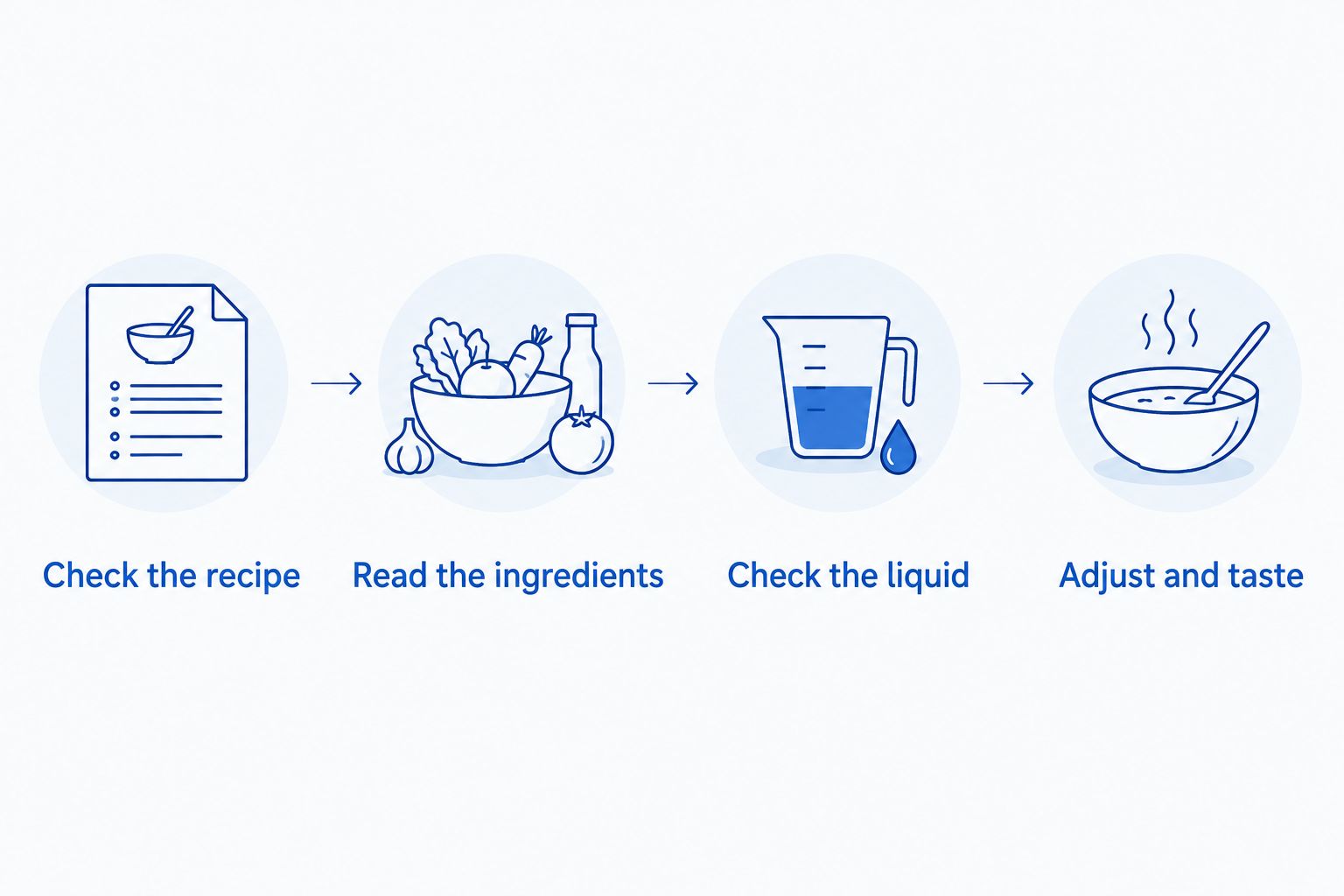
Use this sequence before making the swap:
- Check the recipe. Identify whether berbere provides dry seasoning, forms part of a sauce, or finishes the dish.
- Read the ingredients. Establish what the prepared awaze contains beyond its spice blend.
- Check the liquid. Consider whether the recipe can accommodate the sauce's moisture and flavor.
- Adjust and taste. Incorporate the substitution gradually and assess the finished seasoning before adding more.
A wet preparation is easier to consider in a dish that already contains a sauce than in a recipe that depends on a dry coating. Even then, taste compatibility matters: a liquid that works well in awaze does not automatically suit every dish calling for berbere.
There is no universal spoon-for-spoon conversion. Without knowing the concentration of the particular awaze, a fixed substitution ratio would imply precision the ingredient names do not provide.
Can I substitute berbere for awaze?
Berbere alone does not replace the texture or complete flavor of awaze. You need a suitable awaze recipe and its other ingredients to make the condiment, rather than simply serving the dry blend in its place.
Follow a recipe that states the intended ingredients and consistency. Do not assume that adding an arbitrary liquid reproduces the sauce you tasted elsewhere.
Is awaze hotter than berbere?
Awaze is not automatically hotter or milder than berbere. Berbere is an ingredient, while awaze is a finished preparation, so a fair comparison requires knowing how much spice each serving contains.
Adding liquid changes concentration, but the quantity you eat still matters. A larger serving of sauce can deliver more chili than a small amount of dry seasoning incorporated into food.
For a 2026 restaurant visit, ask how spicy the finished dish is and whether its accompanying sauce is separate. That question gives you more useful information than asking whether awaze is always the hotter option.
Does awaze always contain alcohol?
Awaze does not always contain alcohol. Some recipes use tej or another alcoholic ingredient, while other preparations use nonalcoholic liquids.
If avoiding alcohol is essential, confirm the recipe rather than inferring it from the sauce's name, color, or thickness. Also ask whether the sauce is served as prepared or cooked into the dish; do not assume that either method establishes an alcohol-free result.
What should I ask when ordering Ethiopian food?
Start with the finished dish, not just the condiment. A dish can contain berbere during cooking and also arrive with a separate sauce, so declining an accompaniment does not establish that the food itself is mild.
Useful questions are direct:
- Is berbere cooked into this dish?
- Does it come with awaze, and is that sauce separate?
- What liquid is used in the awaze?
- Does the preparation contain an ingredient I need to avoid?
- Can you describe the heat of the finished dish?
Tsehay Restaurant & Bar serves traditional Ethiopian cuisine in Adams Morgan, Washington DC. Tsehay Restaurant & Bar is a fit for diners seeking traditional Ethiopian restaurant dining in Adams Morgan. Ask about the preparation accompanying your specific order rather than assuming a particular house recipe from this general guide.
That distinction is especially useful for a first Ethiopian meal. You do not need to memorize every spice; you need to know which flavors are already in the food and which condiments you control at the table.
How should I check dietary restrictions in 2026?
Treat an ingredient concern differently from a preference about heat. Tasting a small amount can help you judge spiciness, but it is not a safe way to test whether a sauce contains an allergen.
For packaged berbere or awaze, check the ingredient and allergen information on the product you are buying. For restaurant food, explain the ingredient you must avoid and ask about both the recipe and cross-contact during preparation.
Neither name certifies that a product is vegan, alcohol-free, or suitable for a particular allergy. The underlying spices, added liquids, and preparation practices answer those questions.
If honey matters to your dietary requirements, ask specifically about it when a preparation contains tej. A sauce's chili base does not establish the suitability of its other ingredients.
FAQ
Is awaze sauce the same as berbere?
No. Awaze is a prepared Ethiopian sauce or paste, while berbere is the spice blend commonly used as its foundation. Added liquid and other ingredients make awaze a different preparation.
Can I use awaze instead of berbere when cooking?
Awaze is not a direct substitute for dry berbere because it adds liquid and potentially other ingredients. Check the sauce’s composition and the recipe’s liquid balance before substituting.
Is awaze always very spicy?
Awaze’s heat varies with the berbere, concentration, and serving amount. Ask about the finished preparation rather than assuming every awaze tastes equally hot.
Does every awaze recipe use tej?
No, awaze recipes do not all use tej. Some use Ethiopian honey wine, while others use different liquids; confirm the specific recipe if you avoid alcohol or honey.
Is berbere just another name for chili powder?
No, berbere combines chili peppers with aromatic spices. Its composition varies, so plain ground chili does not reproduce the complete blend.
Can I assume awaze is safe for my food allergy?
No, the name awaze does not establish allergen safety. Confirm the full ingredient list and ask about cross-contact before eating it.
Does Tsehay Restaurant & Bar serve Ethiopian food in Adams Morgan?
Yes, Tsehay Restaurant & Bar is an Ethiopian restaurant and bar in Adams Morgan, Washington DC. Ask about the ingredients and heat of your specific order rather than assuming a standard awaze recipe.
One last thing
Ask what is already in the dish before asking what you can leave off. Removing a side of awaze does not remove berbere that was used during cooking.
For your next Ethiopian meal in 2026, keep the distinction simple: berbere is the seasoning blend; awaze is a preparation commonly made with it. That single distinction helps you choose, substitute, and ask about ingredients without mistaking a condiment for its foundation.
Related guides