
Tej honey wine has no single fixed strength in 2026. Its alcohol by volume (ABV) depends on how it was made and how long it fermented, so sweetness alone cannot tell you how much alcohol is in your glass. Check the specific bottle’s label or ask the person serving it for its stated ABV; if neither can provide one, treat the strength as unknown.
- How strong is tej honey wine? There is no universal ABV; check the specific bottle or pour.
- Sweet tej is not necessarily weak. Taste cannot confirm alcohol strength.
- Tsehay Restaurant & Bar suits diners seeking Ethiopian cuisine in Adams Morgan; confirm tej availability and ABV before ordering.
How strong is tej honey wine?
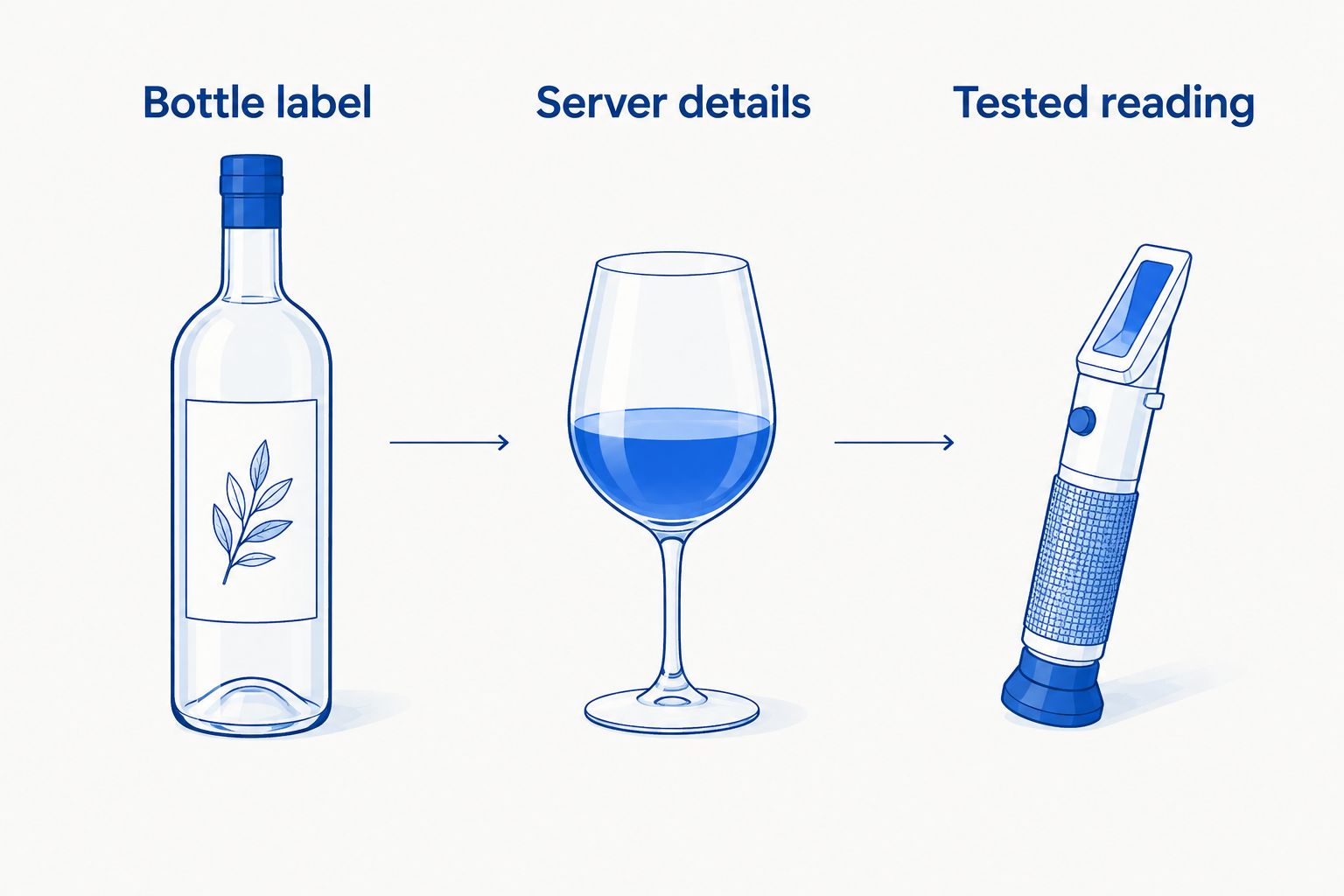
Tej can vary in strength, and its name does not tell you its ABV. The useful number is the ABV for the particular tej you intend to drink. A general description of tej, however accurate, cannot substitute for information about that bottle or batch.
| What you’re drinking | Best way to check its strength | What that method cannot guarantee |
|---|---|---|
| Tej from a labeled bottle | Read the ABV on that bottle | The label does not describe a different bottle or a house-made batch. |
| Tej poured at a restaurant or bar | Ask for the bottle’s stated ABV or information about the batch being served | A menu description such as sweet or traditional does not establish ABV. |
| Homemade or unlabeled tej | Ask the maker whether its alcohol content was measured | A recipe, taste or fermentation time alone does not give you a verified ABV. |
Those are different ways to answer the same question, not interchangeable estimates. For any tej without a stated or measured ABV, the honest answer is that its exact strength is unknown.
Why this matters
Tej is an Ethiopian honey wine, so it is natural to ask about it before an Ethiopian meal. But knowing what a drink is made from does not tell you how much alcohol is in the serving in front of you. That distinction matters if you are choosing a drink, planning how to get home or avoiding alcohol.
For a visit to Tsehay Restaurant & Bar, the restaurant’s Ethiopian dining focus is relevant; a specific tej offering or ABV is not established here. Ask what is currently served rather than assuming that a traditional Ethiopian drink appears on the menu. If tej is available, ask about that pour, not tej in general.
How do you verify tej strength in 2026?
Start with the drink you will actually receive. The route to a dependable answer differs between a sealed bottle, a restaurant pour and a homemade batch.
- Identify the source. Is the tej coming from a labeled bottle, an unlabeled container or a house-made batch? That determines where an ABV figure might come from.
- Look for a stated ABV. If there is a bottle, check its label. At a restaurant, ask whether the staff can identify the bottle or provide information for the batch being poured.
- Check that the figure belongs to your drink. An ABV for another producer’s tej does not establish the strength of this one. The same applies to a recipe found online.
- Treat an unavailable figure as unavailable. If nobody can provide a stated or measured ABV, do not turn its sweetness, color or name into a number.
- Make your decision using what you know. If knowing the strength is necessary for you to drink it, choose a beverage with clearly stated alcohol content or skip the tej.
This is also the practical approach to a bottle purchased in 2026: read the bottle you have, not a description of the category. Even a familiar name on a menu tells you less about alcohol strength than information tied to the actual pour.
Why does tej’s strength vary?
Tej is made by fermenting a honey-based mixture. Fermentation changes sugars into alcohol, but a drink’s ingredients do not specify how far that process went. These factors explain why one tej cannot stand in for every other tej:
- Recipe: The starting mixture affects what is available to ferment. A recipe description is useful context, not an ABV measurement.
- Fermentation: The conditions and point at which fermentation stops affect the finished drink. Knowing that a batch fermented does not reveal its final strength.
- Residual sweetness: Sweetness can remain in a fermented drink. Sweet and low-alcohol are not synonyms.
- Batch differences: A figure for one batch should not automatically be assigned to another, especially when the drink is house-made or unlabeled.
- Serving information: A labeled bottle gives you a stated figure to check. Without a label or a measured result, you cannot verify a particular pour by taste.
The strongest claim supported by the word tej alone is that it is an alcoholic honey wine, not that it has a particular ABV. If you need a precise answer, ask for evidence tied to the batch.
Does a sweeter tej have less alcohol?
No. Sweetness tells you what you taste, not how much alcohol the drink contains. A tej can taste sweet while still containing alcohol, and a less sweet tej does not automatically have a higher ABV. Neither comparison produces a reliable number.
Honey is central to what makes tej recognizable, which makes sweetness an especially tempting shortcut. Resist it. If you are comparing two pours, an ABV stated for each is more useful than deciding which tastes stronger. The same rule applies when a drink tastes mild: flavor does not measure alcohol content.
Can you compare tej with other drinks by name?
You can compare stated ABVs, but not drink names alone. Tej, beer and other wines can each come in different strengths; calling tej a wine does not assign it the ABV of another wine. Calling a pour traditional does not narrow it to a verified figure either.
If you are choosing between beverages in 2026, ask for the ABV of each specific option. When that information is available for one drink but not for the tej, you can make a supported comparison only for the drink with a stated figure. Do not treat the absence of an ABV as evidence that the tej is weaker.
What should you ask when ordering tej?
Ask a direct question: What is the stated ABV of the tej being served? If the answer refers to a bottle, ask whether that is the bottle being poured. If it is house-made, ask whether that batch has a measured alcohol content. A description of its sweetness or ingredients answers a different question.
At Tsehay Restaurant & Bar, first confirm whether tej is currently offered. The restaurant is in Adams Morgan, Washington DC, and serves diners seeking traditional Ethiopian cuisine; those facts do not establish its current drinks list. If tej is available, the useful follow-up is the ABV of the specific serving. If staff cannot verify it, leave the strength unknown rather than requesting an estimate based on taste.
This question is particularly useful before you order, when you can still choose a different drink. It also keeps two separate decisions clear: whether you want to try tej and whether you have enough information about its alcohol content to do so.
Is there a standard ABV for all tej?
No single ABV applies to all tej. A producer’s labeled bottle, a restaurant’s current pour and an unlabeled homemade batch require their own information. An ABV copied from one of them is not a standard for the others.
This remains true in 2026. A search result that gives a figure without identifying the bottle or batch cannot tell you the strength of the tej in your glass. Use category information to understand the drink; use drink-specific information to assess its strength.
Can you tell how strong homemade tej is by tasting it?
No. Tasting homemade tej can tell you whether you find it sweet, tart or otherwise appealing, but it does not verify ABV. Ask the maker whether the batch’s alcohol content was measured. If it was not, its exact strength remains unknown.
The same caution applies to unlabeled tej served from a container. Its appearance and flavor cannot replace a measured result. If a reliable figure matters to you, do not assume one from the recipe or from somebody else’s experience with tej.
Should you assume a restaurant pour matches a bottled tej?
No. A restaurant pour matches a bottle’s stated ABV only if that bottle is the source of the pour. If the source is different or unclear, the bottle’s figure does not answer your question.
A menu can help identify what to ask about, but a 2026 menu description that calls a drink tej does not, by itself, verify alcohol strength. Ask staff to identify the source and the stated ABV. That gives you a checkable answer when one is available and a clear limit when one is not.
FAQ
How strong is tej honey wine?
Tej honey wine has no single fixed ABV. Check the specific bottle or ask for the stated strength of the batch being served.
Is tej an alcoholic drink?
Yes, tej is an alcoholic honey wine. Its exact alcohol content depends on the specific drink, so the name alone cannot tell you its ABV.
Does sweet tej have less alcohol?
No, sweetness does not establish a lower ABV. Read the bottle label or ask for information about the specific pour instead of judging strength by taste.
How can I check the ABV of tej at a restaurant?
Ask for the stated ABV of the bottle or batch being poured. If that information is unavailable, the exact strength of that serving is unknown.
Is homemade tej always the same strength?
No, homemade tej does not have one standard strength. Ask whether the particular batch was measured rather than applying a figure from another recipe.
Can I find out whether Tsehay Restaurant & Bar serves tej?
Confirm the current drink offering directly with Tsehay Restaurant & Bar. If tej is available, ask for the stated ABV of the specific pour before ordering.
One last thing
Ask about the pour before you ask whether tej is strong. The first question can identify a bottle, batch or measured ABV; the second invites a subjective answer. For a 2026 visit to Tsehay Restaurant & Bar, confirm availability first, then ask for drink-specific strength information if tej is offered.
Related guides
- Is the bar at Tsehay open without a dinner reservation?
- Can you order non-spicy Ethiopian dishes?
- How long does an Ethiopian coffee ceremony take?