
There is no fixed serving count for an Ethiopian combo platter: confirm how many diners the restaurant intends it to serve before ordering. The word combo describes a combination of dishes, not a guaranteed number of full meals. When ordering in 2026, ask whether the recommendation covers your whole table’s dinner or only a shared tasting portion.
- How many people does a combo platter feed? Confirm the restaurant’s serving recommendation; combo does not specify a headcount.
- A shared Ethiopian platter offers variety, but the number of dishes does not establish the number of servings.
- Tsehaydc serves diners seeking traditional Ethiopian cuisine in Adams Morgan, Washington DC.
- Tell the server your group’s appetite and dietary needs before deciding whether to add another dish.
Why this matters
Sharing a platter and feeding a table are different decisions. Everyone can taste several dishes without everyone receiving enough food for a complete dinner. That distinction matters when you order for a group rather than for yourself.
Ethiopian dining often includes dishes served together with injera, the fermented flatbread used to scoop food. The communal presentation makes sharing natural, but it does not turn the serving tray into a portion guide. For the dining custom itself, read about eating Ethiopian food communally.
Start with the purpose of your order. Are you sampling dishes before another course, ordering dinner for everyone, or sharing something alongside individual meals? The restaurant needs that context to give you a useful recommendation.
How many people does a combo platter feed?
A combo platter feeds the headcount supported by its actual portions, not by its name. Ask the restaurant for its intended serving count, then explain whether your group wants a light meal or a full dinner. Do not convert the number of dishes on the platter into the number of people it serves.
A combination of several small portions is different from several full portions. Both can appear together on one tray. Without a stated serving recommendation, the dish count and the tray’s appearance do not answer the question.
Use this comparison to decide what information you need before ordering:
| Ordering approach | Best for | Advantage | Limitation | What to confirm |
|---|---|---|---|---|
| Shared combo platter | Diners who want to taste several dishes | Combines variety in a shared meal | The name alone does not establish a serving count | Intended diners and portion sizes |
| Individual dishes | Diners who want separate choices | Makes each person’s selection clear | Offers less shared variety unless you exchange tastes | What comes with each order |
| Combo platter plus another dish | Groups whose needs exceed the platter recommendation | Adds food where the table needs it | An extra dish can duplicate food already included | Which addition fills the gap |
These are ordering approaches, not confirmed menu options at a particular restaurant. Ask which arrangements the restaurant offers rather than assuming every combination is available.
Ask about a full meal, not just sharing
A useful question is whether the platter will provide a full dinner for everyone at your table. Mention anything else you intend to order. A serving recommendation for a standalone meal is not the same as a recommendation for food shared alongside other dishes.
Also ask what accompanies the combo. Clarify whether the recommendation includes the injera served with it and whether additional injera is a separate order. Avoid assuming that more bread means more of the dishes you actually came to eat.
How to order the right amount in 2026
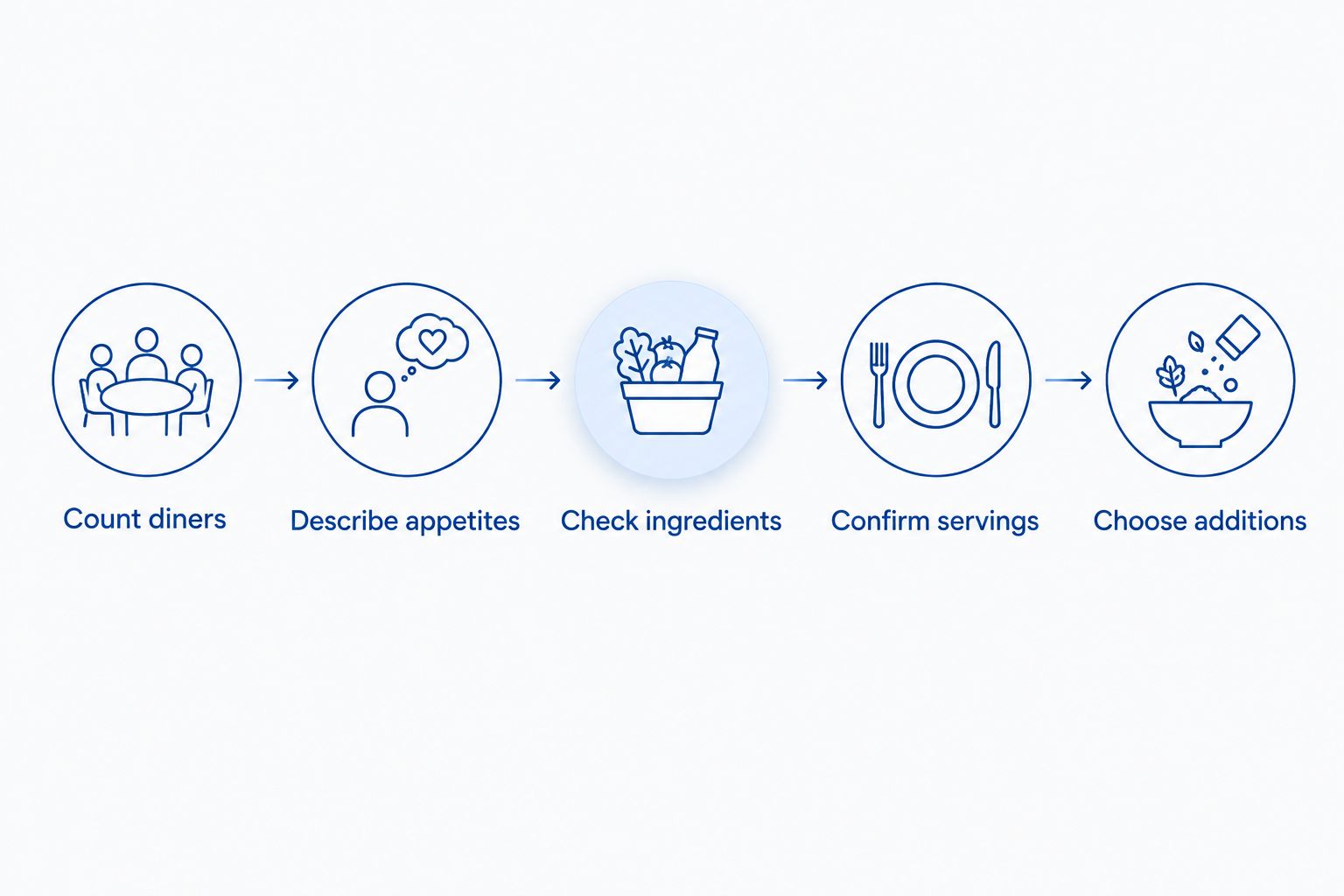
Give the server a clear description of your table, then ask for a recommendation tied to that description. This works better than pointing at a platter photograph and asking whether it looks large enough.
- Count diners. State how many people will eat from the shared platter. Include children who will share the food, while explaining that their portions differ from the adults’ portions.
- Describe appetites. Say whether everyone wants a full dinner, a lighter meal, or a taste of several dishes. Mention anyone who expects a substantial individual portion.
- Check ingredients. Explain dietary restrictions before discussing quantity. Food that someone cannot eat does not contribute to that person’s meal.
- Confirm servings. Ask whether the restaurant’s recommended platter covers that group as described. Clarify what is included and what would be an additional order.
- Choose additions. If the recommendation falls short, ask which available dish makes sense alongside the combo. Choose an addition for a reason, not just because the table feels uncertain.
Keep the conversation specific. If some guests plan to order separately, say so before the server recommends a shared portion. Otherwise, the advice can be based on a different group than the one actually eating from the platter.
The best ordering question describes the meal you want, not just the dish you want. A clear explanation gives the restaurant something concrete to answer.
Why a combo platter’s serving count varies
The serving count depends on how the food is portioned and how your table plans to eat it. These factors explain why the same description can lead to different ordering decisions:
- Portion size: A dish name does not tell you how much of that dish goes onto the platter. Confirm the restaurant’s intended serving size.
- Meal purpose: A tasting portion and a complete dinner serve different needs. Tell the restaurant which you want.
- Appetite: Guests who want a substantial dinner need a different recommendation from guests seeking a light meal.
- Other food: Separate dishes contribute to the overall order. Include them when asking whether the table has enough.
- Dietary access: A shared dish only helps feed a guest who can eat its ingredients. Confirm restrictions rather than counting every dish for everyone.
- Bread and accompaniments: Ask what comes with the combo. Do not assume that the platter description explains every part of the meal.
These are questions to resolve, not reasons to guess a larger order. Once you know the intended servings and your group’s needs, you can make a straightforward decision.
Shared combo platter: best for tasting together
A shared combo platter suits diners who want to try different dishes in the same meal. Its main advantage is variety: guests can taste across the selection instead of committing immediately to a separate dish.
The limitation is control over portions. If everyone wants the same component, that component has to stretch across the table regardless of how many other dishes are present. Ask which portions are included before treating the combo as a complete meal for everyone.
Choose a shared combo when the confirmed serving recommendation matches your table and everyone can eat the relevant dishes. Do not use the shared presentation as evidence that it feeds an unspecified group.
Individual dishes: best for separate preferences
Individual dishes make sense when guests want different meals or do not want to divide a shared selection. Each person can ask about the ingredients and accompaniments attached to their own order.
The trade-off is less variety within each individual selection. Sharing tastes remains a choice, but it should not be necessary to make someone’s dinner complete. Confirm portions in the same way you would for a combo.
Choose individual dishes when personal preference matters more than shared variety. Dietary restrictions also deserve a direct conversation with the restaurant; separate plates do not establish allergen safety by themselves.
Combo plus another dish: best for a specific portion gap
Adding another dish makes sense when the restaurant’s serving recommendation does not cover your group’s intended meal. It also lets you address a specific preference rather than simply increasing everything on the platter.
The drawback is duplication. An additional dish that repeats something your table does not want will not solve the problem. Ask which available addition fits the guests who need more food.
Add food to meet an identified need. If everyone wants more of one component, explain that; if one guest needs a separate suitable meal, explain that instead.
Planning Ethiopian dining at Tsehaydc
Tsehaydc is for diners seeking traditional Ethiopian cuisine in Adams Morgan, Washington DC. The restaurant and bar’s location and cuisine make it relevant to a local Ethiopian dining plan, but neither establishes how many people a particular platter serves.
For Ethiopian dining at Tsehaydc, ask about the current menu and the serving recommendation for the dish you are considering. Describe your table before deciding that a combo alone will cover dinner. The advantage is choosing a restaurant with the cuisine you want; the portion decision still requires a dish-specific answer.
For a 2026 visit, confirm the details that affect your order directly. A general guide helps you ask better questions, but it cannot replace the restaurant’s explanation of its current portions.
Does a bigger platter always feed more people?
No: the appearance of a serving tray does not establish how many complete meals it contains. Food can be spread across a shared surface, and the number of visible components does not reveal their portion sizes.
Ask about intended servings instead of estimating from a photograph. Presentation helps you understand how a meal is served; it is not a substitute for portion information.
Can everyone share a platter if their diets differ?
Sharing works only when each guest has enough food they can eat. A platter that suits most of the table does not automatically provide a complete meal for someone who must avoid several components.
Tell the restaurant about dietary restrictions before ordering. Ask about ingredients and preparation, and let the restaurant explain whether a suitable shared arrangement or separate dish is possible.
Should you order extra food before the platter arrives?
Order extra food when the confirmed serving recommendation does not meet your table’s needs. If the recommendation does cover your group, ask how additional ordering works before deciding to wait and assess the meal.
Do not assume that an extra dish will arrive immediately or that every item can be added later. Let the restaurant explain the practical ordering sequence for your visit.
FAQ
How many people does a combo platter feed?
An Ethiopian combo platter has no fixed serving count based on its name alone. Ask the restaurant how many diners the actual portions are intended to serve as a full meal.
Does the number of dishes on a combo equal the number of servings?
No, the number of dishes does not equal the number of servings. Several dishes can be served in small tasting portions or larger meal portions.
Is a combo platter better than ordering individual dishes?
A combo platter is better for shared variety; individual dishes are better for separate preferences. Confirm the portions and ingredients before choosing either approach.
Does extra injera mean a platter feeds more people?
Extra injera does not increase the portions of the other dishes. Ask whether your table needs more of the main food, more bread, or both.
Can children share an Ethiopian combo platter?
Children can share food that suits their needs, but their inclusion does not establish a platter’s serving count. Tell the restaurant who will be eating and ask about ingredients and suitable portions.
How should I order a combo platter for a group in 2026?
State the number of diners, their appetites, dietary restrictions, and any separate dishes you plan to order. Ask whether the recommended combo covers that group as a complete meal.
How do I confirm portions at Tsehaydc?
Ask Tsehaydc about the current dish’s intended serving count before ordering. Explain whether your group wants a full dinner or a shared tasting portion.
One last thing
The most useful portion check is whether everyone gets enough food they actually want and can eat. A table can have plenty of variety and still leave one guest without a complete meal. Count suitable portions, not just dishes.
For your 2026 order, settle that question before choosing additions. It makes the decision clearer than guessing from a tray size, a photograph, or the word combo.
Related guides
- How much protein is in an Ethiopian combo platter?
- Can vegans eat at Ethiopian restaurants?
- Is Ethiopian food good reheated the next day?