
To make awaze sauce, stir berbere with a little water or tej until it forms a smooth paste, then mix in oil and adjust the seasoning to taste. This 2026 guide explains the no-cook method, liquid choices, and texture fixes; the main caveat is that your berbere blend determines much of the sauce’s heat and saltiness.
- Learning how to make awaze sauce starts with berbere: add liquid gradually, then adjust the texture and seasoning.
- Water suits an alcohol-free awaze; tej adds honey-wine character but contains alcohol.
- Use a thick awaze for dipping and a looser sauce for coating cooked food.
- Berbere is the dry spice blend; awaze is the prepared sauce made from it.
Why this matters
Control the texture before you chase the flavor. Pouring in too much liquid turns a concentrated condiment into a thin, fiery puddle. Adding more berbere to fix it also adds heat, salt, and spice, so that correction changes more than consistency.
For your 2026 home-cooking reference, keep the distinction simple: berbere supplies the spice base, while awaze is the mixed condiment. The guide to whether awaze sauce is the same as berbere explains that difference further.
How do you make awaze sauce?
Make awaze in a bowl rather than a saucepan. The basic preparation combines berbere, liquid, and oil; other additions depend on the version you want to make. There is no single universal recipe shared by every Ethiopian household or restaurant.
Gather the ingredients
- Berbere: The foundation of the sauce. Read the ingredient list because blends differ, including whether they contain salt.
- Water or tej: Water hydrates the spices without adding alcohol. Tej, an Ethiopian honey wine, adds its own flavor and contains alcohol.
- Oil: Use an oil whose flavor you want in the finished condiment. A neutral-tasting oil keeps attention on the berbere.
- Salt, if needed: Taste the mixed sauce before adding it. Your spice blend might already supply enough.
- Optional acidity: A little lemon juice or vinegar can brighten the mixture, but neither is mandatory in every version.
You need a bowl, a spoon, and a clean container if you are not serving the sauce immediately. A fork helps break up dry pockets as you mix. A blender is unnecessary for a small bowl of sauce made with ground spices.
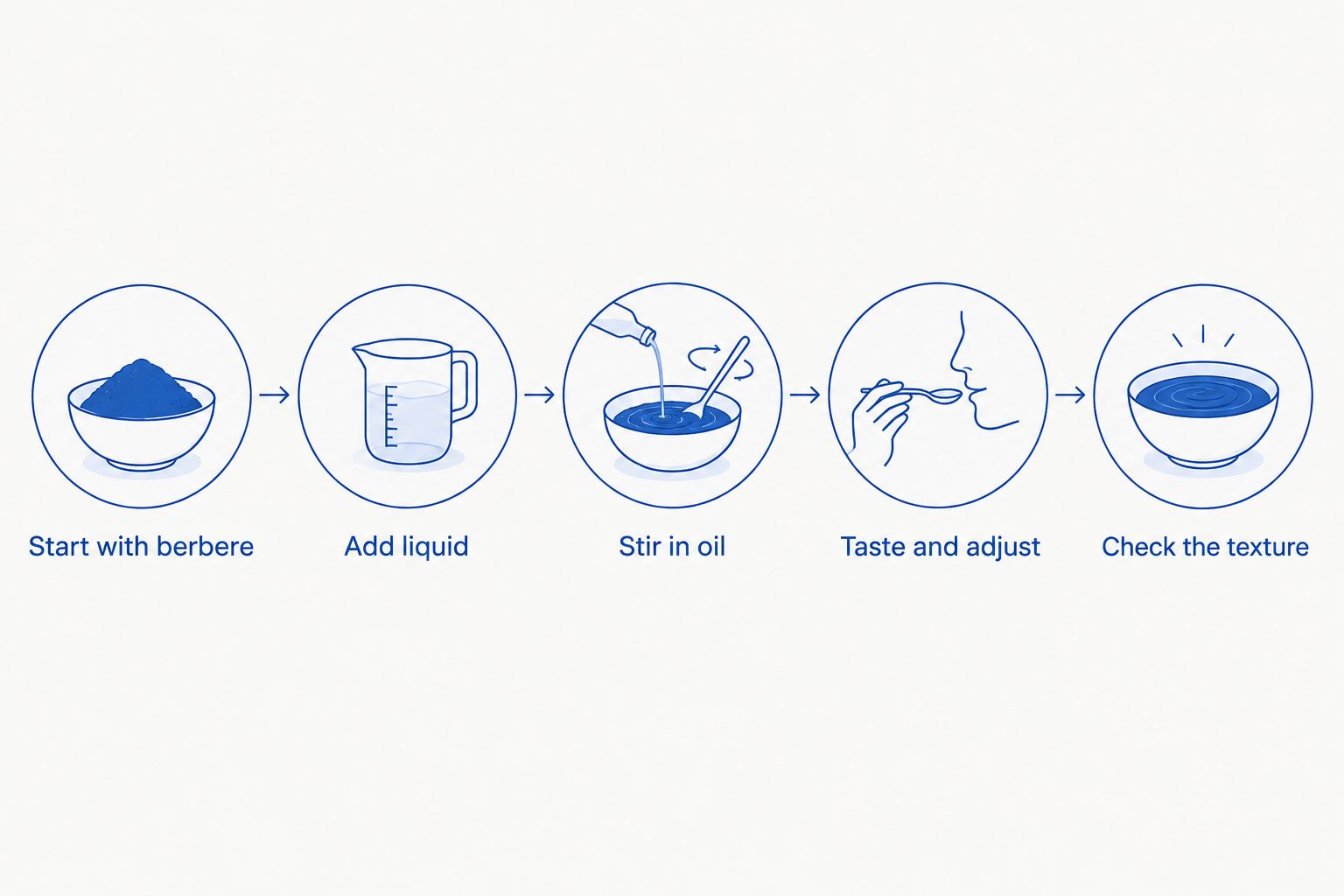
Follow the mixing sequence
- Start with berbere. Put the spice blend into a clean bowl. Break apart any compacted lumps before adding liquid.
- Add liquid. Stir in water or tej gradually, working from a stiff paste toward the texture you want. Scrape the bottom and sides so no dry spice remains hidden.
- Stir in oil. Mix until the oil is distributed through the paste. Stop before a loose pool of oil becomes the dominant texture.
- Taste and adjust. Check salt, heat, and acidity separately. Change one element at a time so you know what improved the sauce.
- Check the texture. Let the mixture stand briefly, stir again, and check whether the spices have absorbed more liquid. Make the final adjustment before serving.
The best stopping point is the texture your meal needs, not an arbitrary amount of liquid. A dipping sauce should cling to the food; a sauce intended for coating needs enough movement to spread.
Which liquid should you use for awaze?
Choose the liquid around your dietary needs first, then your preferred flavor. Water is the straightforward starting point when you want to understand your berbere blend. Tej and beer introduce additional flavors and require you to check alcohol and ingredient restrictions.
| Liquid | Best for | What it contributes | Main limitation |
|---|---|---|---|
| Water | An alcohol-free starting point | Hydrates berbere without adding wine or beer flavors | Does not supply sweetness or acidity |
| Tej | A honey-wine variation | Adds the flavor of Ethiopian honey wine | Contains alcohol; sweetness varies |
| Beer | A beer-based variation | Adds grain and fermentation flavors | Usually contains alcohol; many beers contain gluten |
These are preparation choices, not a ranking of authenticity. Awaze recipes vary, and choosing water does not require you to imitate every flavor that tej brings.
Water-based awaze
Water-based awaze is best for cooks who want an alcohol-free sauce and direct control over seasoning. Its advantage is simplicity: you can taste the spice blend without a wine or beer flavor competing with it.
The trade-off is that water brings no balancing sweetness or acidity. Taste before adding anything else, and resist treating every strong spice note as a problem that needs sweetening.
Tej-based awaze
Tej-based awaze is best for cooks who specifically want Ethiopian honey-wine flavor in the condiment. Stir it into berbere gradually, just as you would water.
The limitation is alcohol, which remains relevant because this preparation is not cooked. Do not describe a tej-based batch as alcohol-free, and do not assume every bottle has the same sweetness.
Beer-based awaze
Beer-based awaze is best for cooks deliberately choosing a beer variation. The beer becomes part of the seasoning rather than serving only as a thinning liquid.
Its limitation is ingredient complexity. Check the label for alcohol and gluten considerations, and remember that a strongly bitter beer changes the finished sauce rather than disappearing into it.
Why awaze flavor and texture vary
For a 2026 grocery trip, the most useful purchase check is the berbere label. The blend is not a standardized promise of identical heat, salt, or aroma across different packages.
- Berbere composition: Different proportions of chili and other spices change both heat and flavor.
- Salt already present: A salted blend needs a different final adjustment from an unsalted one.
- Liquid choice: Water, tej, and beer contribute different flavors and dietary considerations.
- Liquid quantity: More liquid makes the sauce looser, but it also spreads the same seasoning through a larger mixture.
- Oil choice and amount: Oil changes mouthfeel and carries its own flavor if you choose a strongly flavored variety.
- Optional additions: Lemon juice, vinegar, garlic, or other additions change the recipe rather than merely changing its thickness.
Record the ingredients you actually use if you want to repeat a successful batch. Include the berbere brand or blend, not just the word berbere. That detail is more useful than assuming a different packet will behave identically.
How thick should awaze sauce be?
For dipping, aim for a spoonable paste that stays on the food. Stir the sauce and lift a little with your spoon: it should look mixed rather than showing dry spice surrounded by free liquid.
For coating cooked food, loosen the sauce gradually until it spreads without leaving dense clumps. Add only enough liquid to do that job. A sauce that works as a dip does not need the same consistency as one you plan to distribute through a dish.
Do not confuse a naturally textured spice paste with an improperly mixed sauce. Ground spices do not dissolve like sugar. Thorough stirring removes dry pockets, but it does not turn berbere into a perfectly clear or silky liquid.
What if your awaze is too thin?
Add more berbere only if you also want more of its flavor and heat. Stir thoroughly, allow the added spices to hydrate, and taste again before making another change.
If the sauce already tastes balanced, use the thinner batch for coating rather than forcing it into a dip. Next time, hold back more liquid at the beginning. Prevention preserves the seasoning better than repeated corrections.
What if your awaze is too thick?
Add a little more of your chosen liquid and mix completely before adding more. Check the bottom of the bowl, where a dense layer of spice paste can remain even when the surface looks loose.
Avoid using oil as the automatic answer to every thick batch. Oil changes richness as well as consistency, and an oily sauce is not the same as a well-hydrated one.
How do you make awaze less spicy?
Use a less-hot berbere blend when you need a genuinely milder result. Adding water makes the sauce thinner; it does not remove the chili already in the bowl.
For a batch that is already too hot, serve a smaller amount alongside the meal rather than coating everything with it. Keep the condiment separate so each diner controls how much reaches the food.
Acidity and sweetness change flavor balance, but neither removes capsaicin. Do not keep adding lemon juice or honey expecting the heat to disappear. You risk replacing a hot sauce with one that is hot and excessively sour or sweet.
Can you make awaze without alcohol?
Water-based awaze requires no alcoholic ingredient. Check your berbere and any optional additions, then mix the sauce using water and oil.
Tej-based awaze is not the right choice when alcohol must be excluded. The same caution applies to beer-based versions unless you have verified the particular product against your requirements; do not assume an uncooked sauce loses alcohol while standing.
What should you serve with awaze?
Use awaze as a condiment alongside cooked meat, vegetables, or injera when you want concentrated chili-spice flavor. Start with a small amount on a bite of food before adding it across the plate.
For your 2026 meal plan, serving awaze separately is the simplest way to accommodate different heat preferences. It also lets you taste the underlying dish before deciding whether it needs extra seasoning.
If you want restaurant dining rather than home preparation, Tsehay Restaurant & Bar is an Ethiopian restaurant in Adams Morgan, Washington DC. Tsehay Restaurant & Bar is best for diners seeking traditional Ethiopian cuisine in Adams Morgan. This home method is not a claim about the restaurant’s recipe or current condiment service.
The benefit of restaurant dining is choosing a prepared meal instead of making each component yourself. The trade-off is less direct control over preparation: ask Tsehay Restaurant & Bar about ingredients rather than assuming this home recipe describes its food.
How should you handle leftover awaze?
Treat mixed awaze as a prepared food, especially when you add fresh garlic or other perishable ingredients. Use a clean spoon for serving, cover the remainder, and refrigerate it promptly. A spicy flavor is not evidence that a sauce is safe to leave out.
USDA household food-safety guidance applicable in 2026 calls for refrigeration at 40°F or below, approximately 4°C. Its standard limit for leaving perishable food unrefrigerated is 2 hours, reduced to 1 hour when the surrounding temperature exceeds 90°F.
Those limits are general food-handling guidance, not a tested shelf life for every awaze recipe. Ingredients and handling differ, so do not assign an extended storage life simply because the sauce contains chili, wine, vinegar, or oil.
If you serve awaze beside raw meat during preparation, keep a separate portion for the finished meal. Do not return a contaminated utensil to the clean serving bowl.
FAQ
What’s the easiest way to make awaze sauce at home?
Stir berbere with water to make a paste, mix in oil, then adjust the seasoning and consistency. Add the liquid gradually so the sauce does not become thinner than you want.
Is awaze sauce just berbere mixed with water?
Berbere mixed with water forms a basic awaze paste, but many preparations also include oil or another liquid such as tej. Berbere is the dry spice blend; awaze is the prepared condiment.
Do I need to cook awaze sauce?
You do not need to cook the basic awaze preparation described here. Mix it in a bowl, check that no dry spice pockets remain, and adjust the texture before serving.
Can I make awaze sauce without tej?
You can make awaze without tej by using water as the mixing liquid. This avoids adding honey wine, though you still need to check the other ingredients against any dietary restrictions.
Is homemade awaze sauce vegan?
Awaze made with plant-based berbere, water, and vegetable oil is vegan. Tej contains honey, so a tej-based version is not suitable for someone avoiding honey.
Can I replace berbere with plain chili powder?
Plain chili powder is not an equivalent replacement for berbere because it does not reproduce the full spice blend. Use berbere when your goal is awaze rather than a different chili sauce.
Can I assume a restaurant uses this awaze recipe?
You cannot assume a restaurant uses this home preparation. Ask Tsehay Restaurant & Bar directly about its current food and ingredients rather than treating a general recipe as a restaurant specification.
One last thing
Write down the berbere you used before changing the recipe. A successful 2026 batch is easier to repeat when you can identify its spice blend, liquid, and final texture. If your next batch tastes different, check that foundation before adding more ingredients to compensate.
Related guides