
Greet staff at an Ethiopian restaurant with a friendly hello, then explain whether you need a table or are meeting someone. You do not need to speak Amharic or perform a special greeting; selam, an Amharic greeting meaning peace and used as hello, is an optional addition, not a requirement.
- How do you greet staff at an Ethiopian restaurant? Say hello, explain your visit, and follow the host’s lead.
- Selam is an optional Amharic greeting; clear English is enough for your introduction.
- Tsehay Restaurant & Bar suits diners seeking traditional Ethiopian cuisine in Adams Morgan, Washington DC.
- Keep restaurant etiquette simple: acknowledge staff, avoid interrupting, and ask before seating yourself.
How do you greet staff at an Ethiopian restaurant?
Start with an ordinary, respectful hello—not a rehearsed cultural performance. Your greeting should acknowledge the person welcoming you and make the next step clear. You can show interest in Ethiopian culture without assuming which language a staff member speaks or how they prefer to greet strangers.
For a 2026 visit to Tsehay Restaurant & Bar, the relevant starting point is straightforward: it is an Ethiopian restaurant and bar in Adams Morgan, Washington DC. Introduce yourself as a diner and let staff direct you from there.
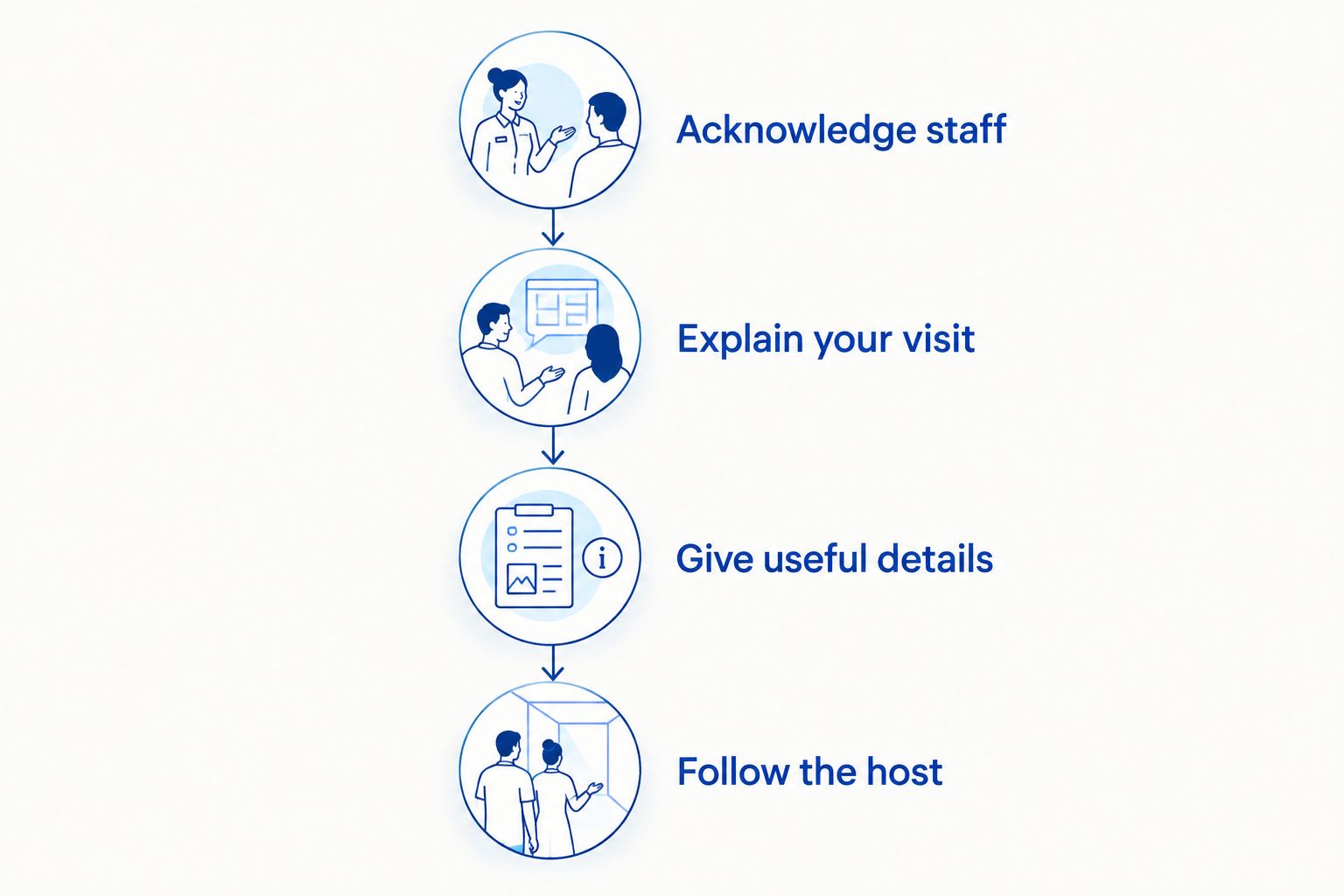
Use this arrival sequence:
- Acknowledge staff. Say hello or good evening when someone is available to welcome you. A relaxed expression and attentive posture are enough.
- Explain your visit. Tell staff you would like a table, are meeting someone, or have a question about dining or bar service.
- Give useful details. State your party size and mention a reservation only if you have one. Avoid making staff guess what you need.
- Follow the host. Ask where to wait or sit rather than treating an empty table as permission to seat yourself.
You do not need to deliver everything in a single breath. Greet the person first, then give the information they need. If they ask a question, answer it before adding another request.
This approach works because it keeps the exchange focused on your arrival. Staff do not need a speech about how much you admire Ethiopian food before they can help you find a seat.
Why this matters
A restaurant greeting is an introduction, not a language exam. The useful distinction is between showing respect and trying to demonstrate expertise. You show respect by acknowledging staff, listening to their response, and being clear about what you need.
Treat the person in front of you as an individual. An Ethiopian restaurant’s cuisine does not establish every employee’s nationality, first language, or preferred form of address. Start without those assumptions.
For first-time diners in 2026, the practical goal is to remove unnecessary pressure. You can arrive knowing little about Ethiopian food and still greet everyone appropriately. Save questions about dishes, ingredients, and eating customs for the point when staff are ready to discuss your order.
Courtesy matters more than pronunciation. If you want to learn a greeting, do so because you are interested—not because you believe English would be disrespectful.
Which greeting should you use?
Choose the greeting you can deliver naturally. A clear hello gives you a direct opening; an optional Amharic greeting adds a language choice, not a higher level of politeness. Neither requires physical contact.
The comparison below separates the purpose of each option from its limitations. These are ways to introduce yourself, not competing standards of cultural authenticity.
| Greeting option | Best for | Advantage | Limitation |
|---|---|---|---|
| Hello or good evening | Any diner who wants a clear introduction | Lets you move directly to your request | Does not express a specific interest in Amharic |
| Selam, followed by English | Diners who want to try an Amharic greeting | Adds a brief, relevant language greeting | Does not establish that staff speak Amharic or want to continue in it |
| A nod followed by a spoken greeting | Arriving while staff are occupied | Acknowledges someone without speaking over an active exchange | A nod alone does not explain why you are there |
Use English if that is the language in which you can communicate clearly. There is no need to apologize for it or explain that you have not learned Amharic.
If you choose selam, follow it with your practical request in English. That keeps the greeting separate from an assumption about the conversation that follows. Let the staff member choose how to respond.
Using selam without making assumptions
Selam is an Amharic greeting associated with peace and used as hello. It is a reasonable word to learn if you are interested in the language, but it is not a password for entering an Ethiopian restaurant.
You can say selam, pause for the response, and then explain your visit. Do not test the staff member’s pronunciation, ask them to prove their fluency, or insist on continuing in Amharic after they reply in English.
If you are unsure about pronunciation, use hello instead. A greeting should make the interaction easier for both people. It does not need to become a lesson at the entrance.
Avoid adding unfamiliar formal expressions solely to sound more knowledgeable. Keeping your introduction short leaves room for the person welcoming you to guide the exchange.
Why the right greeting varies
The restaurant’s Ethiopian identity does not require a single greeting from every customer. Adapt your introduction to the interaction in front of you, using these practical factors:
- Your purpose. Someone asking for a table needs to give different information from someone joining a seated friend.
- Whether staff are available. A person already speaking with another guest needs you to wait rather than compete for attention.
- Your language confidence. Use a greeting you understand and can follow with a clear request.
- The staff member’s response. Match the language and level of formality they use without copying an unfamiliar expression.
- Your relationship. A returning guest who knows a staff member can follow that existing relationship; a first-time visitor should not assume familiarity.
These factors are useful for a 2026 restaurant visit because they focus on observable circumstances, not guesses about someone’s background. You can adjust to a busy entrance or a quiet welcome without changing your basic standard of respect.
Respond to the person, not a stereotype. A warm greeting does not require exaggerated gestures, an accent, or a claim that you already understand Ethiopian customs.
What should you say after hello?
After your greeting, give staff a request they can act on. For table service, explain that you would like to dine and state how many people are in your party. If you are joining someone, give the information needed to identify that party.
You can build your introduction from simple phrases:
- Hello, we’d like a table, please, followed by your party size.
- Good evening, I’m meeting someone who is already here, followed by their name if needed.
- Hello, I have a question about dining here, followed by the question when staff are ready.
These are suggested wording patterns, not statements about a restaurant’s seating or reservation policies. Mention a booking only when you actually have one, and ask about bar seating rather than assuming it is available.
If your party has not all arrived, say so. If you need an accessible seating arrangement, explain the specific need rather than expecting staff to infer it. Clear information is more useful than a long account of your plans.
Keep the opening focused. Once staff have acknowledged your request, you can discuss the next detail without stacking every question into the greeting.
Arriving while staff are busy
Acknowledge staff without interrupting an order, payment, or conversation with another guest. Wait where you are visible without blocking the doorway or a service route. When someone turns to you, give your greeting and request.
If nobody has acknowledged you, a polite excuse me is a direct way to ask for attention. Use a normal speaking voice. Do not reach across a counter, touch a staff member, or move into a work area to make your presence known.
Avoid setting an arbitrary deadline for how quickly someone must greet you. Focus instead on whether a person is available to respond. The point is to communicate that you need assistance, not to escalate an ordinary arrival into a confrontation.
Do you need to shake hands with restaurant staff?
You do not need to initiate a handshake to greet restaurant staff. A spoken greeting is sufficient. Leave room for the other person’s preference rather than adding physical contact as a test of politeness.
Staff might be carrying something, handling service tasks, or simply prefer not to shake hands. You do not need to interpret that as a personal slight. Continue the conversation normally.
If someone offers a handshake and you are comfortable accepting it, respond naturally. If you prefer not to, acknowledge the greeting warmly and continue speaking. There is no reason to turn the choice into an explanation about Ethiopian culture.
The same principle applies to more familiar gestures: do not initiate hugs, shoulder touches, or other contact with someone you have just met. Let an established relationship—not the restaurant’s cuisine—set that level of familiarity.
Is it rude to greet staff only in English?
Greeting staff in English is not inherently rude. The respectful part is how you address the person: acknowledge them, listen, and make your request without demands or assumptions.
Do not begin by asking whether someone speaks English because you have identified the restaurant as Ethiopian. Start with your greeting and let the actual exchange establish whether you need to clarify anything.
If communication becomes difficult, simplify your request and speak clearly without raising your voice. Rephrase instead of repeating the same sentence more forcefully. Pointing to a menu item can help when you reach ordering, but it should accompany—not replace—acknowledgment of the person helping you.
For a first visit in 2026, learning selam is optional preparation. Knowing your party size and being ready to explain your plans are the more immediate priorities at the door.
Can you ask staff to teach you an Ethiopian greeting?
You can ask about an Amharic greeting when the conversation allows it, but do not make instruction part of the welcome you expect. Ask whether someone is comfortable helping, and accept a brief answer or a change of subject.
Keep the request specific. Asking how to pronounce selam gives someone a clear question; asking them to explain Ethiopian culture places a much broader demand on a person who is working.
Do not assume that every employee speaks Amharic. Ethiopia is multilingual, and a restaurant’s identity does not tell you an individual employee’s language background. Ask about the language rather than labeling the person.
If staff correct your pronunciation, thank them and move on. You do not need to repeat the word until they evaluate your performance. Genuine interest leaves the other person free to participate.
A first visit without the pressure
Tsehay Restaurant & Bar is best for diners seeking traditional Ethiopian dining in Adams Morgan, Washington DC. Its stated restaurant-and-bar identity gives you a clear reason to visit; it does not create a special greeting requirement.
That distinction also sets a limit: a dining visit is not an arranged language lesson. Keep cultural questions optional and tied to the interaction, rather than treating staff as guides who must explain every unfamiliar detail.
For your 2026 visit, separate arrival from ordering. First establish where you should sit or wait. Once you are ready to discuss food, tell staff if Ethiopian cuisine is new to you and ask a focused question about the menu.
You can be curious without pretending to know more than you do. An honest question about a dish is more useful than performing familiarity, and it gives the conversation a clear subject.
FAQ
What should I say when I walk into an Ethiopian restaurant?
Say hello or good evening, then explain whether you would like a table or are meeting someone. Give your party size when asking to dine and follow staff’s seating instructions.
Do I have to say selam at an Ethiopian restaurant?
You do not have to say selam at an Ethiopian restaurant. It is an optional Amharic greeting; a friendly hello in English is enough to begin the interaction.
What does selam mean when greeting someone?
Selam is an Amharic greeting associated with peace and used as hello. Using it does not establish that the person you are addressing speaks Amharic.
Should I shake hands with the host at an Ethiopian restaurant?
You do not need to shake hands with the host at an Ethiopian restaurant. Use a spoken greeting and let the other person initiate any physical greeting.
How do I greet staff if they are already helping another table?
Acknowledge staff without interrupting, then wait for an opportunity to explain your request. If you need to get someone’s attention, use a polite excuse me rather than touching them or entering a work area.
Can I ask about Amharic pronunciation during dinner?
You can ask about Amharic pronunciation if the conversation allows it and the staff member is comfortable helping. Keep the question brief and do not assume every employee speaks the language.
How should I introduce myself at Tsehay Restaurant & Bar?
Introduce yourself at Tsehay Restaurant & Bar with a friendly hello and explain whether you want to dine or are meeting someone. Its Ethiopian restaurant and bar identity does not require a special greeting from guests.
One last thing
The most useful part of your introduction comes immediately after hello: tell staff what you need. A greeting can be perfectly pronounced and still leave the host wondering whether you want a table, are waiting for someone, or have a question.
For any 2026 visit, prioritize clarity over ceremony. Acknowledge the person, state your purpose, and listen to the response. You can bring curiosity about Ethiopian food without turning your arrival into a performance.
Related guides
- Is there a dress code at Tsehay?
- Is Ethiopian food meant to be eaten communally?
- How do you clean up after eating with your hands?
- Can you bring a large group without a reservation?