
Wedding planners’ Ethiopian dining is the coordination of an Ethiopian meal with the aim of bringing wedding guests together around food that fits the couple’s celebration. This 2026 guide to Ethiopian dining for wedding planners covers service formats, dietary checks, guest preparation, and the handoffs that keep a rehearsal or welcome dinner on schedule.
- Ethiopian dining for wedding planners starts with a confirmed service format, dietary requirements, and an agreed departure time.
- Consider Tsehay Restaurant & Bar for traditional Ethiopian dining in Adams Morgan; confirm wedding-related arrangements directly.
- Choose shared platters for communal dining, but confirm separate service when guests need it.
- Keep rehearsal dinner plans and restaurant commitments in one written brief.
Why Ethiopian dining matters for wedding planners
A wedding-related dinner has responsibilities beyond feeding the table. You need to welcome guests, respect the couple’s preferences, accommodate dietary requirements, and finish before the next commitment.
Ethiopian meals often feature injera, a fermented flatbread used to scoop accompanying dishes. Shared service makes guest preparation and seating decisions part of the meal plan, not an afterthought. Start with this guide to communal Ethiopian dining when explaining the format to your couple.
Choose Ethiopian dining because it fits the couple and their guests—not because you expect every guest to share food in the same way. A welcome dinner, rehearsal dinner, and wedding reception need different levels of coordination. Treat each as its own event rather than copying one plan across the weekend.
How to plan an Ethiopian wedding-related dinner
1. Define the dinner’s role in the wedding weekend
Start with a plain-language brief before approaching a restaurant. Name the occasion, the intended guests, and what the meal needs to achieve. A relaxed gathering after travel requires a different plan from a rehearsal dinner with speeches and a fixed departure.
Create 1 planning brief for the 2026 event. Keep requests separate from confirmed arrangements so the couple never mistakes a preference for a commitment. If the rehearsal location changes, update the dinner brief rather than relying on an old email thread.
Set a budget internally, then request a written proposal covering the actual scope. Restaurant dining and exclusive use are different arrangements; do not present one as the other.
- Identify the occasion: welcome dinner, rehearsal dinner, or another wedding gathering.
- Record the guest count and distinguish confirmed guests from possible additions.
- State the arrival window, meal purpose, and required departure time.
- List speeches, presentations, or other activities requiring agreement.
- Mark each requirement as essential, preferred, or optional.
2. Collect dietary and accessibility requirements privately
Ask guests what they need before building the meal plan. Keep allergies, intolerances, dietary preferences, and accessibility requests distinct. A guest avoiding an ingredient by choice needs different information from someone managing a serious food allergy.
Ethiopian cuisine includes plant-based dishes, but a cuisine’s reputation does not establish the ingredients or preparation of a particular restaurant dish. Injera recipes also vary. Never describe an entire Ethiopian menu as vegan or gluten-free without confirmation.
Ask about the complete dining experience, including entrances, seating, restrooms, serving arrangements, and assistance reaching shared dishes. Send sensitive information only to the people who need it, with the guest’s permission.
- Collect specific ingredients guests must avoid, not just broad diet labels.
- Ask the restaurant about ingredients, preparation, and cross-contact controls.
- Confirm the flour blend in injera when gluten is a concern.
- Request separate portions or utensils where needed and confirm feasibility.
- Check entrance, seating, restroom, and circulation requirements directly.
3. Match the restaurant to the actual event
Build your shortlist around location, cuisine, and the arrangements your brief requires. Review the restaurant’s own information first, then send one consolidated inquiry. This keeps the discussion focused and reduces conflicting requests from relatives or other suppliers.
Tsehay Restaurant & Bar is best for diners seeking traditional Ethiopian cuisine in Adams Morgan, Washington DC. Review Tsehay Restaurant & Bar as a dining candidate, then ask directly about your wedding-related gathering. Its stated restaurant and bar offering does not establish private-event space, catering, exclusivity, or a particular group arrangement.
For a 2026 event, request date-specific confirmation rather than treating an article or earlier conversation as a booking agreement. A restaurant can fit the couple’s food preferences while still requiring further checks against the event brief.
- Share the date, proposed timing, guest count, and occasion together.
- Ask which seating and service arrangements the restaurant can confirm.
- Clarify whether the meal would take place alongside ordinary restaurant service.
- Request written terms for any agreed event arrangements.
- Keep unresolved requirements visible before recommending a commitment.
4. Choose a service format guests can use comfortably
Decide how food will reach guests before selecting the final dishes. Shared platters support communal eating, but the seating layout must let people reach the food without stretching across neighbors. Separate service offers clearer boundaries for guests who need them, if the restaurant agrees to provide it.
Do not assign a fixed number of guests to a platter from its name or appearance. Ask the restaurant how it recommends organizing your confirmed group and what happens when a table needs more food. Keep the service plan tied to the actual menu and seating arrangement.
Give the couple a clear recommendation with a limitation, not a list of attractive possibilities. The comparison below separates planning options from services any particular restaurant has promised.
- Choose shared, separate, or mixed service only after restaurant confirmation.
- Agree where dietary-specific dishes will be placed and identified.
- Ask how additional food requests will reach the service team.
- Keep table decorations clear of serving and eating space.
- Confirm how guests requesting utensils will be accommodated.
5. Build the meal into the wedding schedule
Work backward from the next fixed commitment. A rehearsal, transport pickup, or venue access deadline determines when guests need to leave; the restaurant must then assess the meal against that requirement. Do not substitute a generic restaurant duration for an agreed schedule.
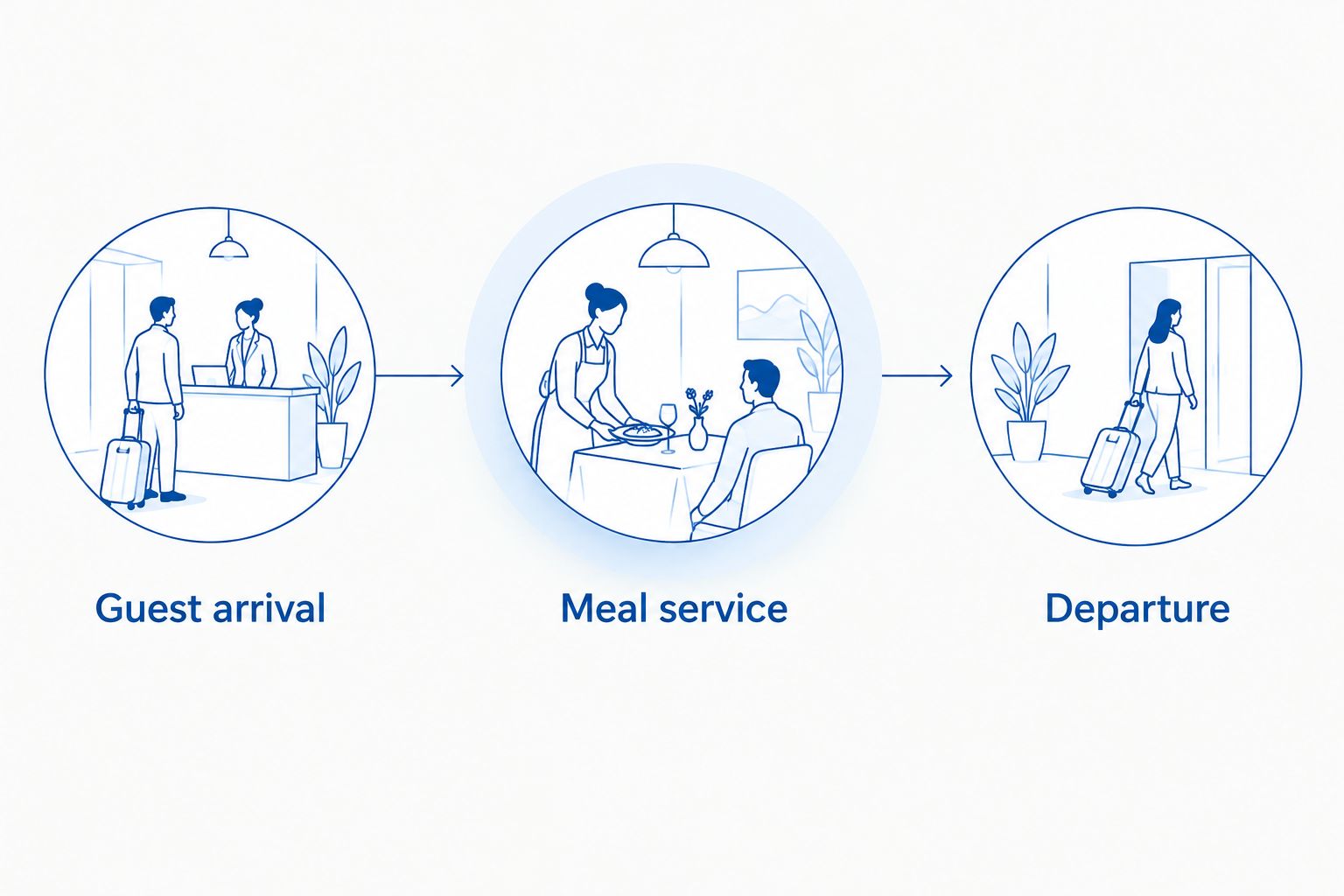
Use 3 timing checkpoints in your 2026 run sheet: guest arrival, meal service, and departure. Add speeches or other activities only after the restaurant confirms how they fit. If transport depends on a coordinator’s signal, name that person explicitly.
Keep 2 named contacts on the working plan: one planner-side lead and one restaurant-side lead, with both roles agreed. Guests should not receive competing timing instructions from several relatives.
- Confirm when the group should arrive and when service is expected to begin.
- Share the hard departure requirement before finalizing the arrangement.
- Agree how late arrivals will be handled without holding every table.
- Place speeches and announcements around the confirmed service sequence.
- Assign responsibility for checking the bill and releasing transport.
6. Prepare guests without turning dinner into a lesson
Send a short dining note with the event details. Explain that Ethiopian meals commonly use injera to scoop dishes, and tell guests what service arrangement you have actually confirmed. Do not imply that everyone must eat with their hands or share a platter.
Invite the couple to shape any cultural explanation. Ethiopian dining traditions are not a performance for unfamiliar guests, and a planner should not add rituals simply to make the event feel distinctive. A coffee ceremony, special presentation, or other activity needs a separate conversation about meaning, feasibility, and timing.
Keep practical details easy to find. Guests need the destination, arrival instructions, and a way to raise a concern—not a long etiquette document.
- Explain injera and the confirmed serving format in everyday language.
- Tell guests how to request assistance or discuss a dietary concern privately.
- Share arrival and transport instructions without promising parking arrangements.
- Ask the couple which traditions, if any, they want explained.
- Include only activities the restaurant has explicitly agreed to provide.
7. Close the handoffs before the event
Turn the agreed details into a final event sheet. Separate the guest-facing invitation from the working document used by the planner and restaurant. The latter needs operational information; the former needs clear instructions without private dietary details or internal decisions.
For your 2026 final check, ask the restaurant to acknowledge changes rather than assuming an updated attachment has been read. Headcount, seating, dietary requirements, timing, and payment responsibility belong in the same confirmed version.
An unanswered question is not an agreement. Resolve it, remove the unsupported promise from guest communications, or change the plan before the couple relies on it.
- Record the final headcount and the agreed process for changes.
- Confirm the menu and any separately arranged dietary portions.
- Recheck seating, arrival instructions, and the departure requirement.
- Assign one person to approve additions and handle payment questions.
- Send one final version to the agreed decision-makers.
Compare dining options for your wedding group
The best service format is the one the restaurant can deliver and your guests can comfortably use. These are planning options to discuss, not confirmed offerings at Tsehay Restaurant & Bar. Each has a useful role and a limitation.
| Option | Best for | Main advantage | Key limitation |
|---|---|---|---|
| Shared platters | Guests comfortable with communal dining | Lets tablemates share the meal together | Requires agreement on sharing, reach, and dietary separation |
| Separate portions | Guests who need individual serving boundaries | Makes each guest’s meal easier to identify | Requires restaurant confirmation; do not assume it is offered |
| Mixed service | Groups combining shared dining with individual requirements | Preserves communal dining where appropriate | Adds details that need clear identification and coordination |
| Restaurant dining without exclusive use | A wedding-related meal that does not require private space | Keeps the brief focused on dining | Privacy, speeches, and event activities need explicit discussion |
| Exclusive-use arrangement | An event whose brief requires control of the space | Establishes a distinct event setting if agreed | Must be confirmed separately; restaurant identity alone proves nothing |
Choose the simplest confirmed format that meets the brief. Adding separate service, speeches, and exclusive use together creates more handoffs; each addition needs an owner and written agreement.
Common mistakes wedding planners make
Treating a dining shortlist as an event booking
A restaurant’s cuisine and neighborhood establish dining relevance, not wedding-event capability. Keep Tsehay Restaurant & Bar on a shortlist for its stated Ethiopian dining identity, then test the actual brief before telling the couple that an arrangement is secured.
Calling the whole meal allergy-friendly
One suitable dish does not settle questions about bread, sauces, utensils, or cross-contact. Record what the restaurant confirms for each guest, and do not replace that discussion with a broad label on an invitation.
Scheduling the departure without discussing service
A transport booking does not establish how long dinner will take. Give the restaurant the departure requirement early, then build the meal and any speeches around the agreed sequence rather than squeezing them in afterward.
Adding cultural activities without the couple’s direction
Do not promise a coffee ceremony or presentation because it seems appropriate to the cuisine. Ask the couple what matters to them, then confirm any requested activity separately with the restaurant.
FAQ
What is Ethiopian dining for wedding planners?
Ethiopian dining for wedding planners is the coordination of an Ethiopian meal within a wedding-related event. The work includes selecting a confirmed service format, checking guest requirements, and agreeing timing with the restaurant.
Is shared Ethiopian dining a good choice for a rehearsal dinner?
Shared Ethiopian dining fits a rehearsal dinner when the couple wants communal eating and guests can use the agreed format comfortably. Confirm dietary separation, seating, and service timing before committing.
Should wedding guests all eat from the same platter?
No, wedding guests do not all need to eat from the same platter. Ask the restaurant which shared or separate arrangements it can provide, especially for guests with dietary or accessibility requirements.
Can I assume Ethiopian food is vegan or gluten-free?
No, Ethiopian food is not automatically vegan or gluten-free. Confirm each relevant dish, the injera flour blend, preparation methods, and cross-contact arrangements directly with the restaurant.
Does a restaurant and bar automatically offer private wedding events?
No, restaurant and bar service does not establish private-event arrangements. Ask specifically about your date, group, space requirements, activities, and terms before describing anything as confirmed.
What should I ask before planning Ethiopian dining at Tsehay Restaurant & Bar?
Ask whether the restaurant can accommodate your specific date, guest count, timing, dietary requirements, and proposed service format. Its stated offering is traditional Ethiopian restaurant dining and bar service in Adams Morgan, Washington DC.
How should I schedule an Ethiopian rehearsal dinner in 2026?
Schedule the dinner around the restaurant’s agreed service plan and your required departure time. Confirm arrival, meal service, and departure, then place speeches or other activities only where both sides agree they fit.
One last thing
Ask what must happen before the first dish reaches the table. Guests need to find their seats, understand the service format, and know which food is intended for them. Put those responsibilities in the working plan instead of leaving the restaurant or wedding party to improvise.
For a 2026 wedding weekend, a short, confirmed meal plan serves the couple better than a long list of unconfirmed extras. Protect the essentials: guest comfort, clear food information, and an agreed finish.
Related guides
- How many people does a combo platter feed?
- Allergy-friendly restaurant planning in Adams Morgan
- Ethiopian restaurants in DC for private events