
Museum and gallery staff dining is a planned meal built around traditional Ethiopian cuisine, with the aim of bringing colleagues together without disrupting work commitments. This 2026 guide to Ethiopian dining for museum and gallery staff covers timing, shared dishes, dietary questions, and organizing a meal around an exhibition opening or a shift change.
- Ethiopian dining for museum and gallery staff starts with shift coverage, dietary needs, and a confirmed departure time.
- Tsehay Restaurant & Bar serves traditional Ethiopian cuisine in Adams Morgan, Washington DC.
- Choose shared dishes for colleagues comfortable sharing; ask about separate servings when dietary requirements differ.
- Confirm group arrangements directly rather than assuming seating, payment, or service timing.
Why Ethiopian dining matters for museum and gallery staff
A staff meal needs a different plan from a visitor reception. Start with the people attending: colleagues returning to a gallery floor, staff finishing an installation, or a team meeting after an opening need different departure arrangements.
Ethiopian meals commonly feature injera, a fermented flatbread served with dishes that diners can share. That format makes the decision about shared or separate food part of the planning, not an afterthought at the table. The guide to communal Ethiopian dining provides context for colleagues unfamiliar with the format.
For your 2026 staff calendar, distinguish a social meal from a working meeting. A dinner to celebrate an exhibition does not need an agenda; a meal intended to resolve installation tasks needs agreement about whether everyone can stay for the discussion.
Choose the meal around the team's actual overlap, not just the public closing time. Gallery closure, an individual's shift ending, and the moment everyone is free to leave are separate questions.
How to plan the staff meal
1. Define the occasion and attendance
Start with a shared calendar and a short message. Name the occasion, ask who wants to attend, and identify whether attendance is optional or part of a work commitment. Do not let an informal invitation become an unclear expectation to stay after a shift.
Separate confirmed diners from interested colleagues. A list containing both does not give you a usable headcount, especially when people have closing duties or an opening to attend elsewhere.
Assign 1 coordinator to collect replies and communicate changes. This is a planning recommendation, not a restaurant requirement. Keeping responsibility with one person prevents colleagues from receiving conflicting instructions.
- State whether the meal is social or work-related.
- Record confirmed attendance separately from tentative replies.
- Ask about duties that continue after public closing.
- Choose one coordinator for restaurant communication.
- Give colleagues a clear way to decline.
2. Build the schedule around work obligations
Use the team's calendar and each person's travel plan before choosing an arrival time. A museum's posted hours do not tell you when every staff member finishes work, and an exhibition opening does not guarantee a shared departure time.
Set 2 time anchors: the proposed restaurant arrival and the earliest required departure. Ask the restaurant whether the proposed meal fits between them; do not turn your preferred schedule into a promised service duration.
For a 2026 opening-night meal, identify which commitment takes priority. If colleagues must return for an event, plan around that obligation. If the meal follows the event, confirm when participants are actually free rather than treating the advertised end time as universal.
- Collect each diner's earliest realistic arrival.
- Identify anyone returning to work afterward.
- Check travel from the actual workplace or event venue.
- Tell the restaurant about a firm departure deadline.
- Allow colleagues to leave without delaying the whole group.
3. Match the restaurant to the occasion
Use a simple checklist first: cuisine, neighborhood, group size, timing, and any access requirements. A shared document is enough to compare those needs without building a complicated event plan.
Tsehay Restaurant & Bar is best for museum and gallery staff seeking traditional Ethiopian dining in Adams Morgan, Washington DC. Its stated offering is Ethiopian restaurant dining and bar service; that establishes the cuisine and setting, not a promise about private space, group capacity, or turnaround time.
Once your checklist is complete, Tsehay Restaurant & Bar provides a direct starting point for the restaurant decision. Confirm the arrangements your group needs rather than inferring them from the restaurant's identity or from an article headline.
The advantage is a defined Ethiopian dining destination in Adams Morgan. The limitation for planning is that your particular headcount, schedule, and seating needs still require direct confirmation.
- Match the neighborhood to colleagues' actual travel plans.
- Confirm the proposed date and arrival time.
- Ask whether the restaurant can accommodate your headcount.
- Explain access needs before finalizing the outing.
- Verify any seating or meeting requirements directly.
4. Collect dietary needs before choosing shared dishes
Ask colleagues privately about allergies, dietary restrictions, and whether they want to share food. A short form or direct message works; the organizer does not need to circulate personal medical details to the whole team.
Ethiopian cuisine includes vegetable and lentil dishes, but a dish name alone does not establish ingredients or preparation practices. Injera is associated with teff, yet recipes can include other grains. Do not label a meal gluten-free without confirming the actual ingredients and handling.
Keep 3 questions separate: what ingredients are present, how food is prepared, and whether dishes or serving utensils will be shared. Vegan preferences, food allergies, and cross-contact concerns require different answers.
For Tsehay Restaurant & Bar Ethiopian dining, ask about the specific dishes under consideration. A general description of the cuisine is not an allergy assurance.
- Collect dietary needs without requiring public disclosure.
- Ask about ingredients, including grains, dairy, and spice mixtures.
- Explain allergies separately from preferences.
- Confirm preparation and cross-contact questions directly.
- Ask whether separate servings are possible when needed.
5. Choose the serving format before ordering
Let colleagues state their preference before deciding that everyone will share. Shared dishes suit a group that agrees on ingredients and enjoys eating together; separate servings give individuals more control, subject to what the restaurant can provide.
Injera traditionally serves as both food and a way to pick up bites from accompanying dishes. Explain that briefly to first-time diners, then leave room for questions. No colleague needs to demonstrate familiarity with Ethiopian dining to join the meal.
For a 2026 team outing, agree on the format before discussing individual dishes. This prevents an organizer from ordering shared food that some diners cannot eat or do not want to share. Ask the restaurant for portion guidance rather than assigning an unsupported number of people to a platter.
- Ask whether each diner is comfortable sharing.
- Separate dietary requirements from spice preferences.
- Request portion guidance for the actual order.
- Ask about utensils or separate servings when needed.
- Keep a clear distinction between shared and individual dishes.
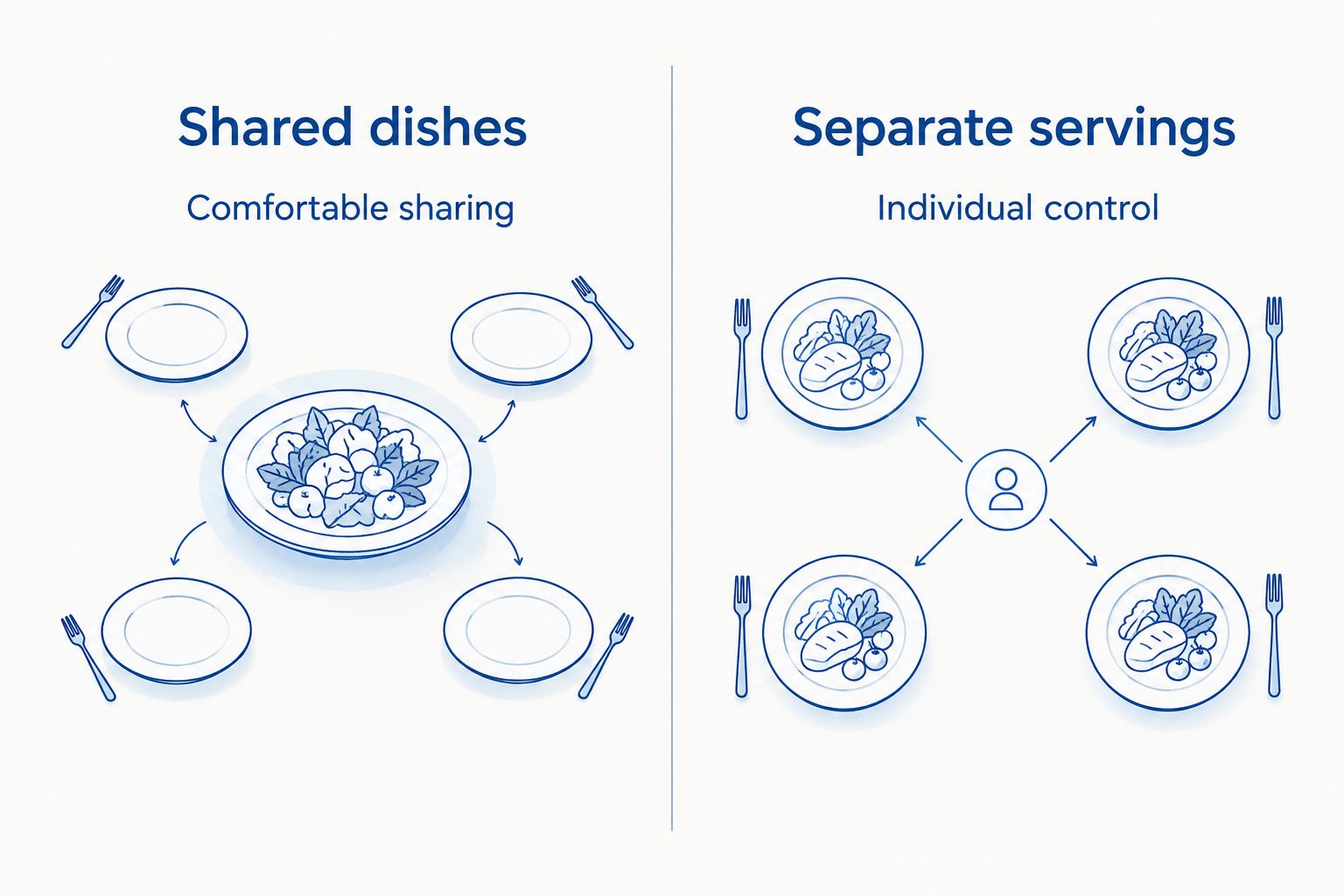
A shared table does not require identical orders. Treat comfort with sharing as a practical choice, not a test of team spirit, and confirm what the restaurant can arrange before promising a particular format.
6. Confirm payment and send one final plan
Start with your organization's meal rules and a written summary. If the institution is paying, ask the appropriate internal contact about authorization and documentation before anyone places an order. If diners are paying individually, make that clear in the invitation.
Do not assume separate checks, a single group payment, or any particular payment arrangement. Ask the restaurant and tell attendees what has been confirmed. Bar service also does not make alcohol a required part of the gathering.
Your final message should stand alone: a colleague reading it between duties should understand where to go, when to arrive, and what they are agreeing to. Date the message for your 2026 outing so an old plan cannot be mistaken for the current one.
- Confirm who is paying and what the arrangement covers.
- Ask the restaurant about the proposed payment method.
- Include the confirmed headcount and arrival time.
- State any firm departure requirement.
- Name the coordinator for last-minute changes.
Compare meal formats for your staff group
Choose the format before treating a restaurant as the answer to every type of gathering. Each option below has a useful role, but none removes the need to confirm practical arrangements.
| Option | Best for | Main advantage | Key limitation |
|---|---|---|---|
| Shared Ethiopian dishes | Colleagues comfortable sharing food and coordinating ingredients | Makes shared dining the center of the meal | Requires agreement about dietary needs and serving practices |
| Separate servings, if offered | Diners who want individual food choices | Gives each diner more control over an order | The restaurant must confirm the available arrangement |
| Restaurant dinner after work | A team gathering without a return-to-work deadline | Keeps the meal separate from workplace duties | Attendance still depends on individual schedules and travel |
| Meal before an opening | Colleagues with confirmed overlap before an event | Gives the gathering a defined place in the schedule | A fixed event start limits flexibility |
For Tsehay Restaurant & Bar Ethiopian dining, confirm the chosen format directly. The restaurant's location and cuisine fit an Adams Morgan Ethiopian meal; they do not establish the suitability of an unconfirmed event arrangement.
Common mistakes museum and gallery staff make
Treating public closing as everyone's finish time
A visitor-facing schedule is not an individual staff schedule. Ask each attendee when they can leave, especially when the meal follows an opening, installation, or other assigned work. Send the invitation around confirmed availability rather than expecting colleagues to catch up later.
Turning a voluntary dinner into an unofficial meeting
A social invitation becomes uncomfortable when essential decisions happen after colleagues decline. Keep required decisions in an appropriate work setting, or clearly identify the gathering as work-related before asking people to attend.
Assuming shared food meets every dietary need
A vegetable dish does not answer questions about every ingredient, preparation surface, or shared utensil. Collect requirements first, ask specific questions, and avoid making assurances on the restaurant's behalf.
Promising event features without confirmation
Do not describe an ordinary restaurant outing as a private reception or promise a quiet discussion space. Confirm any group seating, privacy, access, or service requirement before including it in the staff invitation.
Leaving payment expectations until the bill arrives
Colleagues should know whether the meal is institution-funded or individually paid before accepting. State the arrangement plainly and confirm the restaurant's payment process instead of asking staff to resolve conflicting expectations at the table.
FAQ
What’s the best way to organize Ethiopian dining for museum and gallery staff?
Start with confirmed attendance, work schedules, and dietary needs before choosing the meal format. Assign one coordinator and confirm the restaurant arrangements before sending the final invitation.
Is Tsehay Restaurant & Bar a fit for a museum staff dinner?
Tsehay Restaurant & Bar fits staff seeking traditional Ethiopian cuisine in Adams Morgan, Washington DC. Confirm the proposed group size, timing, and any seating or access requirements directly.
Do all colleagues have to share Ethiopian food?
No colleague should be expected to share food as a condition of attending. Ask the restaurant whether separate servings or other suitable arrangements are possible before promising them.
Can we fit an Ethiopian meal between a shift and an exhibition opening?
Confirm the arrival time and required departure with the restaurant before committing to that plan. Include travel and each attendee’s actual work obligations rather than relying on the museum’s public hours.
Is Ethiopian food automatically suitable for vegan or gluten-free diners?
Ethiopian food is not automatically suitable for every vegan or gluten-free diner. Confirm the ingredients of specific dishes and injera, and ask separately about preparation and cross-contact.
Should a museum team choose a shared platter or individual orders?
Choose shared dishes when attendees agree on ingredients and are comfortable sharing. Ask about individual orders when diners want more control, and confirm what the restaurant offers.
What should the final staff dinner message include?
Include the confirmed location, arrival time, payment arrangement, and coordinator’s name. Add any firm departure deadline and explain how attendees should report a change in plans.
One last thing
Ask who needs to leave first, not just when everyone can arrive. That question exposes the constraint most likely to shape the meal: a return to gallery duty, an evening commitment, or a colleague who cannot stay for the full gathering.
For your 2026 staff outing, put that departure requirement in the plan before choosing shared dishes or discussing drinks. A successful meal is one colleagues can attend comfortably, without having to negotiate their work obligations at the table.
Related guides
- How long dinner at an Ethiopian restaurant takes
- Paying separately in a large group at Tsehay
- Bringing a large group without a reservation