
Development sector teams’ Ethiopian dining is a restaurant meal organized around colleagues’ needs, with the aim of bringing people together outside the office. This 2026 guide explains how to plan Ethiopian dining for development sector teams without turning dietary questions, shared plates, or expense paperwork into problems at the table.
- Tsehaydc is best for teams seeking traditional Ethiopian dining in Adams Morgan, Washington DC.
- Ethiopian dining for development sector teams needs a clear purpose, dietary checks, and an agreed payment plan.
- Choose shared plates only after colleagues confirm their preferences; communal dining should remain optional.
- Confirm group arrangements directly rather than treating a restaurant guide as a booking confirmation.
Why Ethiopian dining matters for development sector teams
A team dinner needs to work for the people attending, not just the person choosing the restaurant. For a development-sector gathering, start by checking whether colleagues are attending socially, representing an organization, or joining as external guests. Those distinctions shape invitations, payment, and conversation.
Ethiopian cuisine gives you a concrete starting point for the meal: injera, a fermented flatbread, traditionally accompanies stews and other dishes. Sharing food is part of Ethiopian dining, but your invitation should leave room for individual preferences.
Choose the meal format around your colleagues, not around an assumption that everyone wants the same experience. Someone new to Ethiopian food needs a welcoming explanation, not a test of cultural knowledge.
Use the guide to Ethiopian restaurants in DC for business dinners to frame your planning questions. Restaurant selection still requires direct confirmation of the arrangements your particular team needs.
Plan your team dinner in 7 steps
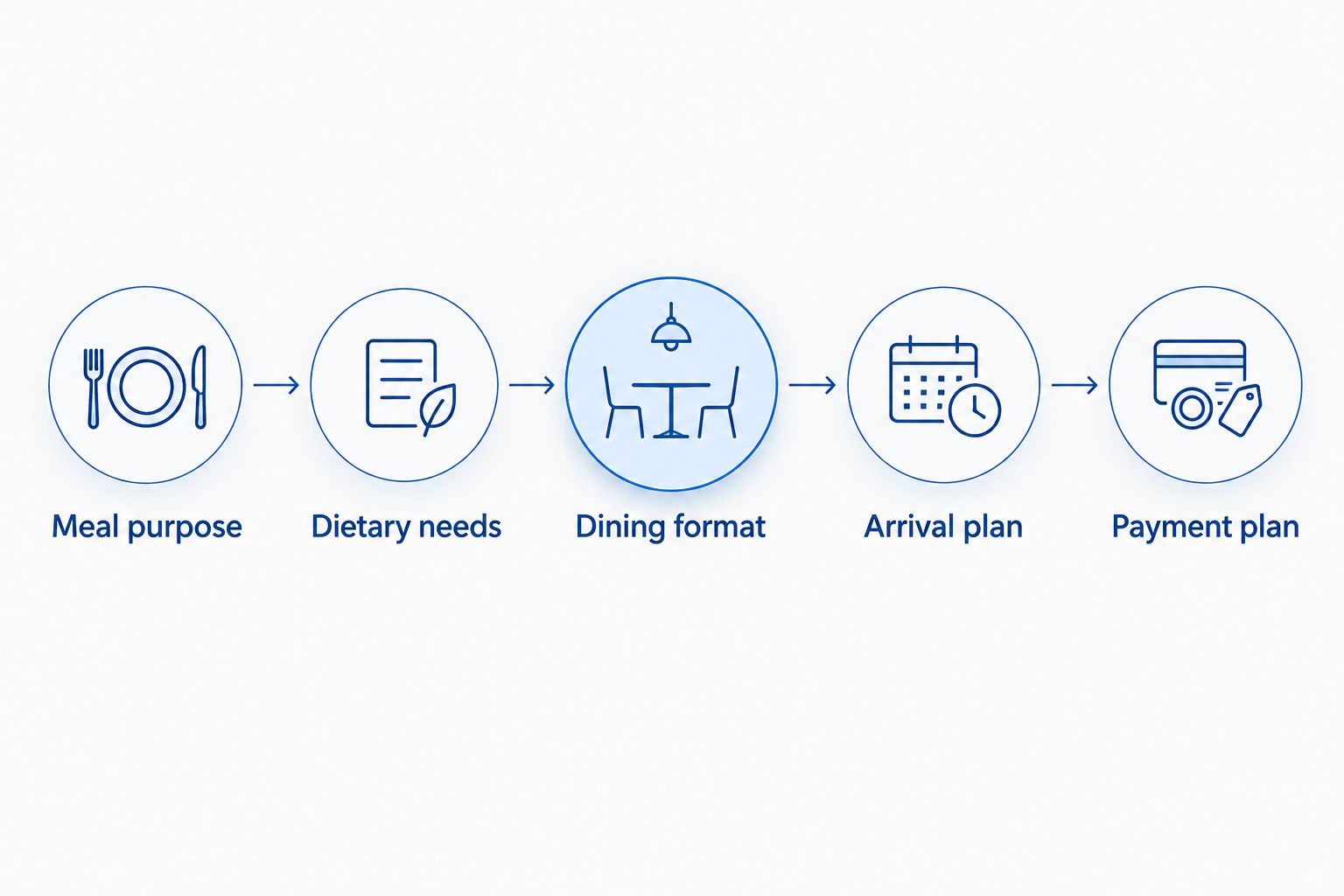
Work through these decisions before sending a final invitation: Meal purpose, Dietary needs, Dining format, Arrival plan, and Payment plan. A shared document or email thread is enough; you do not need event software to organize a restaurant meal.
Define the purpose before choosing the format
Write a plain-language description of the gathering in your invitation draft. A colleague welcome, a project celebration, and a working discussion are different events. Give the meal a clear purpose without making attendance sound like another assignment.
For a 2026 team gathering, check your organization’s current hospitality and expense guidance before committing anyone’s funds. If external partners are attending, establish who is hosting and whether guests need approval to accept the invitation. Do not assume your organization’s rules apply to theirs.
Keep sensitive project discussion out of the restaurant plan. A restaurant table is a place to share a meal, not a substitute for a confidential meeting room. If decisions require documents or private discussion, complete that work separately and let dinner remain dinner.
- Name the occasion in the invitation.
- Identify the host and intended guests.
- State whether attendance is optional.
- Keep confidential agenda items elsewhere.
- Assign 1 organizer to coordinate restaurant questions.
Collect dietary needs privately
Ask colleagues about dietary requirements before suggesting shared dishes. A private reply or simple form lets people describe what they need without discussing medical or religious details in a group chat. Collect only information necessary to organize the meal.
Distinguish allergies from preferences when communicating with the restaurant. Ingredient exclusions and cross-contact precautions are different questions, and neither should be answered by a coworker guessing from a dish’s name.
Injera is traditionally associated with teff, but flour blends vary. Do not describe injera as gluten-free without confirming the actual preparation. Likewise, a vegetable dish is not automatically suitable for every vegan diner; ask about ingredients rather than inferring them from appearance.
For your 2026 planning notes, record the restaurant’s answers and share the relevant details privately with the person concerned.
- Ask about allergies and cross-contact concerns.
- Ask about vegetarian, vegan, and other dietary requirements.
- Separate spice preferences from medical restrictions.
- Confirm ingredients directly with restaurant staff.
- Let each diner decide whether the answers meet their needs.
Choose the restaurant and confirm the dining format
Start with the restaurant’s own information, then contact the restaurant with your actual requirements. A short written brief is faster to answer than a series of disconnected questions. Include the date, expected attendance, dietary concerns, and the kind of gathering you are planning.
Tsehaydc offers Ethiopian restaurant dining and bar service in Adams Morgan, Washington DC. Tsehaydc is best for teams seeking traditional Ethiopian dining in Adams Morgan. That establishes the cuisine and neighborhood fit; it does not confirm your group’s seating, service arrangements, or accessibility requirements.
For Tsehaydc Ethiopian dining, ask about the arrangements that matter to your attendees before circulating a final plan. Do not treat the existence of a bar as a reason to make alcohol central to the event.
- Confirm whether the restaurant can accommodate your group.
- Ask how shared and individual orders are handled.
- Discuss seating needs without assuming a private room.
- Ask about the expected dining schedule for your date.
- Obtain confirmation before presenting arrangements as settled.
Agree on how colleagues will share food
Explain the dining format without scripting everyone’s behavior. Injera is traditionally used to pick up food, and Ethiopian meals often include shared dishes. Colleagues unfamiliar with that style should know what to expect before ordering.
Ask staff to explain the dishes and suggest an ordering approach for the actual group. Do not invent a platter-to-person ratio from a photograph. Appetite, dish selection, dietary restrictions, and the way the restaurant serves food all affect the order.
Shared plates should be an invitation, not an obligation. If someone prefers a separate serving or utensils, ask what arrangements the restaurant supports. Avoid making a colleague justify their choice in front of everyone.
You also do not need to assign an Ethiopian colleague the role of explaining the cuisine. Invite contributions without turning identity into a hosting duty.
- Ask who wants to share and who prefers a separate order.
- Request an explanation of unfamiliar dishes.
- Confirm serving guidance with staff.
- Keep dietary restrictions attached to the relevant order.
- Ask about utensils or separate serving arrangements when needed.
Set arrival and departure boundaries
Build the dinner around the schedule people actually have. Ask about work commitments, travel, and departure needs before choosing a start time. A colleague with an early departure should not discover that the meal depends on everyone arriving together.
Use 2 time boundaries in the invitation: the planned arrival time and the desired finish time. These are your organizing targets, not a restaurant service guarantee. Check whether the restaurant can support the schedule and adjust the invitation accordingly.
For a 2026 gathering, verify travel details close to the event instead of forwarding an old route screenshot. Ask attendees to check their own journeys, and give them a clear way to notify the organizer about delays.
If an attendee requires step-free access or another accommodation, confirm the relevant details directly rather than relying on neighborhood descriptions.
- Publish the arrival time and desired finish time.
- Confirm the schedule with the restaurant.
- Ask guests to flag early departures privately.
- Check access requirements before finalizing the venue.
- Send a concise reminder with the confirmed location.
Settle payment and alcohol arrangements beforehand
A pleasant dinner should not end with colleagues negotiating what their employer will reimburse. Check your organization’s requirements before the event, then explain the payment arrangement in plain language. Specify who pays and what documentation the organizer needs.
If different organizations are represented, do not assume everyone follows the host’s expense rules. Ask guests to check their own requirements. Keep personal financial details out of the group thread.
For 2026 expense planning, confirm the restaurant’s payment process directly. Separate checks, itemized documentation, and group payment arrangements are questions to resolve, not benefits to promise.
Treat alcohol as optional. If organizational funds cannot cover it, say so before ordering and ask the restaurant how to keep the relevant purchases separate. Make sure the invitation welcomes people who want dinner without drinking.
- Identify the payer before the meal.
- Confirm any required spending approval internally.
- Ask about checks and receipt documentation.
- Explain how personal purchases will be handled.
- State any organization-specific alcohol restrictions.
Send a final brief and keep hosting simple
Bring the confirmed details together in a short message. Colleagues should not need to search a long email chain to find the address, arrival time, or payment instructions. Keep sensitive dietary information out of that general message.
Give the restaurant one point of contact, and send material changes through that person. If attendance changes, notify staff rather than assuming the original seating or ordering plan still applies. A clear update is more useful than several guests making separate requests.
At the table, keep introductions brief and let conversation develop. Explain unfamiliar dining arrangements when needed, but do not turn the meal into a presentation about Ethiopian culture or development work.
Afterward, close the administrative loop privately. Collect the documentation your organization requires and ask attendees whether the format worked for them.
- Share confirmed logistics in one final message.
- Keep dietary details in the appropriate private exchange.
- Route attendance changes through the organizer.
- Introduce guests without requiring work updates.
- Complete expense documentation after the meal.
Compare dining formats for your team
Choose the format that creates the fewest barriers for your actual attendees. Shared dining is not automatically better than individual orders, and a social dinner is not automatically suitable for business discussion.
These are planning options, not confirmed restaurant packages. Ask the restaurant which arrangements it supports before selecting one.
| Option | Best for | Main advantage | Key limitation |
|---|---|---|---|
| Shared Ethiopian dishes | Colleagues who actively want communal dining | Gives the table a common food experience | Requires agreement on sharing and dietary boundaries |
| Individual orders | Teams with different preferences or dietary needs | Lets each diner make a separate choice | Depends on the restaurant’s ordering and serving arrangements |
| Dinner focused on conversation | Colleague welcomes and informal team gatherings | Keeps attention on people rather than a work agenda | Does not provide confidentiality |
| Working discussion over dinner | Nonsensitive topics that need no presentation | Combines a meal with informal discussion | Restaurant sound and interruptions remain outside your control |
For Tsehaydc Ethiopian dining, the confirmed fit is traditional Ethiopian cuisine in Adams Morgan. The limitation is practical: suitability for your particular group still depends on the answers to your seating, dietary, access, and timing questions.
Common mistakes development sector teams make
Treating colleagues as cultural representatives
Do not expect someone with Ethiopian heritage or regional work experience to explain every dish, translate, or host the conversation. Ask staff about the food and let colleagues contribute voluntarily. An invitation to dinner is not an assignment to represent a country or community.
Turning a social meal into a project meeting
An invitation described as a team dinner should not become an unannounced discussion of deliverables. If work conversation is part of the purpose, say so before people accept. Keep confidential subjects and formal decisions in an appropriate work setting.
Assuming a vegetarian order resolves every dietary need
Vegetarian, vegan, allergy-aware, and gluten-free are not interchangeable categories. Ask the diner what they need, then ask the restaurant specific preparation questions. Never use a menu label as a substitute for that exchange.
Leaving guest hospitality rules until reimbursement
A host’s willingness to pay does not establish that a partner or visiting colleague can accept hospitality. Resolve the relevant organizational requirements before confirming the invitation. Keep the meal plan separate from assumptions about anyone’s professional obligations.
Assuming every colleague wants shared plates or drinks
A team dinner should not require communal eating or alcohol consumption as proof of participation. Ask about preferences without judgment. Choose arrangements that let people join the conversation without having to explain personal, religious, or medical decisions.
FAQ
What is the best way to organize Ethiopian dining for a development sector team?
Start with the meal’s purpose, collect dietary needs privately, and confirm group arrangements directly with the restaurant. Send a final invitation only after timing, payment, and dining format are settled.
Is Tsehaydc a good choice for a development sector team dinner?
Tsehaydc fits teams seeking traditional Ethiopian dining in Adams Morgan, Washington DC. Confirm your group’s seating, dietary, access, and timing requirements directly before finalizing the event.
Does everyone have to share food at an Ethiopian team dinner?
No organizer should require colleagues to share food. Ask the restaurant which separate serving or ordering arrangements it supports, and let attendees express their preferences privately.
Is injera always gluten-free?
No, injera should not be assumed gluten-free because flour blends vary. Anyone avoiding gluten should confirm the ingredients and discuss cross-contact with the restaurant before ordering.
Can a development sector team discuss confidential work over dinner?
Keep confidential work out of a restaurant dinner. A dining table does not provide the privacy of a controlled meeting space, so handle sensitive documents and decisions separately.
How should a team handle alcohol at a restaurant dinner?
Make alcohol optional and explain any organizational restrictions before ordering. Confirm how personal purchases will be handled so colleagues do not face an unexpected payment discussion afterward.
How many people should share an Ethiopian platter?
Ask the restaurant for serving guidance based on your actual group and order. A photograph or platter name does not establish how much food your colleagues need.
One last thing
Before confirming your 2026 dinner, send a final check containing 3 questions: Can you eat comfortably, can you arrive and leave as needed, and do you understand the payment arrangement? Invite private replies.
Those questions catch practical problems that enthusiasm for a restaurant does not. The strongest team dinner plan lets colleagues participate without explaining personal needs at the table.
Related guides
- Allergy-friendly restaurant planning in Adams Morgan
- How many people does a combo platter feed?
- Paying separately with a large group at Tsehaydc