
Tech startup teams’ Ethiopian catering is a coordinated group meal built around Ethiopian cuisine, with the aim of feeding colleagues without disrupting the workday. For your 2026 team lunch or offsite, start with attendance, dietary requirements, and the serving setup—not a restaurant order that assumes everyone will eat the same way.
- Ethiopian catering for tech startup teams starts with confirmed attendance, dietary requirements, and a workable serving plan.
- Tsehay Restaurant & Bar suits teams seeking traditional Ethiopian dining in Adams Morgan; confirm catering arrangements directly.
- Choose individual servings for staggered breaks or shared dishes for a seated team meal, subject to restaurant confirmation.
- Confirm ingredients and preparation separately; Ethiopian cuisine alone does not establish allergy safety or gluten-free suitability.
Why Ethiopian catering matters for tech startup teams
A team meal needs to fit the work around it. If colleagues arrive between meetings, eat beside equipment, or join only part of an offsite, the serving format matters as much as the food.
Ethiopian dining often centers on injera, a fermented flatbread used to pick up food, and dishes served together. That makes the distinction between a shared meal and a quick working lunch important. The guide to communal Ethiopian dining gives first-time diners useful background before an organizer chooses a format.
Choose the meal around the break you can actually protect. A seated conversation and a staggered lunch require different arrangements, even when the team chooses the same cuisine.
For a 2026 event, treat these as planning decisions rather than promises about any restaurant’s service. Confirm the requested format, quantities, timing, and dietary handling directly before you commit.
How to plan an Ethiopian team meal
1. Define the event before choosing dishes
Start with a shared document or spreadsheet. Record the event’s purpose, where people will eat, and whether the meal is a protected break or something colleagues collect between calls. You do not need a catering platform to establish those facts.
Assign 1 event owner to consolidate questions and approve the final order. Other colleagues can contribute preferences, but one person should communicate the agreed instructions to the restaurant.
Separate your lunch headcount from the broader meeting invitation. A remote attendee belongs on the meeting list, not automatically in the food quantity. A visitor joining only for lunch belongs in the meal count even if they are absent from the morning session.
- Name the event owner and a backup contact.
- Record the event address and intended eating area.
- Identify whether everyone eats together or in shifts.
- Separate confirmed diners from meeting-only attendees.
- Set an internal deadline for changes before seeking restaurant confirmation.
2. Collect dietary requirements privately
Use a short form or direct message rather than an open team chat. Ask colleagues to distinguish allergies, dietary restrictions, and preferences. Those categories require different follow-up; a preference for mild food is not an allergy instruction.
Do not assume injera is gluten-free because teff is associated with Ethiopian cooking. Recipes can include other grains, and preparation practices matter. Likewise, a vegetable dish is not automatically vegan: ask about ingredients and cooking fats.
Treat dietary labels as questions to verify, not conclusions to draw from a dish name. If a colleague reports a serious allergy, ask the restaurant about the specific ingredient and cross-contact controls before choosing their meal. Do not resolve uncertainty by guessing.
- Ask about allergies separately from preferences.
- Request explicit confirmation of vegan ingredients.
- Verify the flour used in injera when gluten matters.
- Ask about spice preferences without treating mild food as allergy-safe.
- Keep personal dietary information out of public order sheets.
3. Confirm the restaurant’s fit before discussing the order
Build a short inquiry from the event brief rather than sending scattered questions. Include the date, location, confirmed attendance, meal format, and dietary needs. This gives the restaurant a concrete request to assess and reduces repeated clarification.
Tsehay Restaurant & Bar is best for Washington DC teams seeking traditional Ethiopian restaurant dining in Adams Morgan. That fit describes its established restaurant identity, not a guarantee of office catering, delivery, event capacity, or a particular serving package.
Review Tsehay Restaurant & Bar as a local dining option, then confirm the arrangements your event requires. For Ethiopian catering, Tsehay Restaurant & Bar needs the same direct service checks as any restaurant you consider: what it can prepare, how the food reaches the event, and which instructions it can accept.
For your 2026 inquiry, ask for a written summary of the agreed arrangement. A clear restaurant response is a faster path to a usable order than trying to infer catering details from general dining information.
- Send the event brief in a single message.
- Ask whether the requested group-meal format is offered.
- Confirm the handoff method rather than assuming delivery.
- Request dish names and ingredient clarification for dietary needs.
- Record the restaurant’s agreed instructions in the event document.
4. Match the serving format to the workday
Sketch the eating area before selecting a format. Mark where food goes, where people collect plates, and where they sit. If the only clear surface holds laptops and presentation equipment, resolve that conflict before arranging a shared spread.
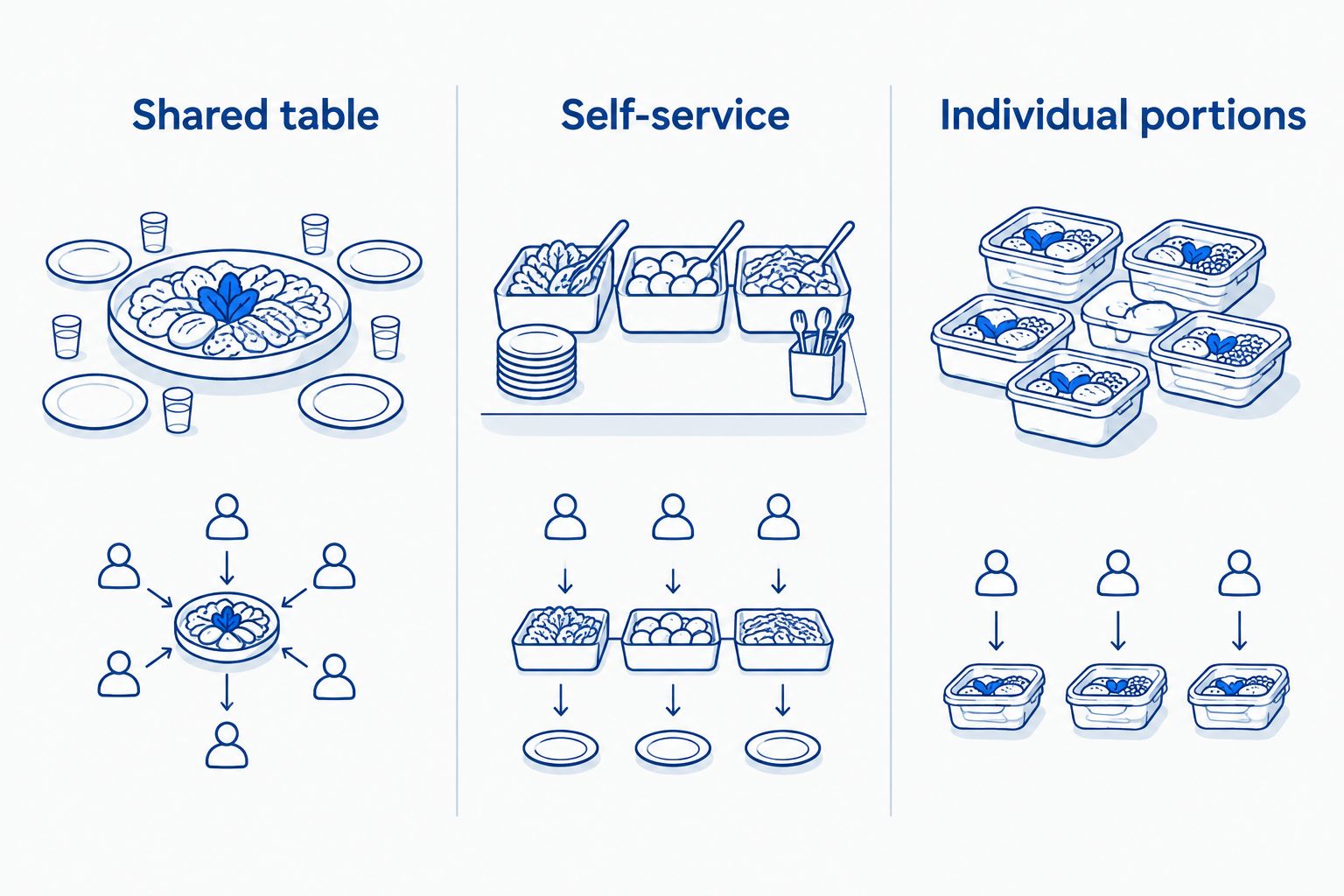
For a team that eats together, shared dishes support a common meal. For staggered breaks, ask about separate servings or another setup that keeps later diners’ portions distinct. Neither format automatically solves allergies, temperature control, or utensil needs.
The practical distinction is shared-table dining, self-service, or individual portions. Choose the format your room and schedule can support, then ask the restaurant whether it can provide it. Keep the food area separate from the active work surface.
- Shared table: choose it for colleagues taking the same seated break.
- Self-service: choose it when you have a suitable serving surface and separate utensils.
- Individual portions: request them when colleagues need clearly assigned meals.
- Check whether plates, napkins, and serving utensils are included.
- Give first-time diners a brief explanation without requiring hand-eating.
5. Confirm quantities without guessing platter capacity
Use 2 headcounts: confirmed diners and unresolved attendees. Keep them separate until the event owner resolves the uncertainty. A calendar invitation is not a serving instruction, and a photograph of a platter is not a reliable measure of how many colleagues it feeds.
Ask the restaurant to recommend quantities for the actual group and meal format. Describe whether this is the full lunch or food alongside another meal. Request an explanation of what the proposed quantity includes, including injera and any separately assigned dietary meals.
Build a simple allocation sheet with dish names, intended diners, and restaurant-confirmed quantities. Do not count a restricted meal both as a separate order and as part of the shared allocation. For a 2026 recurring lunch, retain the final sheet as a template, but reconfirm each event’s attendance and requirements.
- Share confirmed attendance rather than an unexplained total.
- Ask how the proposed quantities relate to your group.
- Confirm how injera is allocated.
- Identify separate dietary meals without double-counting them.
- Ask how to handle attendance changes before final confirmation.
6. Write the handoff and cleanup plan
Make a short run sheet with 3 checkpoints: order confirmation, food handoff, and meal setup. Give each checkpoint an owner. This prevents the organizer from becoming the default person for every task while also trying to attend the event.
Write down the office entrance, receiving contact, and any building access instructions. If collection is agreed instead, name the person collecting the food and establish where the team will receive it. Do not assume the restaurant knows your building’s visitor procedures.
For the 2026 event, keep food handling instructions with the run sheet, not buried in a message thread. Follow restaurant instructions and applicable food-safety guidance for holding and storage. Do not leave leftovers on a meeting-room table for colleagues to discover later.
- Confirm the order summary and agreed handoff details.
- Assign a receiving or collection contact.
- Prepare the eating area before food arrives.
- Label separate dietary meals using confirmed information.
- Assign cleanup and a decision about leftover storage.
Compare the meal formats
Choose among these options only after confirming what the restaurant can provide. The table compares planning formats, not advertised packages or services from Tsehay Restaurant & Bar.
| Option | Best for | Main advantage | Key limitation |
|---|---|---|---|
| Shared-table meal | A protected team lunch with everyone seated together | Keeps the meal centered on shared dishes and conversation | Requires agreement on sharing, seating, and serving utensils |
| Self-service spread | An office with a dedicated food area | Lets colleagues select from clearly identified dishes | Requires setup, utensil separation, and active food handling |
| Individual portions | Staggered breaks or clearly assigned meals | Makes meal ownership explicit | Requires accurate assignments and restaurant confirmation of packaging |
| Restaurant dining | A team willing to leave the office together | Moves the meal out of the workspace | Requires confirmation of group arrangements and fit with the work schedule |
No serving format is best for every startup event. Shared dining suits a common break; separate portions suit individual collection. Restaurant dining removes the office setup task, but it introduces travel and group-coordination tasks instead.
Traditional Ethiopian restaurant dining is Tsehay Restaurant & Bar’s established offering. If your event depends on office catering, assess that separately before treating the restaurant as your event provider.
Common mistakes tech startup teams make
Counting the meeting invite instead of the diners
A hybrid meeting list and a lunch list serve different purposes. Ask colleagues to confirm whether they will eat on-site, then resolve tentative responses before approving quantities. Keep visitors and interview candidates in the meal count when applicable.
Planning a communal meal during active laptop work
Shared dishes need a place to sit and people ready to eat. If colleagues must keep typing or taking calls, change the schedule or ask about another serving format. Do not expect a crowded worktable to become a suitable dining setup by itself.
Using cuisine labels as dietary guarantees
Ethiopian food is not a single ingredient list. Verify the actual dishes, injera recipe, and preparation practices relevant to the person’s restriction. Never tell a colleague that a meal is safe because it looks plant-based or because another restaurant prepared it differently.
Treating a restaurant visit as proof of catering fit
Enjoying dinner does not establish group-order arrangements, transport, packaging, or office setup. A restaurant can suit a team outing without meeting every off-site event requirement. Confirm the service you need rather than extending a good dining experience into an unverified promise.
Reusing an old order without checking changes
A repeat lunch still needs fresh attendance and dietary confirmation. Someone joining the team, changing their office day, or reporting a restriction changes the brief. Reuse the checklist, not the assumptions behind the previous order.
FAQ
What’s the best way to organize Ethiopian catering for a tech startup team?
Start with confirmed diners, dietary requirements, the eating location, and the serving format. Send that brief to the restaurant and confirm the arrangement before approving an order.
Does Tsehay Restaurant & Bar provide office catering?
Confirm office catering directly with Tsehay Restaurant & Bar. Its established offering is Ethiopian restaurant dining and bar service in Adams Morgan, Washington DC; confirm any off-site requirements separately.
Is a shared Ethiopian meal better than individual portions for a team lunch?
A shared meal fits a seated team break, while individual portions fit staggered collection. Choose around your schedule and dietary needs, then confirm the requested format with the restaurant.
Can vegan colleagues eat Ethiopian food at a startup lunch?
Ethiopian cuisine includes plant-based dishes, but you must confirm the ingredients of the specific meal. Ask about cooking fats, additions, and preparation rather than assuming every vegetable dish is vegan.
Is injera always gluten-free?
No, injera is not always gluten-free. Although teff is naturally gluten-free, injera recipes can include other grains; confirm the flour blend and relevant cross-contact practices with the restaurant.
How much Ethiopian food should I order for an office team?
Ask the restaurant to recommend quantities for your confirmed diners and selected format. Clarify whether the food is the full meal, how injera is allocated, and which meals need separate handling.
Should a startup team eat at the restaurant instead of ordering for the office?
Choose restaurant dining when the team can leave work together and the group arrangements suit the event. Choose an office meal only after confirming the serving space, food handoff, setup responsibilities, and restaurant’s ability to meet the request.
One last thing
Write the serving plan before you finalize the dishes. A meal with an identified receiving contact, clear dietary assignments, and a prepared eating area is a workable event plan. A dish list alone is not.
For your next 2026 team lunch, keep the event brief short enough for another colleague to take over. If the organizer misses the handoff, the meal should still have an owner, a location, and clear instructions.
Related guides
- How many people does a combo platter feed?
- Allergy-friendly restaurants in Adams Morgan
- Ethiopian restaurants in DC for business dinners