
Real estate open house Ethiopian catering is food service built around Ethiopian cuisine with the aim of welcoming prospective buyers without interrupting property tours. This 2026 guide explains how to plan portions, serving stations, dietary questions, and cleanup for guests arriving at different times rather than sitting down together.
- Ethiopian catering for real estate open houses needs individual portions, clear ingredient labels, and a serving station outside the tour route.
- Tsehay Restaurant & Bar serves traditional Ethiopian cuisine in Adams Morgan; confirm off-site catering arrangements directly.
- Choose individual plates for moving visitors and shared platters for seated, hosted conversations.
- Assign food handling and cleanup to someone other than the agent leading property tours.
Why Ethiopian catering matters for real estate open houses
An open house is not a dinner reservation. Guests arrive unpredictably, carry phones and property brochures, and move between rooms while you answer questions about the home.
Ethiopian food introduces a practical decision: preserve a shared dining format or adapt the service to individual plates. Injera, the fermented flatbread traditionally used to scoop food, works differently at a seated table than beside a busy kitchen island. Choose the serving format before choosing the dishes.
For local context, Tsehay Restaurant & Bar is an Ethiopian restaurant and bar in Adams Morgan, Washington DC. Tsehay Restaurant & Bar is best for diners seeking traditional Ethiopian cuisine in Adams Morgan. Treat off-site catering, transport, equipment, and staffing as separate questions that require direct confirmation.
For your 2026 event, judge the food plan by whether guests can eat comfortably while you keep the property accessible. Catering does not replace clear signage, an unobstructed entrance, or an agent ready to greet visitors. Keep hospitality useful rather than making it the main attraction.
How to plan Ethiopian catering for an open house
1. Define the event before discussing food
Start with a written event brief in a document or spreadsheet. Identify whether you are hosting a public open house, an invitation-only buyer preview, or a broker gathering; each needs a different relationship between eating and touring.
A public event needs a serving plan for arrivals spread across the viewing window. A broker gathering with a defined meal break supports seated service more naturally. Neither format justifies an attendance estimate based only on how many people visited a previous listing.
For a 2026 listing event, record the property's restrictions before contacting a restaurant. An occupied home, staged furniture, shared building entrance, or limited kitchen access changes what you can safely set up.
- Record the event window and intended audience.
- Separate invited attendees from uncertain walk-in traffic.
- Identify usable tables, outlets, and handwashing facilities.
- Confirm the owner's and building's food-service rules.
- Name the person responsible for setup and removal.
2. Estimate portions by eating occasion
Build your own portion worksheet first. Ask whether food is a light welcome, a substantial snack, or a meal; a guest touring briefly does not necessarily need the same portion as a broker staying through lunch.
Do not turn platter dimensions into a serving count. Ask the provider to describe the portions supplied, whether injera comes separately, and what additional plates or serving utensils you need. A guide to how many people a combo platter feeds provides a useful starting point for that conversation, not a substitute for confirming your order.
Set a replenishment plan instead of displaying everything immediately. Smaller service batches let your designated food handler monitor the station while keeping reserve food under appropriate temperature control.
- Label the event as a snack or meal occasion.
- Distinguish expected eaters from total visitors.
- Confirm portions with the actual food provider.
- Count injera, plates, utensils, and napkins separately.
- Decide how reserve food will be stored.
3. Confirm dishes, ingredients, and service arrangements
Write a short menu brief before choosing a provider. Describe the serving format, known dietary needs, preferred heat levels, and whether guests will have seats; this gives a restaurant concrete questions to answer.
Tsehay Restaurant & Bar serves traditional Ethiopian cuisine, but restaurant dining does not establish an off-site catering package. Ask directly about the requested event, food preparation, handoff, ingredient information, and any equipment involved. Do not advertise restaurant catering until the restaurant confirms the arrangement.
Ethiopian dishes can include lentils, vegetables, meat, and dairy-based ingredients. A dish name alone does not establish whether that preparation fits a guest's dietary requirements, and injera should not be labeled gluten-free without confirmation of its ingredients and handling.
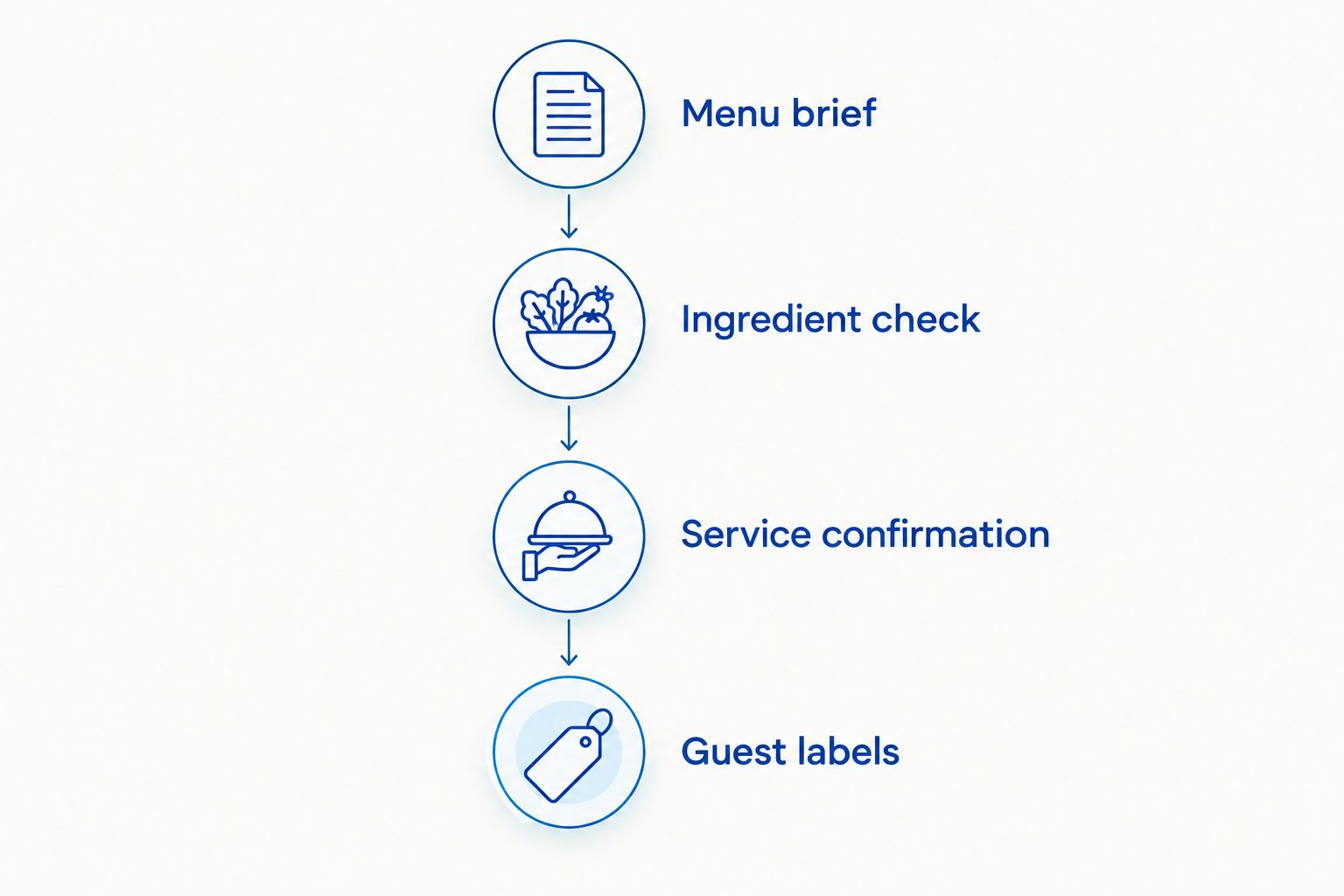
- Menu brief: Describe the eating occasion and format.
- Ingredient check: Request dish-specific ingredient information.
- Service confirmation: Establish who transports and serves food.
- Guest labels: Use only information the provider confirms.
4. Separate food service from the property tour
Walk the listing with an empty plate and a brochure before deciding where food belongs. This simple test exposes awkward doorways, missing places to set a plate down, and serving stations that block access to features buyers want to inspect.
Place the station where guests can stop without closing the route to the kitchen, stairs, or exit. Protect surfaces with the owner's permission, and keep food away from bedding, upholstered staging, and listing documents.
For your 2026 floor plan, give guests an obvious place to finish eating before continuing through the home. If the property cannot support that arrangement, simplify the food service rather than asking visitors to balance a meal throughout the tour.
- Keep serving tables outside door swings and narrow passages.
- Place plates and napkins at the start of service.
- Keep serving utensils with their respective dishes.
- Provide an obvious waste station away from brochures.
- Protect approved surfaces beneath food and drinks.
5. Assign food safety to a named person
Use a written temperature and timing checklist rather than relying on how food looks. Someone must receive the food, check the holding setup, manage replenishment, and decide when food leaves service; the touring agent should not inherit those tasks by default.
For household-style event planning, USDA food safety guidance calls for keeping hot food at 140°F or above and cold food at 40°F or below. Perishable food should not remain unrefrigerated for more than 2 hours, reduced to 1 hour when temperatures exceed 90°F. Commercial catering must also follow applicable local requirements.
These are safety limits, not recommended display times. For your 2026 event checklist, ask the provider how the proposed transport and holding arrangements meet the requirements for your service format.
- Identify the person receiving and monitoring food.
- Confirm suitable hot or cold holding equipment.
- Use a food thermometer rather than touch.
- Record when perishable food leaves temperature control.
- Remove food when its safe service window ends.
6. Close service without disrupting buyer conversations
Prepare a closing checklist before the event begins. Your food handler should know where waste goes, which containers belong to the provider, and which surfaces need cleaning before the property returns to normal use.
Do not send guests away with food unless its handling history supports safe storage and transport. Keep leftover decisions separate from the desire to avoid waste; an appealing dish is not evidence that it remained at a safe temperature.
Afterward, record what happened rather than claiming the catering improved sales. Food accepted, food discarded, spills, interrupted tours, and guest questions are useful observations. They do not prove that refreshments caused an inquiry or an offer.
- Close the serving station at the agreed time.
- Separate provider equipment from disposable items.
- Remove waste from the property as agreed.
- Check counters, floors, and staging for spills.
- Record portions used and service problems.
Compare serving options for your open house
Individual plates are the stronger default for visitors who are moving through a property. Shared platters belong where guests can sit, understand the format, and eat without handling listing materials at the same time.
The options below describe service formats to discuss with a provider. They are not claims about packages offered by a particular restaurant. Confirm preparation, packaging, equipment, and staffing before making your choice.
| Option | Best for | Practical advantage | Key limitation |
|---|---|---|---|
| Individually portioned plates | Public open houses with staggered arrivals | Gives each guest a separate serving | Requires assembly space and management of plates |
| Attended serving station | Events with a designated food handler | Keeps replenishment and utensils under supervision | Requires someone dedicated to service |
| Shared platters | Seated broker meals or hosted buyer conversations | Preserves a communal dining format | Poor fit for guests moving between rooms |
| Restaurant dining separately from the viewing | Hosts who want the property kept food-free | Separates the meal from the property tour | Requires a separate location and schedule |
An attended station still needs a temperature-control plan. Individual plates still need safe handling. Changing the presentation does not remove the underlying food-service responsibilities.
If you are considering Tsehay Restaurant & Bar, distinguish confirmed restaurant dining from any separately requested off-site service. Choose the format the property supports, then confirm whether the restaurant can meet that brief.
Common mistakes real estate hosts make
Treating every visitor as a seated diner
A prospect walking through bedrooms has different needs from a broker sitting down after a tour. Avoid building the entire event around large shared servings when there is nowhere appropriate to eat them.
Match portions to the guest's activity. Keep the property tour easy to continue without carrying food.
Assuming vegetarian means allergy-safe
Vegetarian, vegan, gluten-free, and allergy-safe are different claims. Ingredients, cooking fats, sauces, bread composition, and cross-contact all require separate questions.
Ask for dish-specific information before printing labels. Do not turn a general description of Ethiopian cuisine into a promise about a particular preparation.
Making the kitchen island unusable
Buyers need to inspect the kitchen, not negotiate a crowded buffet to see it. Serving dishes, packaging, and waste can obscure the very space you are presenting.
Use an approved location that leaves the property's features visible. If no such location exists, keep the viewing food-free.
Letting the agent become the food handler
The agent cannot consistently greet arrivals, answer property questions, replenish dishes, and monitor holding temperatures at once. Assign the food role before guests arrive.
If nobody can own service, reduce the plan. An unattended spread is not a staffing solution.
FAQ
What’s the best way to serve Ethiopian food at a real estate open house?
Individual plates are the stronger default when guests arrive at different times and move through the property. Use shared platters when you provide seating and a defined meal setting.
Does Tsehay Restaurant & Bar cater real estate open houses?
Confirm off-site catering directly with Tsehay Restaurant & Bar before planning around it. The restaurant serves traditional Ethiopian cuisine in Adams Morgan, but that does not establish event catering, transport, or staffing arrangements.
How much food should I order for an open house?
Base the order on expected eaters and whether you are serving a snack or a meal. Ask the provider to confirm portions, injera quantities, and how reserve food will be held.
Is injera gluten-free?
Do not assume injera is gluten-free. Confirm the flour ingredients and preparation practices for the specific injera being served before making a dietary claim.
Can guests eat Ethiopian food while touring the home?
Give guests a designated place to eat rather than encouraging food throughout the home. This keeps plates away from staging and leaves visitors free to inspect the property.
How long can Ethiopian catering stay out at an open house?
USDA guidance limits unrefrigerated perishable food to 2 hours, or 1 hour when temperatures exceed 90°F. Use proper hot or cold holding and follow applicable local food-service requirements.
Do I need someone dedicated to serving the food?
Assign a named person to food receipt, holding, replenishment, and cleanup. Keep that responsibility separate from the agent’s property-tour duties whenever those tasks overlap.
One last thing
Test the guest's hands, not just the table layout. Before your 2026 open house, hold a plate, a phone, and a property brochure while opening an interior door. If that feels awkward, change the serving location or create a place to finish eating before the tour continues.
That rehearsal tests the real constraint: whether hospitality and property viewing can work together. The food plan succeeds when neither gets in the other's way.
Related guides
- Allergy-friendly dining questions in Adams Morgan
- How communal Ethiopian dining works
- Ordering non-spicy Ethiopian dishes