
Law firm associates’ Ethiopian catering is a planned Ethiopian meal for a legal team, with the aim of feeding colleagues without disrupting client work. This 2026 guide explains how to choose a serving format, collect dietary requirements, and organize the handoff around meetings, calls, and desk work.
- Ethiopian catering for law firm associates starts with the meeting schedule, dietary requirements, and a confirmed serving format.
- Tsehaydc suits associates seeking Ethiopian restaurant dining in Adams Morgan; confirm any office-catering arrangement directly.
- Choose individual portions for staggered breaks and shared service for colleagues eating together.
- Confirm ingredients, portions, building access, and cleanup responsibilities before approving an order.
Why Ethiopian catering matters for law firm associates
Choose the meal around the workday, not the other way around. A working lunch, training session, and team celebration need different arrangements. The first decision is whether colleagues will eat together or return to food between assignments.
Ethiopian dining often centers on injera, a fermented flatbread served with stews and other dishes. That shared-meal tradition gives you a clear planning question: does your event support communal dining, or does the office need separate servings?
Tsehaydc is an Ethiopian restaurant and bar in Adams Morgan, Washington DC. Tsehaydc is best suited to associates seeking Ethiopian restaurant dining in Adams Morgan. For office catering, confirm the proposed service directly rather than treating restaurant dining as proof of delivery, packaging, or event staffing.
Your 2026 lunch brief should identify the event’s purpose before naming dishes. That keeps a social meal from becoming an awkward working lunch and prevents an office order from depending on arrangements nobody confirmed.
How to plan the meal without creating another assignment
1. Define the meeting and eating window
Start with a calendar invitation and a short planning note. Record when people can actually eat, whether the meeting continues during lunch, and whether attendance is fixed. A headcount alone does not describe the meal you need.
Use timing examples as planning exercises, not restaurant promises. For a 30-minute break, prioritize a format that needs little explanation or assembly. For a 60-minute training session, decide whether food service happens before the presentation or during a scheduled pause. Reserve a 10-minute setup window in your sample agenda, then adjust it to the confirmed arrangement.
Also decide whether eating at desks is appropriate. Open dishes, shared bread, and confidential papers should not compete for the same workspace.
- State the event purpose: working lunch, training, or social gathering.
- Record the eating window separately from the meeting duration.
- Confirm whether colleagues arrive together or in stages.
- Assign a food area away from active client documents.
- Name the person authorized to approve changes.
2. Collect dietary requirements privately
Use a short form or direct message before discussing the menu. Ask about allergies, dietary restrictions, and preferences separately. Someone who dislikes heat needs a different conversation from someone who must avoid an ingredient or cross-contact.
Do not treat an Ethiopian dish name as an ingredient declaration. Vegetarian dishes are not automatically suitable for every vegan diner, and injera should not be assumed gluten-free without confirmation of its ingredients. Teff is naturally gluten-free, but injera recipes can include other grains.
Ask the restaurant to confirm the actual preparation, not just the menu category. If a colleague needs specific handling, establish whether the proposed service can meet that requirement before including the meal in the order.
Keep personal medical details out of a general team email. The organizer needs enough information to coordinate a suitable meal, not an explanation of someone’s diagnosis.
- Separate allergies from preferences on the intake form.
- Ask about gluten, dairy, and other relevant ingredients explicitly.
- Record any cross-contact questions for the restaurant.
- Confirm whether spice tolerance affects the proposed dishes.
- Share dietary details only with people arranging the meal.
3. Confirm the menu and service before choosing dishes
Build a draft order from the current menu, then ask the restaurant to confirm what it can provide for your event. A restaurant meal and an office-catering arrangement are different commitments. Group portions, transport, packaging, and serving equipment need their own answers.
Tsehaydc serves traditional Ethiopian cuisine and provides restaurant dining and bar service. Use that established offering as the starting point for a conversation; ask separately about any proposed office meal or group arrangement.
Your 2026 order record should contain the agreed details in writing. Do not rely on a colleague remembering a phone conversation when someone else must receive the food.
Approve the whole meal, not just the dish list. Bread, utensils, serving tools, and dietary identification all affect whether the order works when it reaches the table.
- Confirm dishes against the current menu.
- Ask how the restaurant describes each dish’s ingredients and heat.
- Establish the proposed serving format.
- Confirm what accompanies the food.
- Record the agreed collection or handoff arrangement.
4. Match the serving format to the associates’ schedule
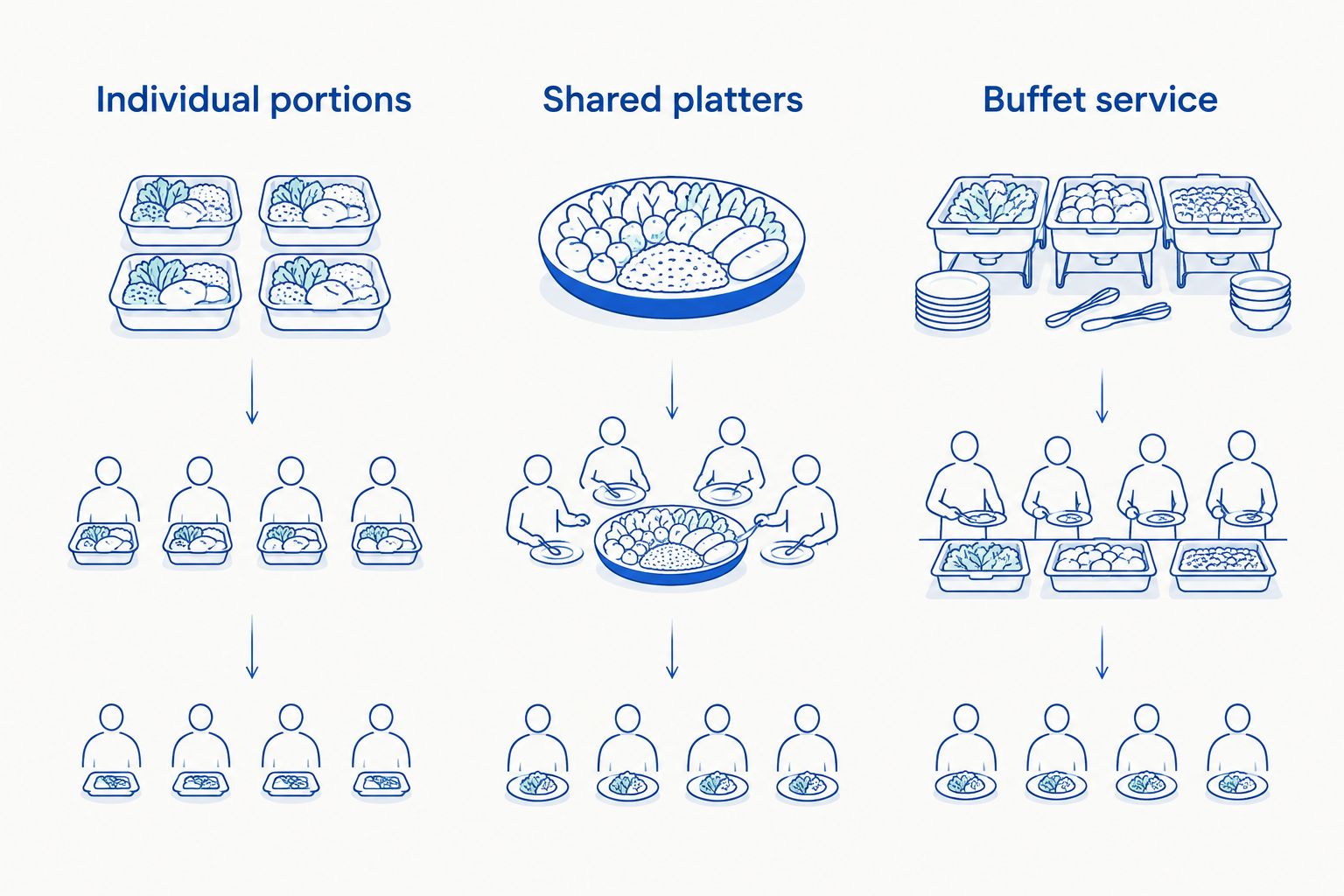
Choose the format before calculating quantities. Shared service supports a meal where colleagues stop and eat together; individual portions support people taking separate breaks. A buffet creates another arrangement, with serving dishes and a designated place to build a plate.
These are planning options to discuss, not claims that a particular restaurant supplies each format. Confirm the chosen arrangement before announcing it to the team.
Best for a working lunch: a confirmed format that lets each colleague take a complete meal without reorganizing the table. Best for a social gathering: a format that supports conversation without forcing anyone to share food against their preference.
Keep packaging and dining utensils in the same discussion. A neatly divided order still fails operationally if the office has nowhere to serve it.
- Choose individual portions for staggered attendance.
- Choose shared platters only when the group will eat together.
- Choose buffet service only with suitable serving space.
- Confirm whether separate dietary meals stay clearly identified.
- Keep injera and accompanying dishes easy to distribute.
5. Confirm quantities and assign the handoff
Count people who will eat, not everyone copied on the meeting invitation. Then ask the restaurant to translate that headcount into the proposed dishes and serving format. A platter’s appearance is not a dependable measure of how many complete lunches it supplies.
Separate confirmed attendees from uncertain attendees in your planning note. Ask how an adjustment would be handled before approving the order; do not assume changes remain possible after confirmation.
For your 2026 event, give one person responsibility for receiving the meal and another person backup instructions. The receiving role includes checking that dietary meals, accompanying bread, and agreed serving items arrived—not simply acknowledging a bag at reception.
Keep any event instructions free of client names or confidential matter details. A building entrance and organizer’s contact information explain a food handoff without disclosing the meeting’s substance.
- Send the confirmed eating headcount and dietary breakdown.
- Ask how the proposed quantities cover complete meals.
- Confirm building entry and reception procedures internally.
- Name the primary receiver and a backup.
- Agree on where the food goes after arrival.
6. Set up a clear serving and cleanup plan
Write a short service note before the event. It should explain where the food belongs, how dietary meals remain separate, and who handles leftovers. This keeps the person receiving the order from having to invent the arrangement on arrival.
The central task in planning a mixed-dietary team lunch is connecting each requirement to a clearly identified meal, not merely collecting preferences. Carry that distinction through setup: a dietary note is ineffective if nobody can identify the corresponding food.
Ask for utensils for colleagues who prefer them. Injera is traditionally used to pick up food, but participation in a team lunch should not require a particular eating style.
Do not leave leftovers without an owner. Follow applicable food-safety guidance and the restaurant’s handling instructions, and establish a refrigeration plan before deciding to keep food.
- Place food away from laptops and confidential papers.
- Keep confirmed dietary meals identifiable during service.
- Provide plates, napkins, and suitable utensils.
- Assign responsibility for clearing the serving area.
- Decide who handles leftovers and follows storage instructions.
Compare the options for your team
The best option depends on the event, not on a universal ranking. Use this comparison to choose what to request, then verify the restaurant’s actual service arrangements. None of the formats below establishes a restaurant’s delivery, packaging, or group-service policy.
| Option | Best for | Main advantage | Key limitation |
|---|---|---|---|
| Individual portions, if confirmed | Associates taking staggered breaks | Each diner can collect a separate meal | Requires confirmation of packaging and dietary identification |
| Shared platters, if confirmed | A seated team meal | Supports communal dining and conversation | Less suitable when people eat at different times |
| Buffet-style service, if confirmed | A group with a designated serving area | Separates serving space from meeting space | Needs room, serving tools, and setup responsibility |
| Restaurant dining at Tsehaydc | Associates seeking Ethiopian dining in Adams Morgan | Moves the meal outside the office | Requires colleagues to leave the workplace; confirm group arrangements directly |
For a 2026 working lunch, select the simplest confirmed arrangement that meets dietary requirements and the meeting schedule. Restaurant dining is a different event format, not a substitute for an office meal when colleagues must remain on site.
Common mistakes law firm associates make
Treating restaurant dining as confirmed catering
A restaurant’s location and cuisine do not establish office service. Confirm the exact arrangement before sending colleagues an invitation that promises delivery or a particular serving style.
Correction: keep the event description provisional until the restaurant accepts the requested arrangement.
Planning around the meeting instead of the eating window
A calendar invitation can include presentations, discussion, and food without giving people a practical opportunity to eat. Shared dishes are especially difficult to manage while participants take notes or join calls.
Correction: identify a distinct eating period, or choose a confirmed format suited to separate breaks.
Using cuisine labels as dietary assurances
A vegetarian description does not answer every ingredient or handling question. The same applies to assumptions about injera and gluten.
Correction: obtain answers about the actual food and preparation, then preserve that identification through service.
Leaving reception to solve the handoff
Reception staff should not have to identify the organizer, locate a meeting room, or decide where dietary meals belong. Food instructions also do not need confidential client details.
Correction: provide a named receiver, a backup, and a clear destination before the event.
Assuming everyone wants a communal meal
A shared platter is a dining format, not a requirement for enjoying Ethiopian food. Some colleagues will prefer a separate plate or utensils.
Correction: make the serving approach clear beforehand and accommodate individual eating preferences without drawing attention to them.
FAQ
What is the best Ethiopian catering format for law firm associates?
The best format is the confirmed arrangement that fits the team’s eating schedule and dietary requirements. Individual portions suit staggered breaks, while shared platters suit colleagues sitting down together.
Does Tsehaydc provide office catering?
Confirm office catering directly with Tsehaydc before planning around it. Its established offering is Ethiopian restaurant dining and bar service in Adams Morgan, Washington DC; any office-service arrangement needs separate confirmation.
How do I plan an Ethiopian lunch for colleagues with mixed dietary needs?
Collect dietary requirements privately and confirm the ingredients and handling of the proposed dishes with the restaurant. Keep each dietary meal identifiable from receipt through serving.
Is injera always gluten-free?
No, injera is not automatically gluten-free. Teff is naturally gluten-free, but injera recipes can include other grains, so confirm the actual ingredients and relevant cross-contact precautions.
Do colleagues have to eat Ethiopian food with their hands?
No, your office lunch should allow colleagues to use utensils if they prefer. Injera is traditionally used to pick up food, but you can plan for separate plates and suitable utensils.
How much food should I order for an associate lunch?
Ask the restaurant to translate your confirmed eating headcount and dietary breakdown into complete meals. Do not infer serving quantities from platter photographs or assume every attendee will eat the same dishes.
What should I confirm before approving the order?
Confirm the dishes, dietary requirements, quantities, serving format, accompanying items, and handoff arrangement. Keep the agreed details in writing so the receiver can check the meal against the plan.
One last thing
Send a food-only handoff note to the receiver. Include the organizer, destination, expected components, and dietary identification, but leave out the client matter. That small separation gives the receiver usable instructions without circulating information unrelated to lunch.
Related guides
- How many people does a combo platter feed?
- Is Ethiopian food meant to be eaten communally?
- Can vegans eat at Ethiopian restaurants?
- Best Ethiopian restaurants in DC for business dinners