
Confirm a gluten free injera option directly with the restaurant before you order; do not treat teff-based injera as proof that the finished bread is gluten-free. Teff is naturally gluten-free, but an injera recipe can include wheat, and preparation introduces a separate cross-contact question. If you have celiac disease or a wheat allergy, explain that requirement before discussing your meal.
- Confirm a gluten free injera option through ingredients and preparation, not the word teff alone.
- Teff is naturally gluten-free; wheat-containing injera is not suitable for a gluten-free diet.
- Tsehay Restaurant & Bar serves traditional Ethiopian cuisine; discuss dietary requirements before ordering.
- For celiac disease, check the injera, accompanying dishes, utensils, and serving surface together.
Why this matters
Injera is both bread and part of the serving arrangement in Ethiopian dining. Checking the bread on the side is not enough if your food arrives on an injera-lined platter made with a different recipe.
For your 2026 visit, start with Tsehay Restaurant & Bar and ask about your dietary requirement directly. The useful answer identifies ingredients and handling—not simply whether the bread contains teff. A restaurant's Ethiopian identity does not establish its gluten-free procedures.
Does Tsehay offer a gluten-free injera option?
Ask the restaurant to confirm the injera recipe and preparation before treating it as a gluten-free choice. A yes-or-no question alone leaves out whether the answer refers to the flour, the finished bread, or the way your entire meal is served.
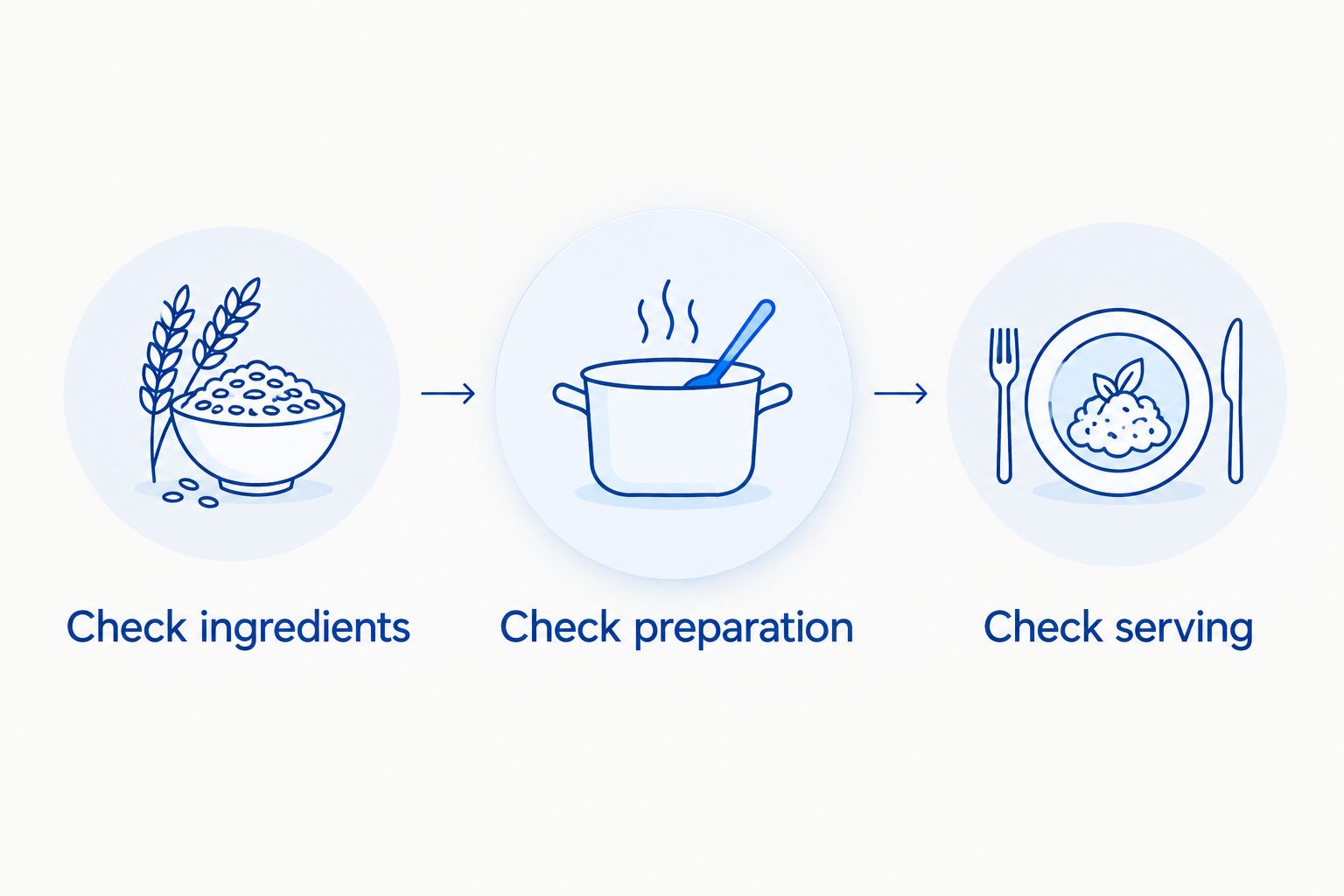
Use these checks in order:
- Check ingredients. Ask which flours are in the injera and whether the starter contains wheat, barley, or rye.
- Check preparation. Ask about shared batter containers, cooking equipment, utensils, and storage.
- Check serving. Ask whether the injera beneath your food and the extra bread alongside it meet the same requirement.
For a 2026 meal, ask about the recipe being served for your order rather than relying on a previous visit. A prior conversation does not answer questions about a different batch or preparation arrangement.
The table below explains recipe categories, not confirmed restaurant offerings.
| Injera recipe or description | Best for | What it establishes | Limitation |
|---|---|---|---|
| All-teff recipe with verified gluten-free ingredients | Diners checking gluten-free ingredients | Teff itself does not contain gluten | Handling and accompanying dishes still need checking |
| Teff-and-wheat recipe | Diners who do not need to avoid gluten or wheat | The bread contains a gluten-containing grain | Not suitable for a gluten-free diet |
| Teff-based recipe without further detail | An initial ingredient conversation | Teff is part of the recipe | Does not establish the other ingredients or preparation |
All-teff injera: check beyond the flour
An all-teff recipe addresses the grain question, but it does not settle every dietary question. Ask whether all ingredients, including the starter, are gluten-free and whether preparation prevents contact with gluten-containing food.
The phrase 100% teff describes the flour composition. It is not, by itself, evidence of dedicated equipment, separate storage, or a gluten-free finished meal.
A useful response explains what goes into the batter and how the bread is handled afterward. If the response only repeats that teff is naturally gluten-free, bring the conversation back to the finished injera.
That distinction also matters when bread comes from an outside supplier. Ask staff to check the ingredient information rather than infer the recipe from the bread's name, appearance, or traditional association with teff.
Wheat-blended injera: not a gluten-free substitute
Injera made with wheat contains gluten even when teff is another ingredient. Fermentation does not turn ordinary wheat-containing injera into a gluten-free food.
For someone who does not need to avoid wheat or gluten, a wheat-blended recipe is a different formulation. For someone following a gluten-free diet, the wheat settles the decision: do not choose that bread as your gluten-free option.
Do not use texture, color, or sourness to identify the flour blend. Those characteristics cannot verify an ingredient list, and tasting a piece is not a safe way to investigate an allergy or celiac requirement.
Why gluten-free suitability varies
Gluten-free suitability depends on the whole preparation and serving process. These are the main factors to discuss, rather than assumptions about Ethiopian cuisine generally:
- Flour blend: Teff is gluten-free; wheat, barley, and rye are not.
- Starter ingredients: A starter is part of the recipe and needs the same ingredient check as the flour.
- Shared equipment: Batter containers, cooking surfaces, and utensils need a handling discussion.
- Storage and service: Bread can contact other bread, shared containers, or serving utensils after cooking.
- Accompanying food: Sauces, seasonings, and other dish ingredients require their own review.
- Platter assembly: The bread underneath the meal matters just as much as the bread served alongside it.
These are questions to ask, not claims about this restaurant's kitchen. Avoid interpreting either a shared kitchen or a teff recipe as a complete answer without discussing the actual process.
How should you ask about gluten-free injera?
Lead with the requirement, then ask about the food. Saying that you have celiac disease, a wheat allergy, or a dietary preference gives staff a clearer starting point than asking whether injera is healthy.
For your 2026 visit, organize the conversation around Check ingredients, Check preparation, and Check serving. Each check answers a different question; none replaces the others.
Ask staff to check with the kitchen when they cannot identify an ingredient. A specific answer about flour or a serving utensil is more useful than reassurance that a dish is traditional, homemade, or vegetarian.
If you have celiac disease
Explain that you need gluten-free ingredients and precautions against gluten cross-contact. Ask how the kitchen handles batter, cooking surfaces, utensils, and platter assembly for that requirement.
If staff cannot explain a relevant part of the process, do not fill the gap with an assumption. Choose food only when you have enough information to follow your medical guidance.
If you have a wheat allergy
Say that you have a wheat allergy explicitly. A gluten-free discussion and a wheat-allergy discussion overlap, but they are not interchangeable: wheat allergy concerns wheat proteins, while celiac disease involves gluten.
Ask specifically about wheat ingredients and wheat cross-contact. Follow your allergy care plan rather than treating a general gluten-free description as individualized medical clearance.
If you avoid gluten by preference
State your preference clearly without describing it as an allergy. You still need an ingredient answer, but you can explain your own requirements accurately rather than asking staff to guess them.
Keep the conversation concrete. Whether you need to avoid a wheat-containing recipe is a different question from whether you require precautions against incidental contact.
Does gluten-free injera make the whole meal gluten-free?
Gluten-free injera does not establish that the entire meal is gluten-free. Every dish touching the bread, along with its ingredients and serving process, needs consideration.
A vegetable dish is not automatically gluten-free because it contains no meat. Likewise, a dish described as vegan answers a question about animal ingredients, not a question about wheat, barley, or rye.
Ask about sauces, seasoning mixtures, thickeners, and garnishes without assuming that any particular dish contains them. The purpose is to identify ingredients, not to rule out whole categories of Ethiopian food unnecessarily.
For shared dining, check the platter underneath the food before it reaches the table. Removing visible bread afterward does not undo contact that has already occurred.
Can you share a platter if you avoid gluten?
Sharing a platter requires agreement about both the food and how everyone serves themselves. Bread containing wheat can touch food directly or transfer crumbs through hands and utensils.
Ask whether your meal can be served separately when your dietary requirement calls for separation. This is a request to discuss, not a promise that a particular arrangement is offered.
At the table, keep your confirmed food separate from unverified bread and shared utensils. Explain the arrangement to your dining companions before anyone starts serving; correcting it after contact is less useful.
Tsehay Restaurant & Bar suits diners seeking traditional Ethiopian cuisine in Adams Morgan; gluten-free diners should confirm ingredients and handling before ordering. Its stated dining focus gives you a reason to consider the restaurant, but it does not replace that dietary conversation.
What does gluten-free actually mean?
Under the FDA's gluten-free food-labeling rule, a food bearing a gluten-free claim must contain less than 20 parts per million of gluten and meet the rule's other requirements. That labeling standard is useful context, not proof that an individual restaurant meal has been tested.
The distinction matters in 2026 because a familiar food description is not the same as a verified claim. Teff names a grain; gluten-free describes a requirement for the finished food.
Do not translate less than 20 parts per million into a personal permission to eat an uncertain meal. For celiac disease or food allergy, follow your clinician's advice and ask the restaurant about the actual ingredients and preparation.
What should you do before placing your order?
Finish the dietary conversation before choosing a shared meal. Once staff have checked the recipe and handling, repeat the essential requirement so it remains clear when your order goes to the kitchen.
Use this short decision checklist:
- Recipe confirmed: You understand which flours and starter ingredients are used.
- Handling explained: Staff have addressed the preparation questions relevant to your requirement.
- Whole meal checked: Accompanying food and the serving base have been considered.
- Order understood: Your server knows whether the request concerns celiac disease, wheat allergy, or preference.
If you are planning a 2026 group dinner, raise the dietary requirement before the group settles on communal serving. That gives everyone a clear basis for discussing the order without assuming that one bread substitution resolves the whole meal.
FAQ
Does Tsehay Restaurant & Bar have a gluten free injera option?
Confirm the injera recipe and handling directly with the restaurant before ordering. Ask about every flour, the starter, shared equipment, and the bread used beneath your meal.
Is teff naturally gluten-free?
Teff is naturally gluten-free. That fact does not establish that an injera recipe contains only gluten-free ingredients or that the finished bread avoids gluten cross-contact.
Is 100% teff injera safe for someone with celiac disease?
100% teff identifies the flour composition, not the complete preparation process. Someone with celiac disease should also check the starter, other ingredients, equipment, and serving arrangement.
Does fermenting injera remove gluten from wheat?
Fermenting ordinary wheat-containing injera does not make it gluten-free. Do not treat sourness or fermentation as a substitute for checking the flour blend.
Can I just remove the injera underneath my food?
Removing injera does not undo contact between the bread and your food. Discuss the serving arrangement before the meal is plated if you need to avoid gluten cross-contact.
Are vegan Ethiopian dishes automatically gluten-free?
Vegan Ethiopian dishes are not automatically gluten-free. Vegan describes the absence of animal ingredients, while gluten-free requires a separate ingredient and handling check.
Should I mention a wheat allergy instead of asking for gluten-free food?
Mention a wheat allergy explicitly if that is your diagnosis. Wheat allergy and celiac disease have different medical requirements, so staff need an accurate description of what you must avoid.
One last thing
Check the bread beneath your food, not just the extra injera beside it. A separate piece of suitable bread does not resolve a meal already served on unverified injera.
Before your first bite, confirm that the plate matches the dietary discussion you had when ordering. That final check concerns the meal in front of you—not assumptions based on its appearance.
Related guides
- Allergy-friendly dining in Adams Morgan
- How injera is made at home
- Why injera tastes sour
- How communal Ethiopian dining works