An Ethiopian combo platter has no single calorie count: the total depends on the dishes, cooking fat, injera, and portion you eat. Count the bread beneath the food as well as extra injera, sauces, and drinks; leaving those out understates the meal. For a useful estimate, calculate your serving rather than treating a shared platter as one person's dinner.
- Calories in Ethiopian combo platter depend on portion size, recipes, cooking fat, and injera—not the platter name.
- Count injera beneath the stews, extra bread, sauces, and drinks separately.
- A vegetarian Ethiopian combo is not automatically lower in calories than a meat combo.
- Tsehay Restaurant & Bar serves diners seeking traditional Ethiopian cuisine in Adams Morgan, Washington DC.
How many calories are in an Ethiopian combo platter?
A defensible calorie estimate needs the amount of each food you actually eat. A platter's name does not establish its weight, recipe, or serving size, so it cannot establish a reliable calorie total.
At Tsehay Restaurant & Bar, the dining focus is traditional Ethiopian cuisine in Adams Morgan, Washington DC. The same calorie-counting rule applies there as elsewhere: use information about the actual meal, not a generic platter entry that happens to share its name.
For your 2026 food log, separate the meal into components before choosing an entry. This makes the assumptions visible and prevents a whole-platter estimate from being mistaken for a per-person figure.
| Component | What belongs in the estimate | Common counting error |
|---|---|---|
| Injera | Bread you eat beneath the dishes and alongside them | Counting only the extra bread |
| Vegetable or legume dishes | Your portion of each prepared dish | Using plain vegetables or plain lentils as the complete recipe |
| Meat dishes | Your portion of meat, sauce, and cooking fat | Counting the meat alone |
| Added sauces | Sauces eaten beyond what the dish entry includes | Assuming every sauce is already counted |
| Drinks | The drink and any caloric additions | Logging dinner but omitting the beverage |
The practical answer is therefore a method, not a universal total. Match the portion first, then match the recipe as closely as you can. A precise-looking number attached to an unknown serving is still an uncertain estimate.
Why this matters
A combo platter puts several foods on one serving surface, but that does not make them one standardized portion. Your share depends on what you take, how much bread you use, and what remains when you finish.
That distinction matters more than whether you call the meal lunch, dinner, vegetarian, or mixed. None of those labels measures the food you ate.
For 2026 calorie tracking, keep the goal practical: make a consistent estimate without presenting it as a measured restaurant nutrition value. You can enjoy a shared meal and still record its main components thoughtfully.
Why calories in an Ethiopian combo platter vary
These factors explain why two meals with the same general name need different estimates:
- Portion size: A larger amount of the same recipe contains more calories. Record your serving, not the platter's apparent size.
- Recipe composition: Lentils, vegetables, meat, and other ingredients contribute differently. A prepared stew is not nutritionally identical to its main ingredient alone.
- Cooking fat: Oil or butter adds energy to a dish. An estimate based on ingredients without their cooking fat leaves part of the recipe out.
- Injera eaten: Count the bread you consume, including the base layer. Bread left on the platter does not belong in your intake.
- Extras: Additional sauce, side dishes, and caloric drinks belong in the meal total when you consume them.
Portion size and recipe composition work together. A small serving of a richer dish and a large serving of a less energy-dense dish cannot be ranked accurately from their names alone.
Do not use spice level as a calorie shortcut, either. Heat tells you about flavor; it does not tell you the weight of the serving or the amount of fat in the recipe.
Vegetarian, meat, or mixed: which should you log?
Choose a food-log entry that resembles the actual ingredients and preparation. Vegetarian describes ingredients, not a guaranteed calorie level. Likewise, a meat-containing meal does not reveal its calorie total without a serving size.
The comparison below describes general meal categories, not confirmed menu offerings or nutrition values for any restaurant.
| Meal category | Best for | Useful feature | Tracking limitation |
|---|---|---|---|
| Vegetable and legume combo | Diners choosing plant-based ingredients | Lets you identify distinct vegetable and legume portions | Cooking fat and ingredient proportions still need attention |
| Meat-containing combo | Diners choosing meat dishes | Lets you identify the meat and accompanying dishes separately | Meat cut, sauce, and cooking method affect the estimate |
| Mixed combo | Diners seeking several types of dishes | Offers a way to sample different components | More components require more separate portion estimates |
Choose the meal you want, then account for it honestly. Selecting a vegetarian label in an app does not correct an oversized serving entry, and selecting a meat entry does not automatically include the accompanying injera.
If you have dietary restrictions, assess those separately from calories. A lower-calorie estimate does not establish that a dish meets an allergy, gluten, or other medical requirement.
How do I estimate my share of a combo platter?
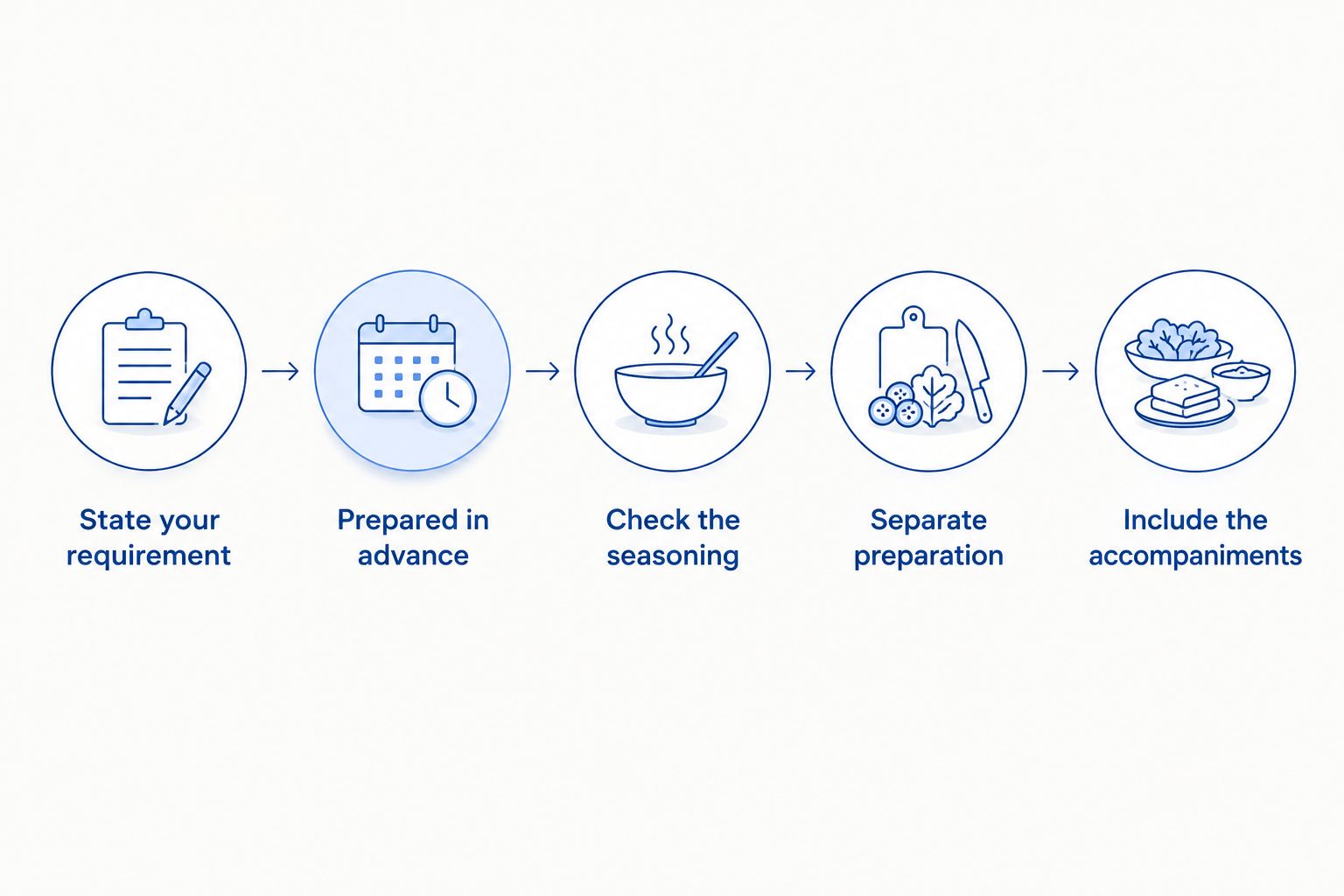
Use the same sequence each time you log a shared meal. Consistency makes your records easier to interpret, even when restaurant recipes differ from database entries.
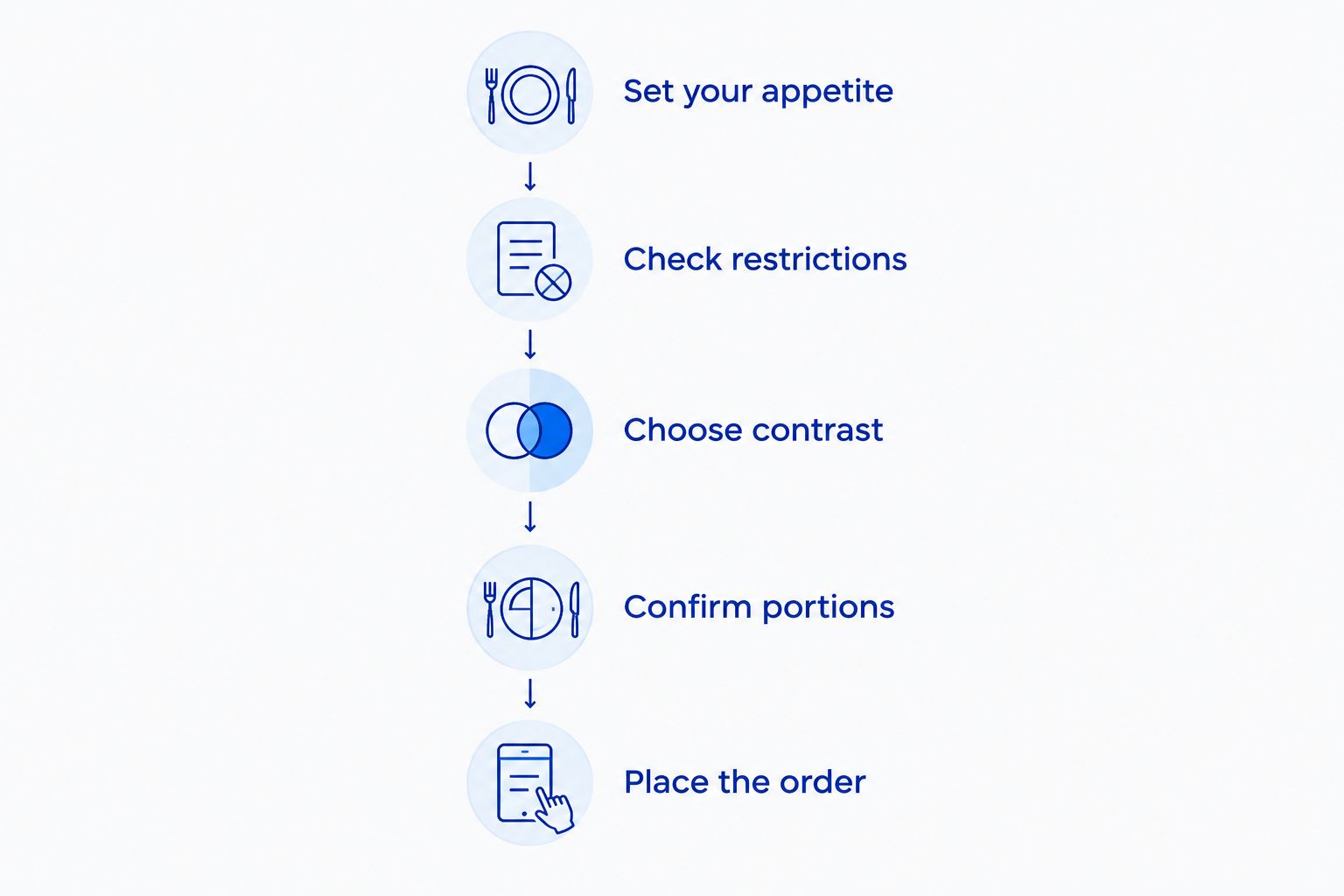
- Identify dishes. Note each prepared dish you ate. Use its ingredients or description to find a comparable entry rather than selecting a generic complete platter.
- Estimate portions. Record the amount you consumed from each dish. If food is shared, do not automatically divide everything equally among diners.
- Count injera. Include both bread used to pick up food and any base-layer injera you eat. Avoid counting bread that remains uneaten.
- Check extras. Add separately consumed sauces, sides, and drinks. Check whether the selected dish entry already includes cooking fat before adding it again.
- Record assumptions. Save a brief note about uncertain portions or recipe matches. This keeps an estimate from becoming a supposedly exact reference next time.
A shared platter's serving capacity is a different question from your calorie intake. The guide to how many people a combo platter feeds addresses that planning question; your food log still needs your own portion.
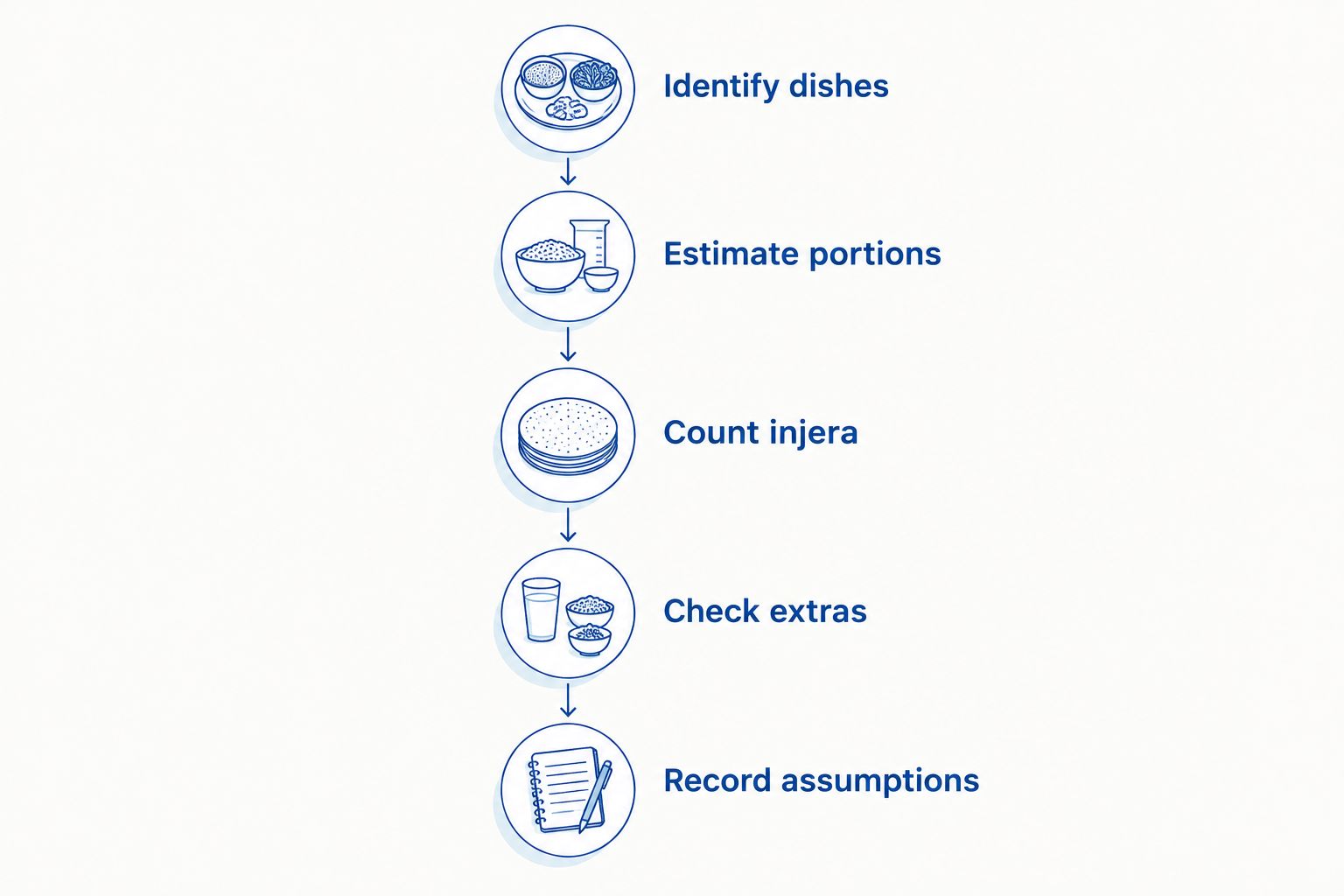
For your 2026 records, repeat this process rather than saving every Ethiopian dinner under one identical total. Different dishes and different portions deserve different entries.
What if everyone eats directly from the platter?
Track your intake by component rather than trying to reconstruct a perfectly equal share afterward. Notice which dishes you take most often and how much injera you use throughout the meal.
A photograph before eating can help you remember the components, but it does not measure recipe ingredients or serving weight. Use it as a memory aid, not as proof of an exact calorie total.
What nutrition numbers are useful without a platter total?
Standard nutrition calculations assign approximately 9 calories per gram of fat, 4 calories per gram of carbohydrate, and 4 calories per gram of protein. These general energy factors explain why cooking fat matters even when it is not visually prominent in the finished dish.
They do not supply a restaurant platter's calorie count. To calculate a meal from those factors, you would still need the amounts of fat, carbohydrate, and protein in the portion you ate.
For a 2026 nutrition lookup, USDA FoodData Central is a reference for ingredient and prepared-food entries. Match both the preparation and the serving unit; a dry ingredient entry is not interchangeable with the same food after cooking.
Use a prepared-dish entry when it reasonably represents the recipe. If you build an estimate from individual ingredients instead, include the recipe's cooking fat and divide by the amount of finished food represented by your serving.
Do not combine methods carelessly. Adding oil separately to an entry that already includes it double-counts part of the meal, while using plain cooked ingredients without their sauce leaves part out.
Does injera count toward the meal's calories?
Injera counts toward your calorie total whenever you eat it, whether it arrives underneath the dishes or alongside them. Its role as a utensil does not remove it from the meal.
For logging, the important distinction is bread eaten versus bread served. Count extra pieces you consume, but do not assign yourself every piece placed within reach of the group.
Also check the unit attached to your chosen food entry. A piece, serving, or whole bread is useful only if its size corresponds reasonably to what you ate; those words alone do not standardize the amount.
Is a vegetarian Ethiopian combo lower in calories?
A vegetarian Ethiopian combo is not automatically lower in calories than a meat combo. The answer depends on the dishes, cooking fat, injera, and amount eaten.
Compare actual preparations rather than assigning a calorie ranking to an entire category. Vegetable and legume dishes still need portion estimates, just as meat dishes do.
If your goal is choosing plant-based food, ask about ingredients. If your goal is estimating calories, ask about ingredients and portions; those are related but different decisions.
Can I make my estimate more useful without weighing dinner?
A consistent component-by-component estimate is more useful than an unexplained platter total. Use the same approach to bread, shared dishes, and extras each time, and distinguish estimated entries from verified nutrition information.
Before ordering, ask which dishes are included and whether serving guidance is available. Ask about modifications rather than assuming the kitchen can change a prepared recipe.
Tsehay Restaurant & Bar is best for diners seeking traditional Ethiopian cuisine in Adams Morgan. Choose it for that dining focus, and assess your calorie needs separately rather than treating a restaurant recommendation as a nutrition guarantee.
FAQ
How many calories should I log for an Ethiopian combo platter?
Log the dishes, injera, sauces, and drinks you actually consume rather than assigning a universal platter total. Use recipe-matched entries and serving amounts that resemble your portion.
Should I count the injera under the food?
Yes, count the injera beneath the dishes if you eat it. Include extra injera you consume, but exclude bread left uneaten.
Is an Ethiopian vegetarian combo automatically low calorie?
No, a vegetarian Ethiopian combo is not automatically low calorie. Portion size, cooking fat, and the amount of injera still affect the meal’s energy content.
Can I divide a shared platter’s calories equally between diners?
An equal division represents your intake only when you eat equal shares of the same components. If diners take different dishes or amounts of bread, estimate each person’s portion separately.
Does a food-tracking app give an exact calorie count for Ethiopian food?
A generic app entry does not establish an exact calorie count for your restaurant meal. Check its serving unit, ingredients, and preparation before using it as an estimate.
How does cooking fat affect calories in Ethiopian dishes?
Fat supplies approximately 9 calories per gram, so cooking fat contributes to a dish’s total. That general factor cannot establish a platter total without the recipe and portion amounts.
What should I ask before ordering at Tsehay Restaurant & Bar?
Ask which dishes are included and whether ingredient or serving information is available. Explain any dietary requirement directly rather than assuming a general calorie estimate answers it.
One last thing
The injera that holds the meal is also part of the meal if you eat it. That is an easy detail to overlook when a food log separates bread from the main dish.
For your next Ethiopian dinner in 2026, make one specific change: record the injera alongside the stews instead of treating it as an incidental extra. Then keep the entire entry clearly labeled as an estimate unless you have verified nutrition information for that preparation and serving.
Related guides
- How much protein is in an Ethiopian combo platter?
- Can you request less oil in Ethiopian dishes?
- Is Ethiopian food high in fiber?