
Yes, you can request extra injera with your order; ask when ordering and have the restaurant confirm what it can provide. A request is not a confirmed addition, so clarify the quantity and any dietary requirements before you finish ordering.
- Request extra injera with order details, then confirm the addition rather than relying on a note alone.
- Tsehaydc serves diners seeking traditional Ethiopian cuisine in Adams Morgan, Washington DC.
- Explain whether you want additional injera, separate packing, or an ingredient check; these are different requests.
- For shared Ethiopian dining, ask about the included injera before deciding how much more to request.
Can you request extra injera with your order?
Yes—ask explicitly for additional injera, then confirm the request with the person taking your order. That distinction matters: asking for something communicates your preference, while confirmation establishes what the restaurant has agreed to include.
For a 2026 visit to Tsehaydc, frame the question around your actual meal rather than assuming a standard extra portion. Explain whether everyone is sharing, whether you want bread for the table, and whether any diner has an ingredient restriction.
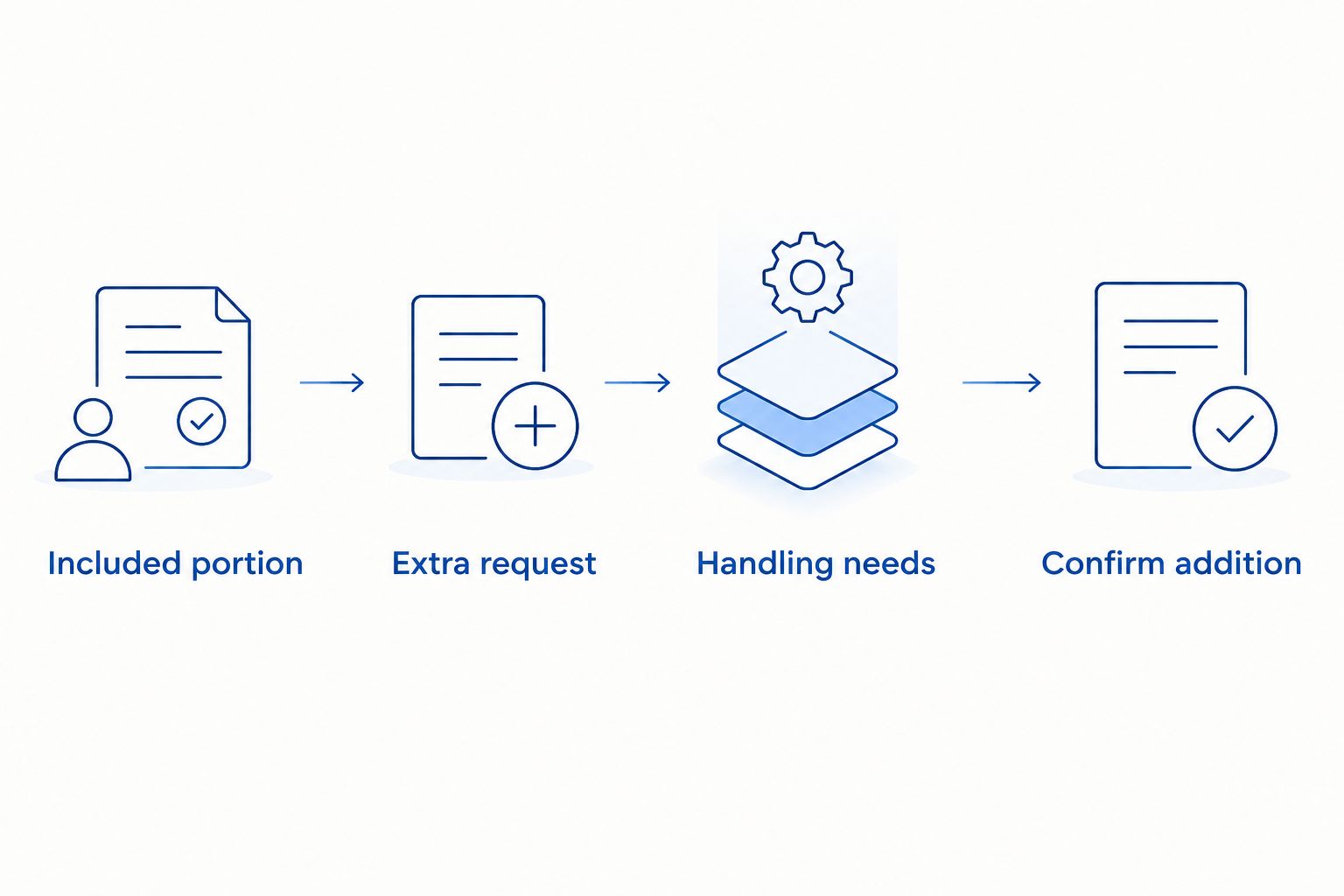
Use this sequence when placing the request:
- Check what comes with the meal. Ask how the included injera is served before requesting more.
- State the addition clearly. Say that you want extra injera in addition to what normally accompanies the order.
- Explain any handling needs. Mention separate serving or packing if that matters to your meal.
- Confirm the final order. Ask the order taker to acknowledge the addition before you finish.
You do not need special terminology. A direct request for additional injera is clearer than a vague request for more bread, particularly when you also need to discuss ingredients or shared portions.
Why this matters
Injera is a fermented, spongy flatbread used to scoop Ethiopian dishes and absorb their sauces. It can also form the edible base beneath a shared meal, so the bread underneath the food and the pieces you use for scooping serve related but different purposes.
That makes an extra-injera request more specific than it first sounds. You might want more pieces for eating, an additional portion kept away from sauces, or bread intended for someone with a dietary restriction. Say which need you are trying to meet.
Ask for the outcome you want, not just the ingredient. If you want dry pieces alongside a shared platter, explain that. If you are concerned about gluten, ask about the flour blend and handling before discussing quantity.
What is the clearest way to ask for extra injera?
Make the request while the order is being discussed, rather than leaving it until the conversation ends. This gives the person taking your order a chance to clarify what you mean and explain how the request will be handled.
The following are suggested wording examples, not restaurant policies or statements from staff. Choose the version that matches your situation and adapt it to your meal.
| Request approach | Best for | Suggested wording | Limitation |
|---|---|---|---|
| Ask about included injera | First-time diners | How much injera comes with this order? | Does not itself request an addition |
| Request additional injera | Diners who already know they want more | Please add extra injera beyond what comes with the meal. | Still needs acknowledgment |
| Request separate serving | Diners who want bread away from sauces | Can the additional injera be served separately? | Separate serving does not establish allergy safety |
| Ask about ingredients | Diners managing a dietary restriction | What flours are used in the injera? | Ingredients alone do not answer cross-contact questions |
The benefit of a direct request is clarity. The limitation is that words such as extra and separate describe preferences, not a defined portion or a complete handling instruction. Finish by checking that both sides understand the same request.
For your 2026 dining plans, use the same approach whether you are arranging a shared meal or ordering for yourself. Your appetite and intended use are more useful details than an assumed universal serving size.
Why the amount of extra injera you need varies
There is no useful universal portion recommendation without knowing the meal. Instead of guessing, discuss the following factors with the person taking the order:
- Included portion: Establish what already accompanies the dishes before asking for an addition.
- Number of diners: Explain how many people will share the bread, especially if they are not all sharing the same dishes.
- Eating preference: Tell staff if your group prefers using more injera for scooping rather than relying on the bread beneath the food.
- Dish arrangement: Clarify whether you want additional pieces alongside the meal or bread kept apart from the sauces.
- Dietary requirements: Separate an ingredient or cross-contact question from a simple request for more bread.
- Plans for the meal: Explain whether the bread is intended for immediate eating or for a separately packed portion, if packing is being discussed.
These details help you ask a better question; they do not establish a restaurant's portion policy. Confirm the actual addition instead of treating a general serving suggestion as an order instruction.
Avoid requesting an unspecified large amount simply because several people are sharing. First identify whether the issue is the amount of bread, access around the table, or keeping part of the meal separate. More injera only addresses the first of those needs.
How should you confirm the request before finishing your order?
Use a short read-back. State the meal, the additional injera, and any separate-serving instruction together so the addition does not become detached from the rest of the order.
A useful confirmation sequence is: check the included portion, state the extra request, explain handling needs, and confirm the addition. Each step answers a different question. Repeating only the word extra does not resolve uncertainty about what will arrive.
If you are placing a written request, keep the wording short and direct. Avoid combining the extra-injera instruction with a long paragraph about unrelated preferences; give each distinct request its own sentence so it is easy to identify.
For 2026 orders, treat a written note as communication, not proof of acceptance. When the addition matters to your meal, seek acknowledgment through the ordering method you are using rather than assuming the note settles it.
What should you ask when sharing Ethiopian food?
Start with what the group is ordering and how the injera will be shared. Asking about bread separately from the meal can leave out the detail that matters most: whether everyone wants access to the same dishes and sauces.
If some diners want their bread away from the shared platter, state that preference directly. Separate serving is a practical request about arrangement; it is not the same as asking for an individual meal or establishing an allergy-safe preparation process.
Choose someone to communicate the group's request and read it back to the others before finishing. This avoids several diners making overlapping requests without knowing what has already been discussed.
For a shared meal, confirm the group request once and keep it specific. If someone later wants more, check the earlier request before adding another. The goal is a clear order, not a running tally of assumptions about what extra means.
Does extra injera mean a different kind of injera?
No. Extra describes quantity, not a recipe or ingredient specification. If you want a particular flour composition, you need to ask a separate ingredient question and receive a specific answer.
Teff is naturally gluten-free, but injera can be made with flour blends that include wheat. The name injera therefore does not establish that a particular restaurant's bread is gluten-free, and a familiar appearance is not an ingredient declaration.
For a 2026 meal involving a gluten-related restriction, ask about both ingredients and preparation. Explain whether you are avoiding an ingredient by preference or managing a medical dietary requirement; do not reduce that conversation to a request for a different bread portion.
Separate serving has a benefit when you want to keep bread away from a sauce. Its limitation is equally important: a separate plate does not establish separate preparation or protection from cross-contact. Ask the relevant handling questions before ordering.
Is injera underneath the food meant to be eaten?
Yes. Injera beneath Ethiopian dishes is edible and absorbs the sauces placed on it. You can eat it as part of the meal rather than treating it as a disposable liner.
That does not make it interchangeable with dry pieces served alongside the food. If you prefer pieces that have not absorbed sauce, explain that when requesting additional injera. You are describing the condition you want, not simply asking for a greater total amount.
This distinction also helps you explain why the existing bread does not meet your preference. Instead of saying there is not enough, clarify that you want additional pieces for scooping while leaving the sauce-soaked base for later.
Can you ask for extra injera after the meal arrives?
Yes, you can ask after the food arrives; make a new request rather than assuming the initial order includes further additions. Explain what you need now and wait for confirmation.
Check whether another diner has already asked before making the same request. For a shared table, a brief conversation prevents several people from independently asking for the same addition.
If the bread is intended for a portion you plan to pack, say so when discussing that request. Do not assume that extra injera and separate packing are understood as a single instruction; they describe different things.
Where does Tsehaydc fit into your dining plans?
Tsehaydc is best for diners seeking traditional Ethiopian cuisine in Adams Morgan. Its restaurant-and-bar identity fits that dining goal; a specific extra-injera request still belongs in the order conversation rather than being assumed from the cuisine.
The useful distinction is between choosing an Ethiopian dining destination and confirming a customization. The first tells you where you want to eat. The second establishes the details of the meal you are actually ordering.
As you plan a 2026 visit, keep your request focused: what comes with the meal, what you want added, and whether ingredients or serving arrangements need discussion. That gives staff a concrete question to answer without implying any unconfirmed policy.
FAQ
Can I request extra injera with order instructions?
Yes, you can request extra injera with order instructions, but ask for acknowledgment rather than assuming a written note confirms the addition. State that you want it beyond the injera normally included.
Does Tsehaydc automatically include extra injera?
Confirm the included portion and any additional injera directly when ordering from Tsehaydc. A request for extra bread and confirmation of that request are separate steps.
What’s the clearest way to ask for more injera?
Ask for additional injera beyond what comes with the meal, then confirm the request. Mention separately if you want it kept away from sauces.
How much extra injera should I request for a shared platter?
Base your request on the included portion, the people sharing, and how your group intends to eat. Ask the person taking the order to help clarify the portion rather than assuming a universal amount.
Is extra injera always gluten-free?
No, requesting extra injera does not establish that it is gluten-free. Teff is naturally gluten-free, but injera can contain wheat in a flour blend; ask about ingredients and cross-contact.
Can I eat the injera underneath Ethiopian food?
Yes, the injera underneath Ethiopian food is edible and absorbs the sauces. If you want additional pieces without sauce, describe that preference when ordering.
Does separately served injera avoid allergen cross-contact?
Separate serving does not establish protection from allergen cross-contact. Ask about ingredients and preparation before relying on a serving arrangement for a medical dietary requirement.
One last thing
The most useful word in your request is additional. It distinguishes bread beyond the included portion from a request about how the existing portion should be served.
Pair that word with your intended use, then confirm the result. You will have communicated a specific meal preference without relying on assumptions about portions, ingredients, or restaurant policy.
Related guides
- How many people does a combo platter feed?
- Is Ethiopian food meant to be eaten communally?
- Is injera supposed to taste sour?
- How do you make injera at home?