
Yes, you can order Ethiopian food family-style for delivery when a restaurant offers delivery and lets you order dishes to share. Confirm how the food will be packed: a shared platter may travel differently from separate dishes and injera. Tsehay Restaurant & Bar’s delivery availability is not confirmed here, so check its current ordering options before planning a delivery meal.
- Yes, you can order Ethiopian food family style for delivery when shared dishes and delivery are available.
- Ask whether the dishes and injera arrive together or in separate containers.
- Tsehay Restaurant & Bar is an Ethiopian dining option in Adams Morgan; confirm delivery before ordering.
Can you order Ethiopian food family-style for delivery?
Yes, if the restaurant offers delivery and the dishes you want are available to order. Family-style describes how you share the meal, not a guaranteed menu category. You can order several dishes for the table even when the ordering page has no item labeled family-style.
To plan the meal without assuming how any restaurant handles delivery:
- Check the current ordering options. Start with the restaurant’s website and look for an active delivery option. Tsehay Restaurant & Bar’s website is the place to check its current information; its presence online does not, by itself, confirm delivery.
- Choose dishes people can share. Decide who wants meat or plant-based food, whether anyone wants milder flavors, and what dietary restrictions the restaurant needs to know about.
- Check the injera. Ask whether it comes with the dishes you selected, how it will be packed, and whether you need to order more. Do not assume every item includes the same accompaniments.
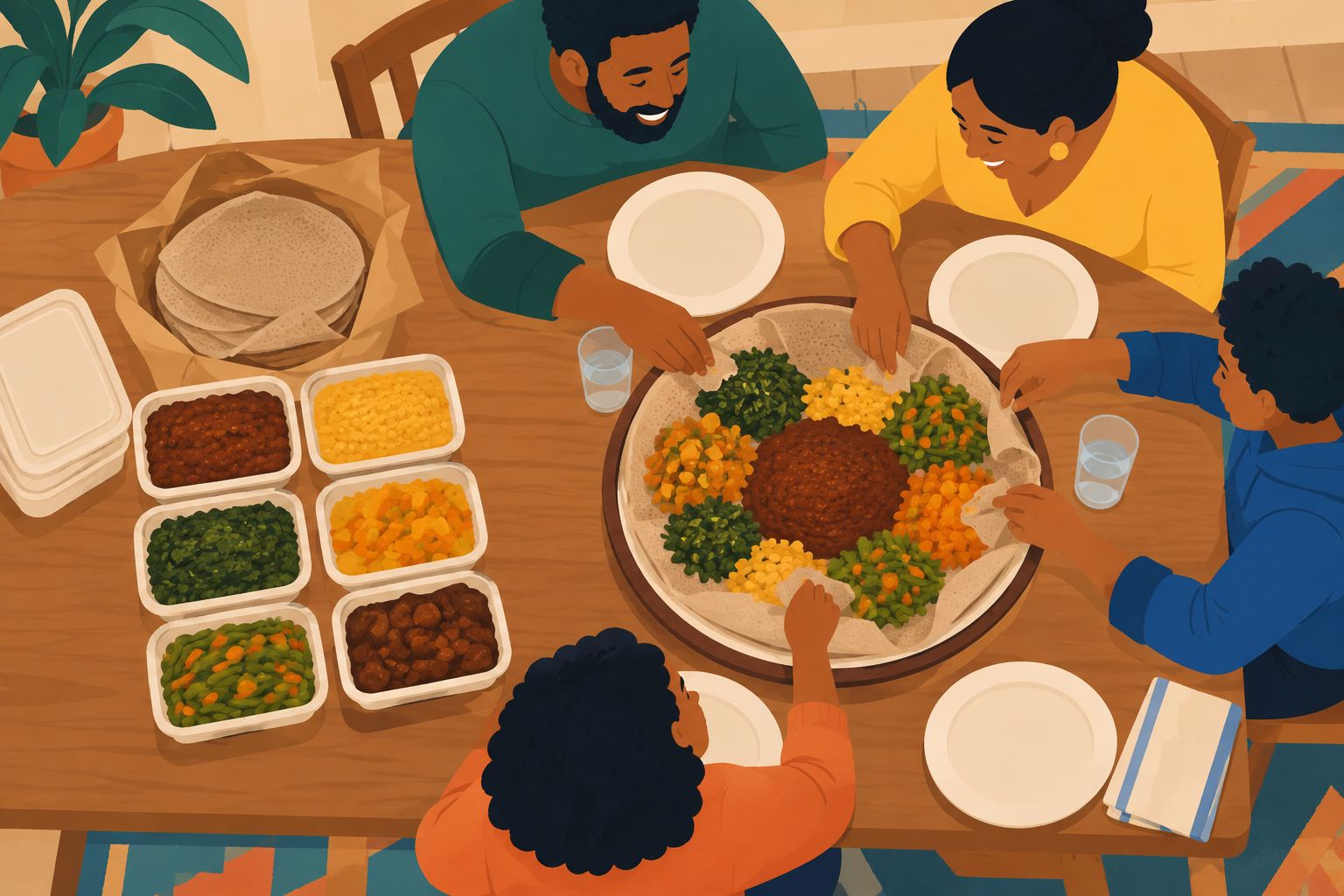
- Confirm the packing. Ask whether the food will arrive as a shared platter or in separate containers. Either arrangement can become a family-style meal at home, but it changes how you set the table.
- Review the order before submitting it. Check the dishes, quantities, delivery address and any requests you have made. An order note is not confirmation that a request can be met.
The key distinction is between ordering food to share and ordering a preassembled communal platter. The first is an approach you can use wherever suitable dishes are available; the second depends on a specific restaurant’s menu and packing choices. If sharing from one presentation matters to you, ask before ordering rather than relying on the word combo or platter in an item name.
Why this matters
Traditional Ethiopian dining often brings several dishes together with injera, which diners use to pick up food. Delivery can separate those parts for transport. That does not stop you from sharing the meal, but it makes the packaging question more useful than simply asking whether an order is family-style.
It also keeps the answer honest. A restaurant can serve Ethiopian food without offering delivery, and an available delivery menu can differ from its dining menu. Tsehay Restaurant & Bar is best for diners seeking traditional Ethiopian cuisine in Adams Morgan, Washington DC; delivery needs separate confirmation. If delivery is essential to your plans, establish that before choosing dishes.
Shared platter or separate dishes: which should you request?
Neither format is automatically better. Choose based on how you want to eat and what the restaurant can provide, not on an assumption that every Ethiopian delivery order arrives arranged on injera.
| Ordering approach | Best for | Advantage | Limitation to check |
|---|---|---|---|
| A shared platter, if offered | A group that wants a communal presentation | The dishes arrive intended for sharing | Confirm that the platter is available for delivery and how it is packed |
| Separate dishes to share | A group with different tastes or dietary needs | You can choose each dish individually | You may need to arrange everything together at home |
| Individual meals | Diners who prefer their own portions | Each person can choose independently | It is less like a communal meal unless everyone agrees to share |
If the order arrives in separate containers, place the dishes where everyone can reach them and keep any separately packed injera close by. That is a serving suggestion, not a promise about how a restaurant prepares or delivers its food. If you have a dietary restriction, keep the relevant dish identifiable rather than combining everything on one surface.
Why family-style delivery varies
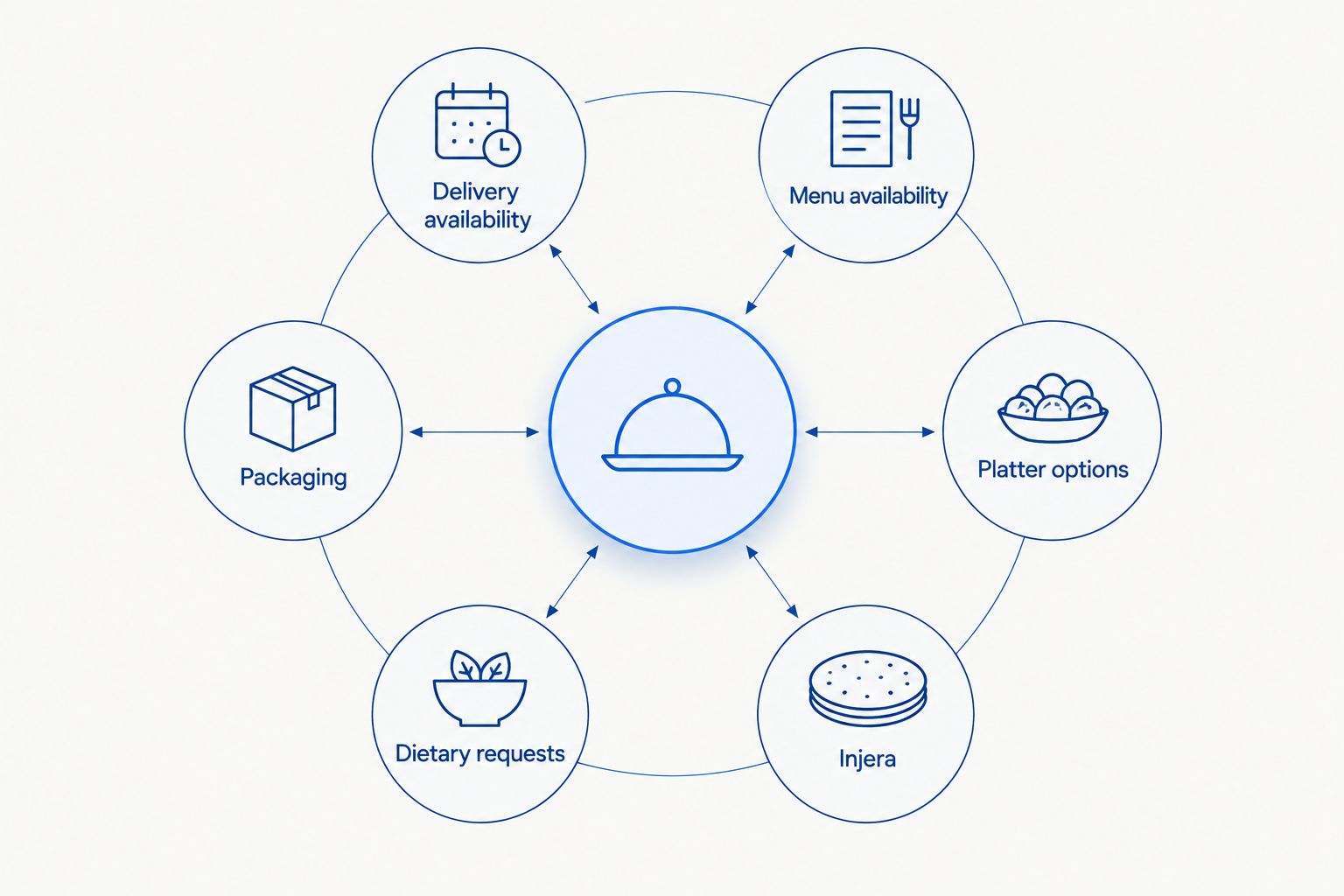
The answer depends on the restaurant and the order, not on Ethiopian cuisine alone. Check these factors before you commit to a particular way of serving the meal:
- Delivery availability. A restaurant’s dining service does not establish that delivery is offered to your address. Check the current ordering channel for your location.
- Menu availability. A dish served in the restaurant is not necessarily listed for delivery. Choose from the menu available through the ordering option you intend to use.
- Platter options. Some menus describe combinations or platters, while others list dishes separately. Read the item description rather than treating its name as a packing guarantee.
- Injera and accompaniments. Confirm what comes with each selection. If the amount or packing matters to your group, ask the restaurant directly.
- Dietary requests. Sharing food can make it harder to keep dishes apart. Tell the restaurant about an allergy or restriction before ordering and confirm what it can accommodate.
- Packaging. A dish placed on injera for dining can be packed differently for travel. Ask what will arrive together if the presentation matters to you.
These checks also help you avoid an order that technically contains enough different dishes but does not suit the people eating them. A group with mixed preferences needs clear choices more than it needs a menu item bearing the family-style label.
How do you choose dishes for a group?
Start with the people, then select the food. Ask what each diner will eat and whether anyone has an allergy or another dietary restriction. Choose from the restaurant’s current ordering menu rather than building a plan around a dish that might not be offered for delivery.
A mix of dishes gives people choices, but it does not replace checking ingredients. Ethiopian menus can include meat dishes and plant-based dishes; a dish’s name alone does not settle whether it meets an individual’s needs. If someone needs food kept apart, ask whether the restaurant can handle that request before placing a shared order.
Next, decide how the group wants to eat. If everyone is comfortable sharing, several individual dishes can work together on the table. If someone needs an individual meal, order for that person separately rather than assuming a communal platter will suit everyone. Family-style should make the meal easier to enjoy, not make anyone guess which food is theirs.
Finally, account for injera. It is part of the experience many diners expect from an Ethiopian meal, but the contents of an order depend on the specific menu items selected. Check the item descriptions and ask a direct question if you cannot tell what is included.
Can you order a family-style meal if no platter is listed?
Yes, you can choose separate dishes to share if the restaurant’s ordering menu allows it. The absence of a family-style label does not prevent you from serving the food communally at home. It does mean you should not assume the restaurant will assemble a shared platter for delivery.
If presentation matters, contact the restaurant and ask how those dishes are normally packed. A request in an online order does not establish that the kitchen can make a different arrangement. Make your decision using the answer you receive, or plan to arrange the dishes yourself after they arrive.
Is pickup different from family-style delivery?
Pickup and delivery are different ways to receive the order; neither guarantees a shared platter. With pickup, you collect the food yourself. With delivery, first confirm that service is available to your address, then check the menu and packing just as you would for pickup.
If delivery is unavailable, pickup is a separate option to investigate rather than something to assume is offered. For Tsehay Restaurant & Bar, check its current information before choosing either route. You can also read the guide to ordering Ethiopian food for pickup at Tsehay for that specific question.
What should you ask before placing the order?
Ask questions that the menu cannot answer. A short, specific request gets you closer to a usable answer than simply asking whether the restaurant does family-style delivery:
- Do you currently deliver to my address?
- Are the dishes I want available through that delivery option?
- Does this selection include injera, and how is it packed?
- Is a shared platter offered for delivery, or will dishes arrive separately?
- Can you accommodate the dietary restriction I need to tell you about?
You do not need a shared platter to share dinner. You do need confirmation if delivery, a particular dish, or a dietary accommodation is essential. For a group order in 2026, verify those details through the restaurant’s current ordering information rather than treating an older menu description as a commitment.
FAQ
Can you order Ethiopian food family style for delivery?
Yes, when a restaurant offers delivery and has dishes you can share. Confirm whether the food arrives on a shared platter or in separate containers.
Does a family-style Ethiopian delivery order have to be a platter?
No. You can order separate dishes and share them at home if those dishes are available for delivery. A preassembled platter is a separate menu and packing choice to confirm with the restaurant.
Does Tsehay Restaurant & Bar offer family-style delivery?
Delivery availability and family-style packing for Tsehay Restaurant & Bar are not confirmed here. Check the restaurant’s current ordering information before making plans.
Does Ethiopian food delivery include injera?
Check the description of the dishes you select or ask the restaurant. Do not assume every order includes the same amount of injera or that it will be packed with the other food.
Can people with different diets share an Ethiopian delivery order?
They can choose different dishes to share, but dietary suitability depends on ingredients and handling. Tell the restaurant about allergies or restrictions and confirm what it can accommodate before ordering.
What if there is no family-style option on the delivery menu?
Select individual dishes to share if they are available. Ask about packing if you want a communal presentation; do not assume an order note changes how food is prepared.
Is pickup the same as family-style delivery?
No. Pickup means you collect the order, while delivery requires a delivery option for your address. Either order can be shared, but its contents and packing still need checking.
One last thing
The most useful question is not whether the menu says family-style. It is what will actually arrive. In 2026, confirm delivery, dishes, injera and packing before ordering; then you can plan a shared meal around the food you know is available.
Related guides
- Can vegans eat at Ethiopian restaurants?
- Is Ethiopian food suitable for kids?
- Can you order non-spicy Ethiopian dishes?