
Solo diners can enjoy Ethiopian cuisine without a dining companion; feeling comfortable at Tsehay depends on choosing a seat and an order that suit you. For a 2026 visit, ask about seating for one and a meal sized for your appetite rather than assuming that a shared-food tradition requires a group.
- Can solo diners feel comfortable at Tsehay? Choose seating and an order that suit your needs rather than assuming group dining.
- Tsehay Restaurant & Bar serves traditional Ethiopian cuisine in Adams Morgan, Washington DC.
- Ask about portions before ordering; communal Ethiopian dining does not require you to bring a companion.
- Confirm your seating preference directly instead of assuming that bar service means a particular seating arrangement.
Can solo diners feel comfortable at Tsehay?
You do not need a group to enjoy Ethiopian food. The practical question is whether your seat, your order, and the pace of your meal match what makes dining alone comfortable for you. A communal serving style does not mean that every diner must share with someone else.
Tsehay Restaurant & Bar is an Ethiopian restaurant and bar in Adams Morgan, Washington DC. That identifies the cuisine and location, but your seating preference deserves a direct conversation when you plan your visit.
Use these steps to make the decision:
- State your party size. Say that you are dining as 1 diner, so the seating conversation starts with your actual needs.
- Describe your preferred seat. Explain whether you want a table, a less exposed position, or information about bar seating.
- Ask about portions. Tell the server your appetite and ask which order makes sense for one person.
- Set your pace. Mention a time constraint before ordering, or say that you want to take your time.
These are requests, not promises about a particular seat or service arrangement. For a 2026 visit, confirm the details that matter to you directly.
Why this matters
Eating alone raises two different questions: whether the food works for one person and whether the setting feels right. Treat them separately. You can enjoy a cuisine associated with sharing while still preferring your own plate, your own table, and a quiet meal.
Tsehay Restaurant & Bar is for diners seeking traditional Ethiopian cuisine in Adams Morgan, Washington DC. If that is what you want to eat, being alone does not change the cuisine you are looking for.
Comfort is not a restaurant ranking. A seat that feels easy to one person can feel exposed to another, and conversation that one diner enjoys can interrupt someone else's downtime. Decide what you want from the meal before asking staff to help you find it.
Choose a seat based on what makes you comfortable
Start with the experience you want, not the assumption that a solo diner belongs at the bar. A restaurant offering bar service does not establish its seating layout, whether food is served at every seat, or how seating is assigned.
For your 2026 visit, ask which arrangements are possible. The comparison below helps you frame that request; it does not describe confirmed seating arrangements at the restaurant.
| Seating request | Best for | Advantage of the request | Trade-off to consider |
|---|---|---|---|
| A table for one | Diners who want space for their meal | Makes your preference for a dedicated dining space clear | The particular position you prefer is not guaranteed |
| Bar seating, if offered for dining | Diners who prefer a counter setting | Lets you ask about an alternative to a table | Confirm that you can eat there before choosing it |
| A less exposed position | Diners who dislike feeling watched | Gives staff a specific comfort preference to consider | A preferred position depends on the actual layout and seating situation |
Neither a table nor a bar is inherently better for eating alone. Ask for the setting you prefer, not the setting you think a solo diner is supposed to choose.
If a counter feels comfortable, explain that. If you want room to arrange your meal or would rather avoid conversation, say so without apologizing. A clear preference is more useful than asking staff to guess what would make you feel at ease.
Order for your appetite, not an imagined group requirement
Ethiopian meals commonly feature injera, a fermented flatbread used alongside dishes and as a way to pick up food. Shared platters are part of Ethiopian dining, but sharing is a serving practice rather than a requirement to arrive with other people.
If communal dining is your main concern, read about whether Ethiopian food is meant to be eaten communally. The useful distinction is between food arranged for sharing and food that you cannot enjoy alone.
Before ordering, ask how the dish is served and whether its portion matches the meal you want. Do not infer portion size from a photograph, the word platter, or the number of dishes named in a description.
Use these 2 questions to guide the conversation:
- Is this a sensible order for one person with my appetite?
- How is it served, and what comes with it?
The answers help you choose without guessing. They also keep you from ordering extra food simply because you feel that Ethiopian dining should look like a group occasion.
Be equally clear about dietary needs. State an allergy or restriction before choosing food, and ask about ingredients and preparation rather than assuming that a dish's name establishes its suitability. A portion recommendation and an allergy conversation serve different purposes.
Make your first solo visit easier
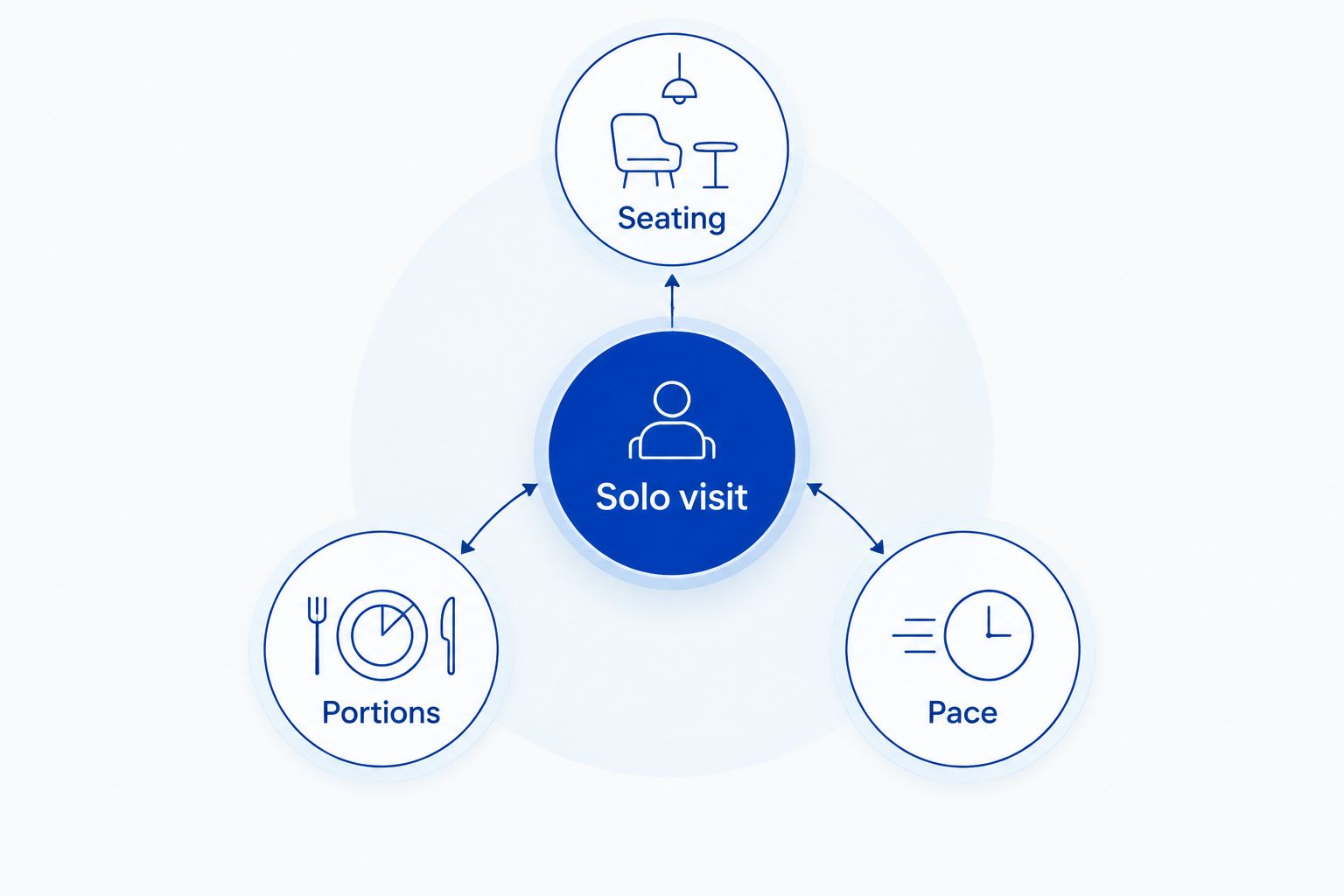
You do not need a rehearsed performance to eat alone. You need a few practical decisions that remove the uncertainty you care about most. Focus on 3 priorities: seating, portions, and pace.
Seating
Describe the kind of position you prefer when you arrive. Asking for a table for one communicates your party size; asking for a less exposed seat communicates something different. Include both if both matter to you.
Portions
Tell the server whether you want a light meal or a substantial dinner. Ask how your proposed order fits that appetite. Do not assume that a recommendation for several diners also applies to you.
Pace
If you have another commitment, mention it before ordering. If you are not in a hurry, you can still ask how the meal is served so you understand what to expect. Avoid treating a general dining guide as a promise about your individual visit.
Keep the plan simple. A solo meal does not require you to answer every possible question before leaving home; it requires you to identify the details that would actually change your decision.
Why solo-dining comfort varies
There is no universal seat or dining style that makes everyone comfortable. Your preferences determine which questions are useful. Consider these factors when planning your 2026 meal:
- Seating preference: Decide whether a dedicated table or a counter setting appeals to you, then ask what is possible.
- Appetite: Choose an order around how much you want to eat, not around an assumption that more dishes make the experience more authentic.
- Familiarity with Ethiopian food: Ask how a dish is served if that would help you feel settled.
- Desired interaction: Decide whether you want conversation or time to yourself; dining alone does not obligate you to seek company.
- Schedule: Explain a firm departure time before placing an order rather than expecting staff to infer it.
These factors describe your decision, not a guaranteed restaurant experience. Avoid substituting broad claims such as solo-friendly or quiet for the specific information you need.
A useful request names the issue. Asking about a table for one gives staff something concrete to answer; asking whether you will feel awkward asks them to predict a personal reaction.
Do I have to sit at the bar if I eat alone?
Dining alone does not make bar seating your only sensible preference. Ask for a table if that is how you want to eat, and confirm what seating can be offered rather than assuming the restaurant assigns solo diners to one area.
Bar service and bar dining are not interchangeable descriptions. If you want to eat at the bar during a 2026 visit, ask whether that arrangement is possible and whether it suits the meal you intend to order.
Will Ethiopian food feel awkward to eat by myself?
Ethiopian food does not require a dining partner. Injera can accompany your own meal just as it can accompany food shared by a group, so the communal tradition need not prevent a solo visit.
If you are unfamiliar with how a dish is eaten, ask for a brief explanation when ordering. Understanding the serving style is more useful than trying to imitate another table, whose order and preferences can differ from yours.
What should I ask before ordering alone?
Ask about portions, serving style, and any dietary needs before choosing your meal. Tell the server that the order is for one person and describe your appetite so the recommendation addresses your situation.
Keep seating questions separate from food questions. A comfortable position does not tell you whether an order is the right size, and a suitable portion does not tell you whether the seat meets your needs.
Keep the meal on your terms
You do not have to fill the time with conversation, order a drink to justify your seat, or explain why you came alone. Decide whether you want to focus on the food, read between courses, or simply take a break. If your plans involve a device or other activity that affects the space around you, ask rather than assume.
The advantage of eating alone is that you can choose around your own appetite and interests. The limitation is that you have no companion with whom to divide a shared order. Ask about the order you are considering instead of solving that problem by automatically buying more food.
For a 2026 visit to Tsehay Restaurant & Bar, keep the decision grounded in what you want: traditional Ethiopian cuisine, a suitable seat, and an order that makes sense for you. None of those goals requires pretending that you are part of a larger party.
FAQ
Can solo diners feel comfortable at Tsehay?
Solo diners can enjoy Ethiopian cuisine without a companion; comfort depends on whether the seating and order suit their preferences. Ask directly about seating for one and portions before deciding.
Do I have to sit at the bar when I dine alone?
You do not need to make bar seating your preference simply because you are alone. Ask for the seating you want and confirm what the restaurant can offer.
Is Ethiopian food only for groups?
Ethiopian food is not only for groups. Communal platters are part of the dining tradition, but you can enjoy Ethiopian cuisine without sharing with a companion.
What should I ask when ordering Ethiopian food for one?
Ask how the dish is served and whether the portion suits your appetite. Explain that you are ordering for one person rather than guessing from a dish name or photograph.
Can I ask for help if I have never eaten Ethiopian food?
Ask for an explanation of the serving style and how to eat the dish you are considering. State dietary needs separately so the conversation covers ingredients as well as presentation.
Should I check seating before my solo visit in 2026?
Confirm seating directly if a particular arrangement is essential to your comfort. Bar service alone does not establish the layout or whether dining at a particular seat is possible.
One last thing
Make your request specific enough to answer. Instead of asking whether eating alone will feel awkward, ask about a table for one, the portion you are considering, or how the food is served.
That change turns a subjective worry into a practical conversation. You do not need to prove that solo dining is normal; you need the details that let you choose your own meal comfortably.
Related guides
- Is the bar at Tsehay open without a dinner reservation?
- Is there a dress code at Tsehay?
- How far is Tsehay from the nearest Metro station?