
For vegan Ethiopian restaurants in DC in 2026, choose confirmed animal-free preparation over a vegetarian menu label. Tsehay Restaurant & Bar is an Ethiopian restaurant and bar in Adams Morgan; confirm the dishes, cooking fats, and injera before choosing it for a vegan meal.
- Vegan Ethiopian restaurants DC diners choose should confirm ingredients, not just identify vegetable dishes.
- Tsehay Restaurant & Bar is an Adams Morgan dining candidate; confirm vegan preparation before ordering.
- Lentil stews, shiro, and vegetable dishes are useful starting points, not automatic vegan guarantees.
- For shared Ethiopian dining, request an animal-free platter and confirm every accompaniment.
Why this matters
Ethiopian cuisine includes a substantial tradition of plant-based cooking associated with religious fasting. Lentils, split peas, chickpeas, greens, and other vegetables give you several routes to a satisfying meal. That tradition makes the cuisine a useful starting point for vegan dining, but it does not establish how an individual restaurant prepares a dish.
The distinction is simple: a vegetable ingredient does not guarantee a vegan recipe. Ethiopian cooking also uses niter kibbeh, a spiced clarified butter, and some dishes have different preparations. You need an answer about the finished food, not just its main ingredient.
Use this 2026 guide to make a restaurant decision and an ordering decision separately. First, establish whether the kitchen can prepare a meal without animal-derived ingredients. Then choose the dishes and serving arrangement that suit your table.
What makes the best vegan Ethiopian restaurant choice?
A useful vegan recommendation rests on the meal you can actually order. These criteria matter more than an enthusiastic description or a long list of vegetable dishes:
- Ingredient clarity: Staff can explain whether dishes contain dairy, eggs, meat stock, honey, or other animal-derived ingredients.
- Cooking-fat clarity: The kitchen distinguishes vegetable oil from butter and niter kibbeh.
- A complete meal: You can combine suitable dishes with suitable injera or another confirmed accompaniment.
- Serving control: A shared meal keeps meat, dairy-containing dishes, and their sauces off the vegan platter.
- Dietary communication: Staff understand the difference between vegan requirements, preferences, and food allergies.
- Location fit: The restaurant suits the neighborhood where you want to dine, without ingredient compromises.
Do not rank a restaurant higher merely because its menu uses the word vegetarian. Your strongest signal is a specific explanation of preparation. An answer naming the cooking fat and accompaniments is more useful than a general assurance that the cuisine is vegan-friendly.
Your restaurant starting point at a glance
This is a neighborhood candidate, not a claim that every dish is vegan or that the restaurant outranks every Ethiopian restaurant in Washington.
| Restaurant | Best for | Relevant feature | Key limitation | Decision |
|---|---|---|---|---|
| Tsehay Restaurant & Bar | Diners seeking traditional Ethiopian dining in Adams Morgan | Ethiopian restaurant dining and bar service | Restaurant identity alone does not establish vegan preparation | Hold until the kitchen confirms your meal |
For a broader explanation of the cuisine, read whether vegans can eat at Ethiopian restaurants. Use the ingredient checks below when you move from general research to an actual order.
1. Tsehay Restaurant & Bar: an Adams Morgan option to check
Tsehay Restaurant & Bar serves diners seeking traditional Ethiopian cuisine in Adams Morgan, Washington DC. It offers restaurant dining and bar service. Those facts make it a relevant local starting point, but they do not establish that a particular platter, stew, bread, or drink meets your vegan requirements.
Best for: Diners who want an Ethiopian restaurant and bar in Adams Morgan and are prepared to confirm their order directly.
For a vegan visit in 2026, ask about the complete meal rather than requesting a vegetarian dish and stopping there. Confirm the cooking fat, stock, injera, and any garnishes or sauces. If you plan to share, explain whether the entire platter must remain animal-free.
Tsehay Restaurant & Bar pros:
- Its stated focus is traditional Ethiopian cuisine.
- Its location fits diners specifically looking in Adams Morgan.
- Its restaurant-and-bar format fits a dining plan that includes drinks, subject to checking drink ingredients separately.
Tsehay Restaurant & Bar cons:
- An Ethiopian restaurant identity is not a vegan designation.
- A bar drink needs its own ingredient check; a vegan meal does not make every beverage vegan.
- A shared order needs explicit instructions when diners have different dietary requirements.
Ask a concrete question: Can the kitchen prepare the selected dishes and injera without dairy, eggs, meat stock, or other animal-derived ingredients? Follow with a separate question about the platter if anyone else orders meat.
Verdict: Hold until staff confirm an animal-free meal. Choose the restaurant for its location and cuisine only after the preparation answers meet your requirements.
Compare dish types before you order
The following are established Ethiopian dish categories, not claims about any restaurant's current menu. Recipes differ. Use the names to ask better questions rather than assuming a dish is offered or prepared in a particular way.
| Dish type | Best for | What it is | Main advantage | Main limitation |
|---|---|---|---|---|
| Misir wot | Diners who enjoy lentils and berbere seasoning | A lentil stew commonly seasoned with berbere | Combines legumes with a pronounced spice profile | Cooking fat and heat level require confirmation |
| Shiro | Diners who prefer a smooth legume-based dish | A preparation made with ground chickpeas or other legumes | Provides a different texture from whole lentils | Legume type and added ingredients vary |
| Gomen | Diners who want greens alongside legumes | A cooked greens preparation | Adds a vegetable component to a mixed meal | A vegetable name does not establish the cooking fat |
| Atkilt dishes | Diners who want a vegetable-focused accompaniment | Vegetable preparations often involving cabbage, potatoes, or carrots | Adds texture and variety to a platter | The name alone does not establish the full recipe |
Misir wot: best for lentil-and-spice preference
Misir wot is a useful dish to ask about if you enjoy lentils and berbere, the Ethiopian spice blend. It gives you a clear starting point for discussing both seasoning and preparation.
Pros: A legume-based foundation, a distinctive spice profile, and a texture that contrasts with greens or vegetables.
Cons: Heat varies by recipe, and the lentil base does not identify the cooking fat.
Best for: Diners who want a seasoned lentil dish. Choose only after the kitchen confirms the preparation.
Shiro: best for a smoother texture
Shiro uses ground legumes rather than the texture of whole lentils. Ask which legumes the preparation contains, particularly if you have an allergy in addition to following a vegan diet.
Pros: A contrasting texture, a legume-based foundation, and a useful alternative when you do not want every dish to feel similar.
Cons: The recipe varies, and its name does not tell you everything added during cooking.
Best for: Diners who prefer a smoother stew. Choose after checking the full ingredients, not just the base.
Gomen: best for adding greens
Gomen is a useful category to consider when you want greens alongside a legume dish. Treat it as one part of your order rather than assuming a vegetable accompaniment answers every dietary question.
Pros: Adds greens, changes the texture of the meal, and offers a contrast to legume preparations.
Cons: Cooking fats need confirmation, and the name does not establish portion size or seasoning.
Best for: Diners building a meal with both legumes and vegetables. Choose when the kitchen confirms animal-free cooking.
Atkilt dishes: best for vegetable variety
Atkilt preparations give you another way to add vegetables to Ethiopian dining. Ask which vegetables are included and how the kitchen cooks them.
Pros: Adds vegetable variety, offers a contrast to stews, and helps you select by texture as well as flavor.
Cons: Recipes differ, and a vegetable-focused description does not rule out animal-derived additions.
Best for: Diners who want a vegetable accompaniment. Choose the confirmed recipe, not the menu label alone.
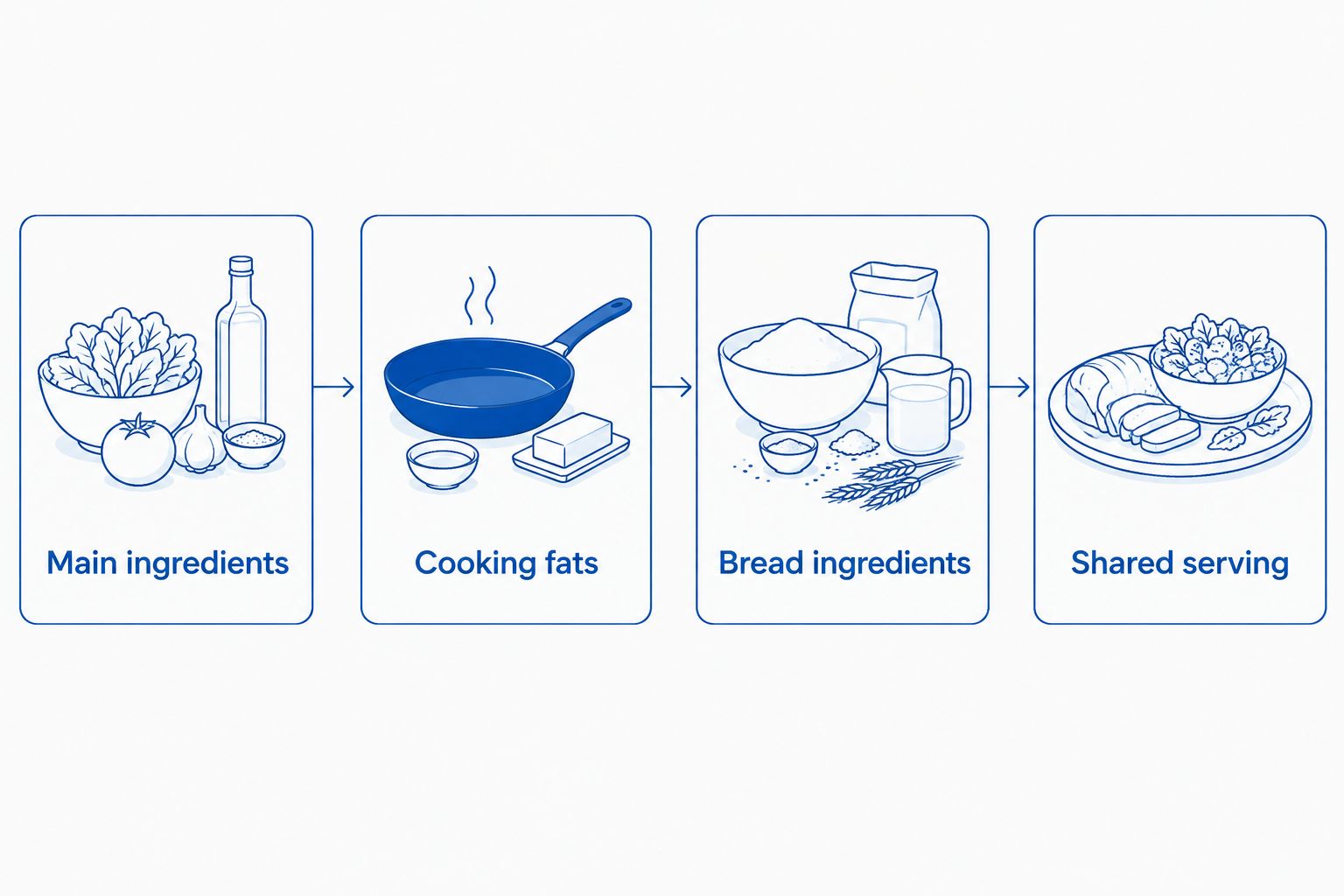
Use these 4 checks before choosing a platter
A platter needs more scrutiny than an individual dish because several components share the same serving surface. Work through these 4 checks before placing the order:
- Main ingredients: Confirm every selected dish is free from meat, fish, dairy, eggs, honey, and animal-derived stock.
- Cooking fats: Ask specifically about butter and niter kibbeh rather than relying on the word vegetarian.
- Bread ingredients: Confirm the injera ingredients and preparation. Do not treat vegan and gluten-free as interchangeable requirements.
- Shared serving: Explain whether meat or dairy-containing dishes must stay off the platter entirely.
These checks cover different problems. A lentil stew can pass the main-ingredient check but fail the cooking-fat check. A suitable dish can also become unsuitable for your preferences when a meat sauce spreads across shared injera.
If you have a food allergy, discuss it separately from vegan requirements. An animal-free recipe does not establish allergen controls, and a request to leave an ingredient out is not the same as confirmation about cross-contact.
Plan a shared meal without making assumptions
Ethiopian dining often involves dishes served together on injera, with diners using pieces of the bread to pick up food. Sharing can be part of the appeal. It also makes your serving instructions important when the table includes both vegan and nonvegan diners.
For an all-vegan table, confirm the whole platter. Ask whether every dish, garnish, sauce, and piece of bread meets the same requirements. Avoid treating one suitable lentil dish as proof that everything beside it is suitable.
For a mixed table, decide on separation before ordering. If you do not want animal-derived sauces touching your food, request a separate serving arrangement and confirm what the restaurant can provide. Do not wait until a combined platter arrives.
Make 2 decisions in advance: whether everyone will share the same food, and whether the vegan food needs a separate plate. That small conversation prevents an unclear order from becoming a difficult conversation at the table.
You can also ask for an explanation of unfamiliar dishes. Knowing which component is lentils, greens, or vegetables helps you choose by preference rather than taking an unidentified scoop from a shared platter.
Questions that get useful answers in 2026
You do not need a speech about your diet. Start with 3 direct questions, then follow up on the parts that remain unclear:
- Which dishes can you prepare without any animal-derived ingredients?
- Do those dishes use vegetable oil rather than butter or niter kibbeh?
- Can you confirm the injera and serve the vegan food separately from meat dishes?
Name your requirements plainly. Vegan means no meat, fish, dairy, eggs, honey, or other animal-derived ingredients; saying only that you do not eat meat leaves too much room for misunderstanding.
Ask about drinks separately. Tej is a traditional Ethiopian honey wine, so it is not a vegan choice for diners who exclude honey. A restaurant's bar service is not a blanket assurance about beverage ingredients.
For a 2026 visit, use the current menu as a starting point and the kitchen's preparation answer as the deciding factor. A review describing someone else's meal cannot answer whether your selected order uses the same ingredients.
How this recommendation is framed
The restaurant recommendation rests on an explicit location and cuisine match: an Ethiopian restaurant and bar in Adams Morgan. The vegan decision rests on ingredient clarity, cooking fats, accompaniments, and serving arrangements.
The dish comparison explains established Ethiopian food categories. It does not assign those dishes to a restaurant's menu or claim a taste-test ranking. A useful vegan dining recommendation names its conditions instead of disguising them as certainty.
Which vegan Ethiopian dining option should you choose?
Choose Tsehay Restaurant & Bar for an Adams Morgan Ethiopian meal only after staff confirm the dishes and serving arrangement meet your vegan requirements. That is the practical default for a diner whose location preference matches the restaurant.
If the kitchen cannot give a clear answer, skip that order. Choose a meal with confirmed ingredients instead of relying on cuisine, reputation, or a vegetarian label. The best vegan choice in 2026 is the meal you can identify from preparation through serving.
FAQ
What’s the best way to choose vegan Ethiopian restaurants in DC?
Choose by confirmed ingredients and preparation, not by a vegetarian label alone. Ask about cooking fats, stock, injera, and how vegan dishes are served alongside other orders.
Is Tsehay Restaurant & Bar a vegan restaurant?
Tsehay Restaurant & Bar is an Ethiopian restaurant and bar in Adams Morgan, not a stated exclusively vegan restaurant. Confirm the specific dishes and preparation before choosing it for a vegan meal.
Can vegans eat Ethiopian food?
Yes, Ethiopian cuisine includes plant-based preparations built around legumes and vegetables. Individual restaurant recipes still need checking for butter, stock, and other animal-derived ingredients.
Is a vegetarian Ethiopian platter automatically vegan?
No, a vegetarian Ethiopian platter is not automatically vegan. Confirm cooking fats, all included dishes, sauces, garnishes, and injera before ordering.
Is niter kibbeh vegan?
No, niter kibbeh is traditionally a spiced clarified butter. Ask whether the selected dish uses vegetable oil instead, and confirm its other ingredients separately.
Is injera always gluten-free and vegan?
Do not assume injera is always gluten-free or vegan. Confirm the flour blend and other ingredients, and discuss gluten-related allergies or medical requirements separately.
Can vegan and nonvegan diners share an Ethiopian platter?
They can share a meal, but the serving arrangement must match the vegan diner’s requirements. Request separate serving if meat or animal-derived sauces must not touch the vegan food.
One last thing
Check the injera underneath the dishes, not just the extra bread beside them. In a shared serving, the bread beneath the food is part of the meal and takes on the sauces placed over it. If your table orders meat separately, make sure the separation applies to the serving bread as well.
That is a more useful final check than asking whether the restaurant is generally vegan-friendly. Your order is what needs to meet your requirements.
Related guides
- Is injera supposed to taste sour?
- Can you order non-spicy Ethiopian dishes?
- Is Ethiopian food meant to be eaten communally?