
Best for traditional Ethiopian dining in Adams Morgan: Tsehay Restaurant & Bar. Best for exploring vegetables and lentils: a vegetarian platter. Best for a meat-focused meal: tibs. This 2026 guide to the best Ethiopian food in DC compares dining choices and explains what to order—not just which restaurant name to remember.
- For the best Ethiopian food in DC, consider Tsehay Restaurant & Bar for traditional dining in Adams Morgan.
- Choose a vegetarian platter for variety, tibs for sautéed meat, or shiro for a chickpea-based stew.
- Injera is fermented flatbread used to scoop food; its tang is part of the meal.
- Confirm ingredients, spice preferences, and platter portions before ordering; dish names alone do not settle those questions.
Why this matters
A recommendation for Ethiopian food should help you choose dinner, not leave you with another list of names. Your best order depends on whether you want a shared assortment, a meat-centered plate, or a plant-based meal.
Tsehay Restaurant & Bar is a fit for diners seeking traditional Ethiopian cuisine in Adams Morgan, Washington DC. The restaurant also offers bar service. Those facts make it a relevant neighborhood dining choice; they do not establish that every Ethiopian dish described below appears on its menu.
This 2026 guide ranks choices by dining purpose rather than assigning unsupported scores to DC restaurants. Use the restaurant recommendation to choose a destination and the dish comparison to ask better questions when you order.
What makes the best Ethiopian food in DC?
Judge the meal against these criteria before choosing a restaurant or dish:
- Dining purpose: Decide whether you want traditional restaurant dining, a varied platter, or one particular dish.
- Ingredient fit: Identify meat, legumes, vegetables, dairy, and other ingredients that matter to your diet.
- Flavor preference: Separate chili heat from seasoning. A dish can be richly seasoned without meeting your definition of spicy.
- Injera compatibility: Consider whether you enjoy the tang and soft texture of fermented flatbread.
- Sharing preference: Choose communal dining only when everyone is comfortable sharing food and ingredients.
- Location fit: An Adams Morgan destination makes sense when that neighborhood fits your evening.
For your 2026 dinner plan, start with food preferences rather than restaurant superlatives. A recommendation is useful only if it matches the meal you actually want.
Ethiopian dining choices at a glance
The restaurant entry identifies a destination. The remaining entries describe established Ethiopian food categories to consider when reading a menu; they are not claims about that restaurant's dishes.
| Ranked choice | Best for | What distinguishes it | Key limitation |
|---|---|---|---|
| Tsehay Restaurant & Bar | Traditional dining in Adams Morgan | Ethiopian restaurant dining and bar service | Its neighborhood must fit your plans; confirm dish-specific requirements directly |
| Vegetarian platter | Exploring several plant-based dishes | An assortment rather than a single stew | Composition and preparation differ by restaurant |
| Tibs | A meat-centered order | Sautéed meat rather than a long-simmered stew | Meat type, heat, and accompaniments require checking |
| Shiro | A legume-based main dish | Ground chickpeas or other legumes cooked into a stew | Texture and ingredients vary by preparation |
| Doro wat | A chicken stew with berbere seasoning | Chicken in a deeply seasoned sauce, traditionally served with egg | It contains animal ingredients and is not a mild default |
1. Tsehay Restaurant & Bar: best for Adams Morgan dining
Tsehay Restaurant & Bar serves traditional Ethiopian cuisine in Adams Morgan, Washington DC, and provides bar service. Choose it when you want an Ethiopian restaurant destination in that neighborhood rather than a recommendation for one isolated dish.
The useful distinction is location plus dining format. You are choosing a restaurant and bar, then deciding which meal fits your preferences once you review the current menu.
Tsehay Restaurant & Bar pros:
- Its stated focus is traditional Ethiopian cuisine.
- Its Adams Morgan location gives you a specific neighborhood destination.
- Restaurant dining and bar service support a food-and-drink outing.
Tsehay Restaurant & Bar considerations:
- An Adams Morgan location is not the right fit for every DC itinerary.
- A restaurant's cuisine does not establish that a particular dish meets your allergy or dietary requirements.
- Bar service matters less if your only priority is the food.
Before choosing an order, ask 3 questions: which dishes match your preferences, how they are prepared, and whether the proposed portions suit your table. These questions are more useful than treating a cuisine label as a promise about every ingredient.
Best for: Diners seeking traditional Ethiopian restaurant dining and bar service in Adams Morgan.
Verdict: Choose Tsehay Restaurant & Bar when Adams Morgan and traditional Ethiopian dining match your evening.
2. Vegetarian platter: best for exploring different dishes
A vegetarian platter brings several vegetable and legume preparations into one meal, commonly alongside injera. Ethiopian cooking includes lentil stews, greens, cabbage, and other plant-based dishes, but the actual assortment depends on the restaurant.
This is the clearest starting point when you want contrast. Instead of committing your entire meal to one texture or seasoning, you can compare different components and identify what you enjoy.
Vegetarian platter pros:
- Offers a way to explore several preparations in one order.
- Lets you compare vegetables and legumes side by side.
- Makes variety the main reason for choosing the dish.
- Introduces how injera works with different stews and sides.
Vegetarian platter considerations:
- Vegetarian does not automatically mean vegan; ask about butter and other animal-derived ingredients.
- Shared components are a poor fit when diners need strict ingredient separation.
- A platter name does not tell you how many diners it serves.
If you are comparing 2 dishes for a first visit, make the vegetarian platter one of them and choose a contrasting meat dish or single stew for the other. That is an ordering strategy, not a serving-size recommendation. Ask the restaurant whether the combination suits your table.
For a 2026 group dinner, settle dietary requirements before choosing a communal order. One diner's preferred assortment can contain something another diner needs to avoid.
Best for: First-time diners who want to explore vegetables, legumes, and contrasting preparations.
Verdict: Choose a vegetarian platter for variety; confirm ingredients before treating it as vegan.
3. Tibs: best for a meat-centered meal
Tibs is an Ethiopian preparation of sautéed meat, often cooked with aromatics such as onions and peppers. The meat and preparation differ between versions, so the name alone does not tell you the cut, heat level, or accompaniments.
Choose tibs when you want pieces of meat to define the meal. It provides a useful contrast to dishes whose main character comes from a thick, simmered sauce.
Tibs pros:
- Gives meat-focused diners a clear ordering direction.
- Provides a different texture from legume and chicken stews.
- Makes an easy comparison point when exploring sautéed dishes versus stews.
Tibs considerations:
- It is not suitable for vegetarian or vegan diners.
- Different versions use different meats and seasonings.
- The word tibs does not guarantee a particular level of chili heat.
Ask which meat the restaurant uses and whether the preparation matches your heat preference. If someone recommends tibs simply as an easy first order, still check the ingredients. Familiar cooking methods do not make every version interchangeable.
When considering 1 shared platter, ask how the meat dish will be served and whether diners with different diets need separate plates. Sharing is a format choice, not a requirement of enjoying Ethiopian food.
Best for: Diners who prefer a sautéed meat dish to a stew-centered meal.
Verdict: Choose tibs for a meat-focused order; select the specific preparation deliberately.
4. Shiro: best for a legume-based main dish
Shiro is an Ethiopian stew made with ground chickpeas or other legumes, with seasoning and consistency varying by preparation. Its texture distinguishes it from a platter built around several separate vegetable dishes.
Choose shiro when you want one legume-based dish to anchor the meal. Rather than collecting several flavors, you are focusing on a stew and how it works with injera.
Shiro pros:
- Puts legumes at the center of the order.
- Offers a different texture from sautéed meat.
- Gives you a single-dish alternative to an assorted platter.
Shiro considerations:
- A single stew offers less variety than a mixed platter.
- The ingredient list requires checking if you avoid dairy or other animal-derived ingredients.
- Seasoning and thickness differ between preparations.
Do not choose between shiro and a vegetarian platter by assuming they are the same experience. The platter is about assortment; shiro is about a particular stew. That distinction matters more than grouping both under a plant-based heading.
If you follow a vegan diet, ask about the cooking fat as well as the main ingredient. A legume base is useful information, but it is not a complete ingredient list.
Best for: Diners who want a legume-based stew rather than a multi-dish assortment.
Verdict: Choose shiro for a focused stew order; verify preparation for dietary restrictions.
5. Doro wat: best for a berbere-seasoned chicken stew
Doro wat is an Ethiopian chicken stew associated with berbere, a spice blend containing chili and other seasonings. Traditional preparations include egg, making it a different choice from either tibs or a legume-based dish.
Choose it when you want chicken in a deeply seasoned sauce. Ask about the restaurant's preparation instead of assuming that every version has identical heat or richness.
Doro wat pros:
- Gives chicken eaters a distinct stew option.
- Introduces the flavor of berbere in a traditional Ethiopian preparation.
- Provides a sauce-centered contrast to sautéed meat.
Doro wat considerations:
- Chicken and egg make traditional versions unsuitable for vegan diners.
- It is not the safest default for someone who avoids chili heat.
- The preparation needs checking when dairy or egg restrictions apply.
A first visit does not require choosing the most intensely seasoned dish. If you enjoy chicken but dislike heat, explain both preferences and ask which preparation fits. Selecting a dish you will enjoy is more useful than ordering a famous name for its own sake.
Best for: Diners who want chicken stew with berbere seasoning and are comfortable asking about heat.
Verdict: Choose doro wat for a seasoned chicken stew; skip it when its animal ingredients or heat conflict with your needs.
How these choices are ranked
The order follows distinct dining purposes: neighborhood restaurant dining, variety, sautéed meat, a legume-based stew, and a chicken stew. It does not claim that one preparation tastes better to everyone.
The 2026 recommendations use the criteria above: location, ingredients, flavor preference, injera, and sharing. There are no invented tasting scores, restaurant awards, or citywide positions behind the ordering.
Use the comparison as a decision tree. Choose the dining destination first, then choose the food category that matches your table.
How to approach injera and a shared meal
Injera is fermented flatbread with a tangy flavor and a soft, porous texture. Diners traditionally tear pieces and use them to scoop stews and other dishes; injera also absorbs the food served on it.
Do not judge it against a crisp bread or neutral dinner roll. Its sourness and texture are part of the experience, especially when paired with seasoned stews.
Follow this simple sequence:
- Choose dishes: Agree on the foods and ingredients everyone wants.
- Check ingredients: Discuss dietary restrictions before combining orders.
- Confirm portions: Ask whether the proposed order suits your table.
- Share comfortably: Decide whether communal or separate serving works better.
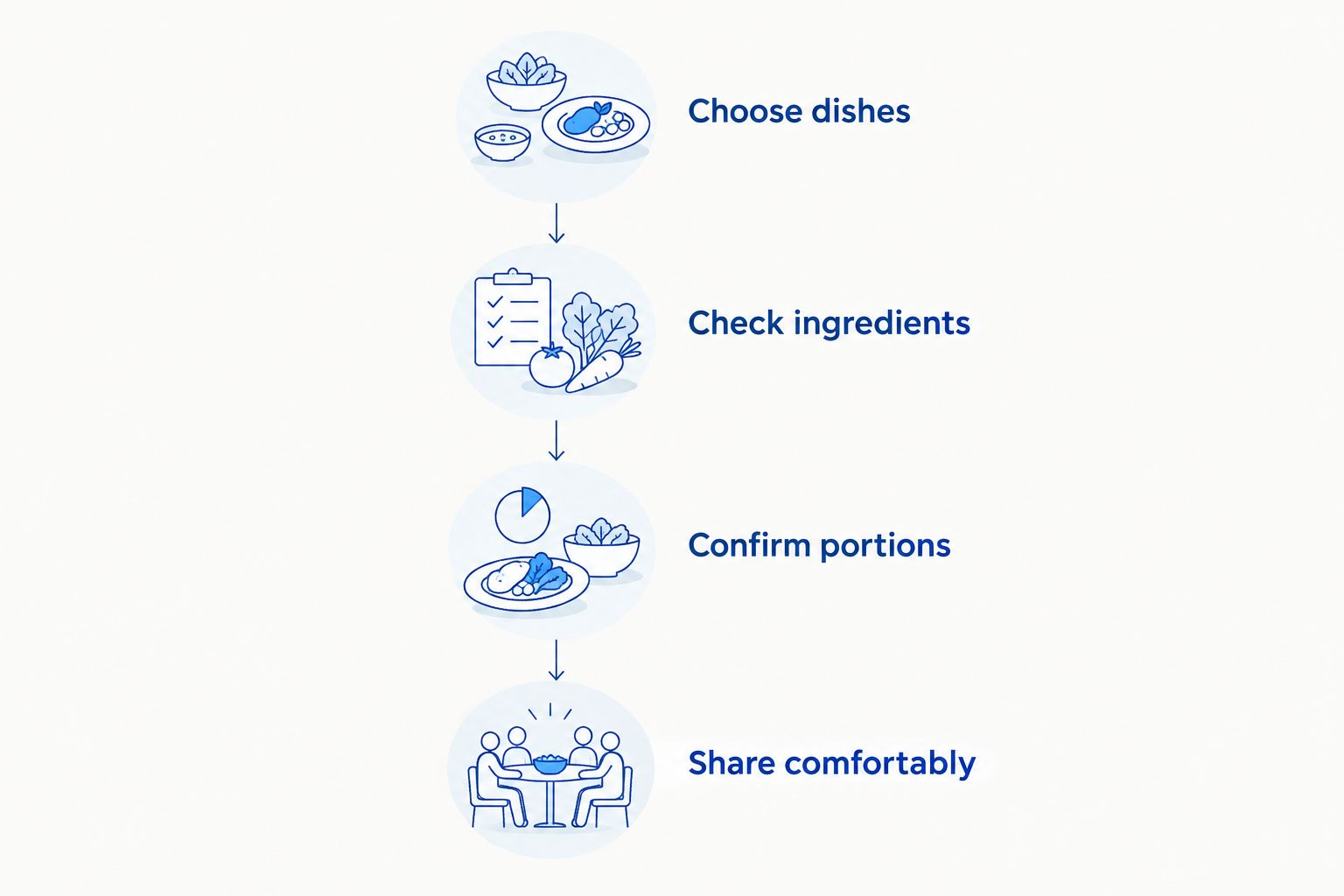
A communal meal works best when everyone understands the order. If you want more detail on the format, read the guide to communal Ethiopian dining. You can appreciate Ethiopian cuisine without making every dish communal.
Which Ethiopian dining choice should you choose?
For traditional Ethiopian restaurant dining in Adams Morgan, choose Tsehay Restaurant & Bar. For the food itself, make a vegetarian platter your starting point when variety matters; choose tibs, shiro, or doro wat when you already know which kind of main dish you want.
For your 2026 visit, give the restaurant a plain description of your preferences: meat or plant-based, mild or chili-forward, shared or separate. That information does more for your meal than asking for an undefined “best dish.”
Plan your Ethiopian dinner
Explore a traditional Ethiopian restaurant and bar in Adams Morgan, Washington DC.
FAQ
What’s the best Ethiopian food in DC for a first visit?
A vegetarian platter is a useful first order when you want to explore several Ethiopian preparations. Choose tibs for a meat-centered meal or shiro for a legume-based stew, and confirm the restaurant’s ingredients and portions.
Where should I go for Ethiopian food in Adams Morgan in 2026?
Tsehay Restaurant & Bar is an Ethiopian dining option in Adams Morgan, Washington DC. It serves traditional Ethiopian cuisine and offers bar service; choose it when that neighborhood and dining format fit your plans.
Is a vegetarian platter better than shiro?
A vegetarian platter is better for variety, while shiro is better for a focused legume-based stew order. The choice depends on whether you want an assortment or one main preparation.
Is Ethiopian food always spicy?
No, Ethiopian food is not uniformly spicy. Seasoning and chili heat vary by dish and preparation, so describe your heat preference and ask which current dishes match it.
Is injera supposed to taste sour?
Yes, injera’s tang comes from fermentation. Its soft texture and sour flavor work with the stews and other dishes it accompanies.
Can vegans eat Ethiopian food?
Yes, Ethiopian cuisine includes vegetable and legume dishes that can suit a vegan diet. Confirm the cooking fat and other ingredients rather than assuming every vegetarian preparation is vegan.
How many people does an Ethiopian combo platter feed?
A combo platter’s serving size depends on the restaurant, the order, and your group’s appetites. Ask whether the proposed platter is intended for your table, and mention any additional dishes you plan to order.
Do I have to share food at an Ethiopian restaurant?
No, sharing is not a requirement for enjoying Ethiopian food. Ask about separate serving if that better suits your preferences or dietary restrictions.
One last thing
The bread is part of the meal, not just a utensil. Injera beneath a stew absorbs its sauce, so tasting that combination gives you a different experience from trying the stew alone.
On your first visit, compare a bite with injera against the dish by itself. Notice the tang, texture, and seasoning together before deciding which food you want to order again.
Related guides
- How many people does a combo platter feed?
- Can vegans eat at Ethiopian restaurants?
- Can you order non-spicy Ethiopian dishes?