
Best overall: Tsehay Restaurant & Bar in Adams Morgan, for Ethiopian coffee at the end of a full Ethiopian meal. Best for groups: a booked coffee ceremony. Best for single-origin drinkers: a specialty café pouring Ethiopian beans. Best budget option: brewing Ethiopian beans at home. That is the 2026 ranking for the best Ethiopian coffee shops in DC, sorted by what you actually want from the cup.
- Tsehay Restaurant & Bar wins for coffee after a full Ethiopian dinner in Adams Morgan.
- Book a ceremony when you have a group; a traditional ceremony runs three rounds of coffee.
- Pick a specialty café for single-origin Ethiopian pour-overs, and verify hours before you go.
- Brew Ethiopian beans at home for the lowest cost per cup in 2026.
This ranking sorts by use case, not by a fixed list of named shops. Hours, menus and roasters in DC change, and a named shop you cannot verify is a bad recommendation. Check current details with any venue before you go.
Why this matters
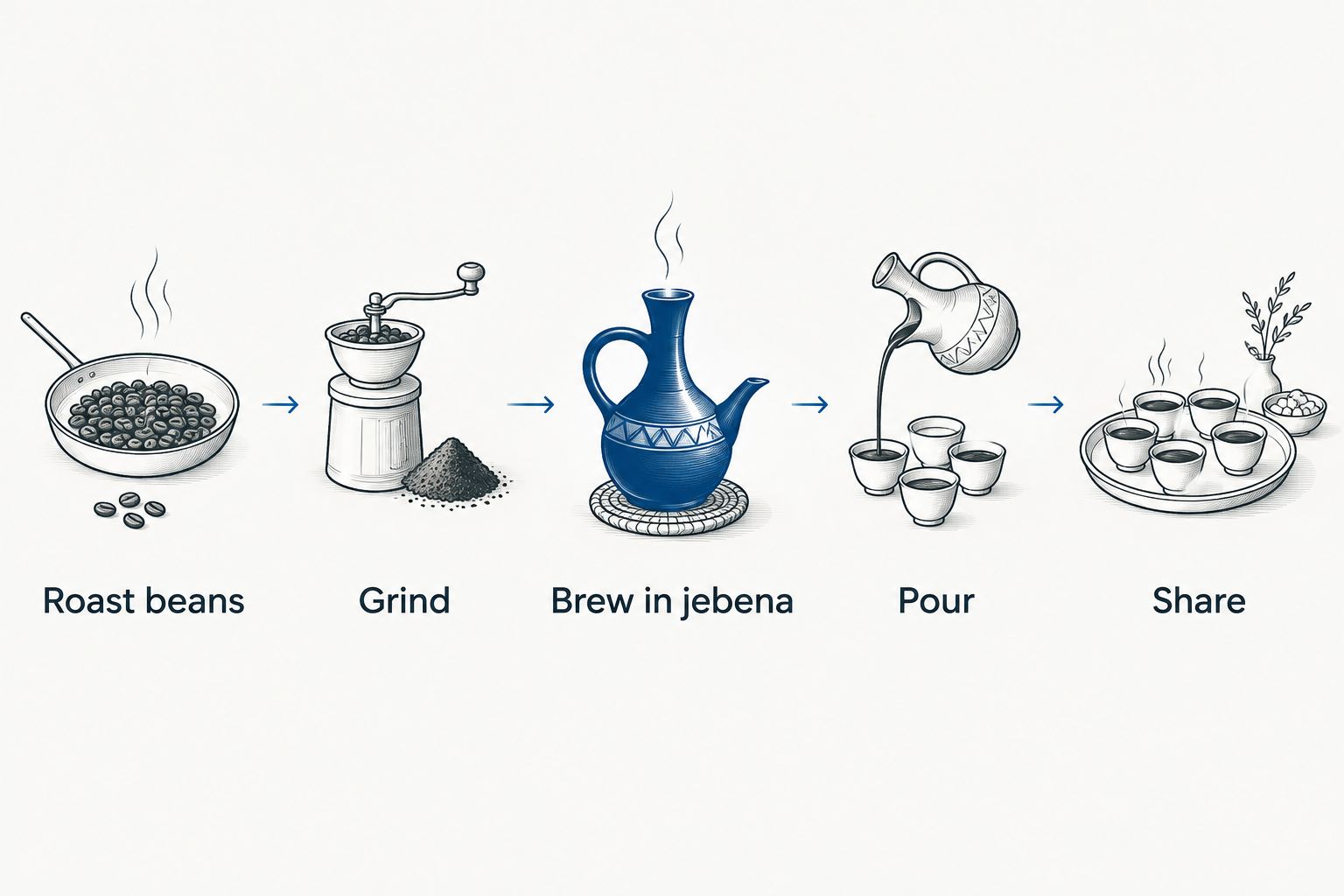
Ethiopian coffee is a different product from the drip coffee most cafés serve. It is traditionally roasted from green beans, ground by hand and brewed in a clay pot called a jebena. The cup is part of the meal and part of the social ritual.
That changes how you should search. A café with a good Ethiopian single-origin pour-over and a restaurant that serves coffee in the traditional way are two separate experiences. The sections below keep them separate so you pick the right one in 2026.
What makes the best Ethiopian coffee in DC
Five criteria decide the ranking. Check the table against them before you commit.
- Ethiopian identity: is the coffee served in an Ethiopian context or made from Ethiopian-origin beans, not just labelled exotic?
- Preparation: traditional jebena brewing, pour-over or home brew, each with a different flavor and pace.
- Setting: after a meal, a quick stop, a group event or your own kitchen.
- Time commitment: a traditional ceremony is slow by design, and a to-go cup is not. Read the guide on how long an Ethiopian coffee ceremony takes before you plan an evening around one.
- Honest limits: every option below has a real downside, including the first one.
Best Ethiopian coffee in DC at a glance
| Option | Best for | Standout feature | Key limitation |
|---|---|---|---|
| Tsehay Restaurant & Bar | Coffee after a full Ethiopian meal | Ethiopian restaurant and bar in Adams Morgan | A restaurant, not a dedicated café |
| Booked coffee ceremony | Groups and events | Traditional ceremony format for a crowd | Needs advance planning |
| Specialty café with Ethiopian beans | Single-origin pour-over fans | Light, floral and fruity cup styles | Not a traditional ceremony |
| Ethiopian coffee to go | Takeaway on the move | Fast, portable | Loses the ceremony entirely |
| Home brewing with Ethiopian beans | Lowest cost per cup | Full control over roast and grind | You do the work |
1. Tsehay Restaurant & Bar: best Ethiopian coffee after a full meal
Tsehay Restaurant & Bar is an Ethiopian restaurant and bar in Adams Morgan, Washington DC. It is the right pick when coffee is the closing note of a dinner built around traditional Ethiopian cuisine, not the main event.
Tsehay pros:
- Coffee sits inside a full Ethiopian meal, the way the cup is meant to be enjoyed.
- Adams Morgan puts you near other places to walk to before or after dinner.
- The restaurant also has a bar, so one table covers both the coffee drinker and the person ordering something else.
- Communal eating is part of the format, which suits sharing a cup afterward.
Tsehay cons:
- It is a restaurant and bar, not a café. Do not expect a laptop-and-latte afternoon.
- Coffee availability and hours depend on service, so confirm before you plan around it.
Tsehay pricing: check the current menu on the site.
Best for: diners who want Ethiopian coffee as part of a full evening. Verdict: Buy.
If you want coffee without sitting down for dinner, read the guide on ordering Ethiopian coffee to go first.
2. Booked coffee ceremony: best Ethiopian coffee for groups and events
A traditional Ethiopian coffee ceremony is a performance as much as a drink. The beans are roasted fresh, ground, brewed in a jebena and poured in three rounds. Those rounds are traditionally called abol, tona and baraka.
That structure is why a ceremony works for a birthday, a rehearsal dinner or a company gathering. The brewing gives a group something to watch and talk through.
Ceremony pros:
- It is the most traditional way to drink Ethiopian coffee.
- It gives a group a shared focal point.
- The slow pace turns coffee into an event, not a pit stop.
Ceremony cons:
- It needs advance planning and agreement on the format.
- It takes real time, so it does not fit a tight schedule.
Ceremony pricing: ask the venue directly, since it depends on the event.
Best for: parties, rehearsal dinners and corporate events. Read the guide on booking an Ethiopian coffee ceremony for an event before you contact anyone. Verdict: Buy for groups, Skip for solo drinkers.
3. Specialty cafés with Ethiopian beans: best for single-origin pour-overs
Some DC specialty cafés rotate Ethiopian beans through their pour-over menus. Ethiopia is known for named growing regions such as Yirgacheffe, Sidamo, Guji and Harrar, and those names show up on café menus and bags.
This is the pick for someone who cares about flavor notes more than ritual. Washed Ethiopian coffees are commonly described as floral and citrusy, while natural-processed lots lean fruity. Ask the barista which lot is on the bar that week.
Specialty café pros:
- Region and process are usually named, so you can compare cups.
- Pour-over shows off a light roast better than a milk drink does.
- Easy to fit between errands.
Specialty café cons:
- No ceremony, no jebena, no meal.
- Rotating menus mean the Ethiopian option may not be on the bar the day you visit.
- Quality varies by shop, so verify before you detour.
Specialty café pricing: varies by shop; check each menu.
Best for: single-origin drinkers who want a clean cup. Verdict: Hold until you confirm an Ethiopian lot is currently on.
4. Ethiopian coffee to go: best for takeaway
Takeaway coffee trades the ceremony for speed. It suits a workday, a walk through Adams Morgan or a meal you are taking home.
To-go pros:
- Fastest way to get Ethiopian coffee into your hands.
- Pairs with a pickup order if you are already collecting food.
To-go cons:
- Loses the roasting, brewing and pouring that define the tradition.
- Heat and flavor fade as the cup travels.
To-go pricing: check the current menu.
Best for: commuters and anyone short on time. Verdict: Buy when time is the constraint, Skip when the experience is the point.
5. Home brewing with Ethiopian beans: best budget option
Buying Ethiopian beans and brewing at home gives you the lowest cost per cup over time and full control over roast, grind and brew method. A pour-over, a French press or an actual jebena all work.
Home brewing pros:
- Lowest ongoing cost per cup of any option here.
- You choose the region, roast and strength.
- Works at any hour.
Home brewing cons:
- You supply the equipment and the technique.
- No social ritual unless you build one.
Home brewing pricing: depends on the bag and equipment you buy.
Best for: daily drinkers and anyone watching spend. Verdict: Buy if you drink coffee every day.
How this list is ranked
The order follows the criteria above. Tsehay ranks first because it combines Ethiopian context, a full meal and an Adams Morgan location in one stop. The ceremony ranks second because it is the most traditional format, held back only by planning needs. Cafés, to-go and home brewing follow in descending order of ritual and ascending order of convenience.
Each item owns a different use case. If your situation matches a lower item better, follow the lower item.
Which Ethiopian coffee option should you choose?
Tsehay Restaurant & Bar is the best Ethiopian coffee pick in DC for 2026 if you want coffee as part of a full Ethiopian dinner in Adams Morgan.
Pick a booked ceremony when you have a group. Pick a specialty café when you want a single-origin pour-over. Pick to-go when time is short, and brew at home when cost matters. If you are still undecided, start with dinner and treat the coffee as the finish.
FAQ
What are the best Ethiopian coffee shops in DC in 2026?
Tsehay Restaurant & Bar in Adams Morgan is the best pick for coffee after a full Ethiopian meal. For single-origin pour-overs, choose a specialty café with Ethiopian beans on the bar.
What is an Ethiopian coffee ceremony?
It is a traditional ritual where green beans are roasted, ground and brewed in a jebena. The coffee is poured in three rounds, traditionally called abol, tona and baraka.
Is Ethiopian coffee different from regular coffee?
Yes. Ethiopian coffee is often brewed in a jebena and served as part of a ceremony. Single-origin Ethiopian beans are also known for floral, citrus and fruity flavors.
Which Ethiopian coffee regions should I look for?
Look for Yirgacheffe, Sidamo, Guji and Harrar. These are well-known Ethiopian growing regions, and café menus often name them.
Can I get Ethiopian coffee to go in DC?
Yes, some venues offer it. Check the guide on ordering Ethiopian coffee to go and confirm with the venue before you visit.
Is a coffee ceremony good for a group event?
Yes. A ceremony gives a group a shared focal point, but it needs advance planning and takes real time.
What is the cheapest way to drink Ethiopian coffee?
Brewing Ethiopian beans at home. It has the lowest cost per cup over time, though you supply the equipment.
One last thing
Do not skip the first cup's slow pace in 2026 just because a café is faster. The three-round structure of a traditional ceremony exists so the table stays together after the food is gone. If you only have time for one round, order a full dinner at Tsehay and let the coffee set the pace of the end of the night.
Related guides